
A Different Kind of End-of-the-World Story
Post-apocalyptic fiction has a crowding problem. Shelves buckle under the weight of viral outbreaks, societal collapses, and wandering survivors who exist mainly to suffer picturesquely. Most of these novels share a common weakness: the chaos feels hypothetical, even cozy. The logistics of survival are handwaved, the military and governmental machinery simply evaporates, and the reader is asked to take a lot on faith.
D.J. Molles, a former U.S. Army infantryman writing his debut novel, refuses that bargain. The Remaining is built on the premise that someone, somewhere, would have planned for the worst—and that the plan would be both genuinely useful and genuinely insufficient. That tension is the engine of the whole book, and it runs clean from the first page to the last.
The Setup
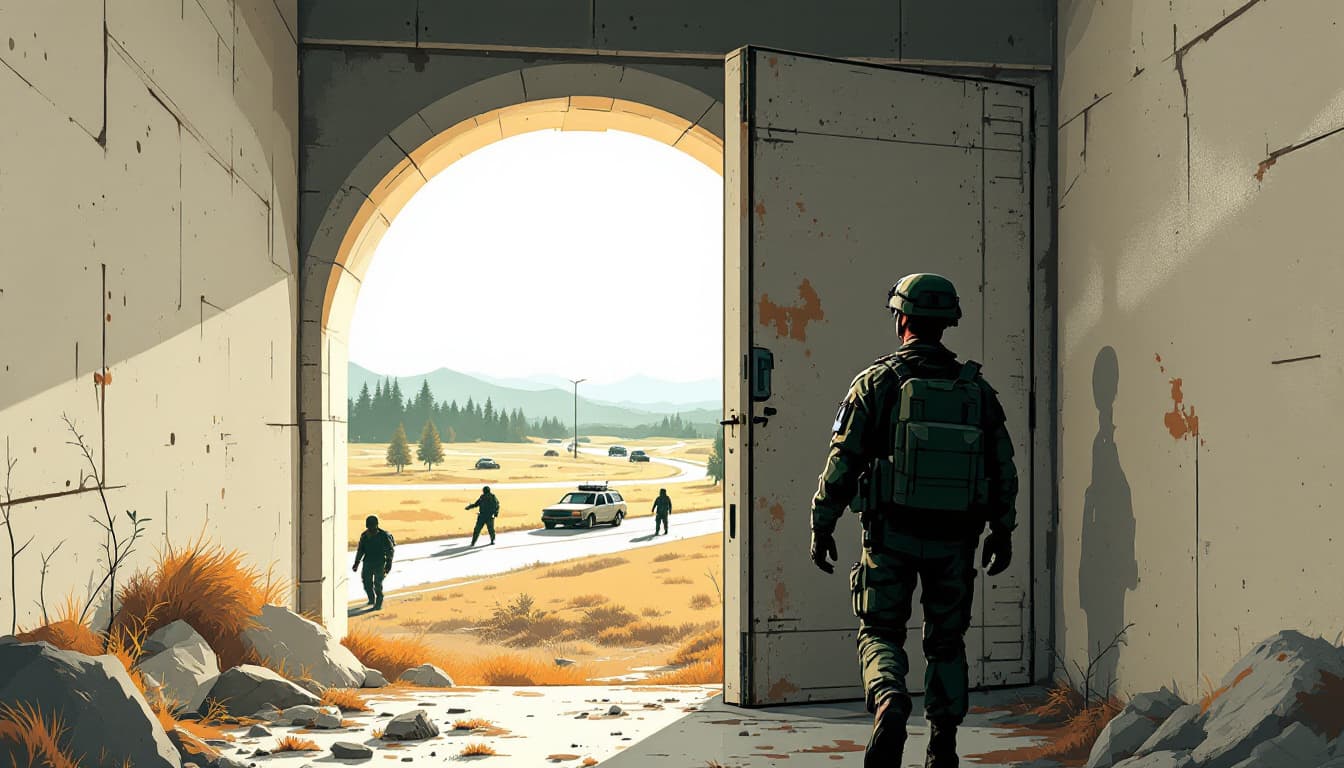
Captain Lee Harden is a soldier sealed inside a reinforced underground bunker beneath his own home, part of a classified government continuity program. His mission: wait out a catastrophic event, then emerge to help rebuild American civilization in his assigned sector. The catastrophic event arrives on schedule—a bacterial outbreak that strips the infected of higher cognition and leaves them violent, fast, and nearly impossible to live alongside. When Harden surfaces, his carefully stocked bunker and his carefully memorized protocols meet a world that has deteriorated far faster and far further than any planner anticipated.
That's about as far as the plot summary needs to go. The novel's first act—Harden's emergence and his initial contact with what's left of his community—is too well-constructed to spoil, and the later acts depend on surprises that are earned rather than merely engineered.
Craft: Prose, Pacing, and Character
Molles writes in a style that suits his material perfectly: direct, functional, occasionally stark. This is not lyrical apocalypse fiction in the mode of Cormac McCarthy's The Road, and it doesn't aspire to be. The sentences are built for momentum. Descriptions of tactical movement, weapon handling, and physical injury carry the specificity of someone who has done these things rather than researched them. There's a correctness to the action sequences—the way a structure gets cleared, the way ammunition anxiety accumulates—that gives the novel a quality most genre thrillers can only approximate.
Where Molles shows the most craft is in his management of dread. The Remaining operates in a register somewhere between military thriller and survival horror, and he navigates the tonal gap with more skill than you'd expect from a debut. The infected here are not shambling, and they are not quite the sprinting rage-monsters of contemporary zombie cinema either. They are specific, and that specificity makes them frightening in a way that generic zombie hoards seldom are.
Lee Harden himself is the novel's chief achievement as a character. Military protagonists in genre fiction tend to flatten into either invincible operators or hollow vessels for action choreography. Harden is neither. He is competent—genuinely, demonstrably so—and Molles trusts that competence to be interesting in its own right rather than undermining it for the sake of cheap drama. But competence alone does not make a character. What elevates Harden is his sense of obligation: to his mission, to the people he encounters, and to a version of the country that may no longer exist. He carries that obligation the way soldiers sometimes carry grief, quietly and at considerable cost.
The secondary characters are thinner, which is the novel's most honest weakness. Some of the survivors Harden encounters are vivid enough to matter; others exist primarily to complicate the mission or to make moral points. This is forgivable in a first installment of a series, but readers who prioritize ensemble depth should know what they're getting into.
What Works and What Doesn't
The novel's pacing is close to flawless for roughly its first two-thirds. Molles understands the rhythm of escalation and relief, and he earns his set pieces by doing the quieter work beforehand—establishing stakes, building tension through logistics rather than coincidence. A mid-novel sequence involving a fortified community is the book at its best: morally complicated, tactically specific, and emotionally costly in ways that feel inevitable rather than manipulative.
The final third is where The Remaining shows some structural seams. The narrative begins to feel more episodic, and certain plot developments arrive with a speed that sits uneasily against the patient world-building of the opening. It's a symptom common to serialized genre fiction—the need to leave enough thread for subsequent volumes can pull at the integrity of the individual book—and it costs the novel something, though not enough to significantly damage the overall effect.
The prose, while efficient, can occasionally tip into flatness. Moments of emotional weight sometimes receive the same neutral treatment as tactical description, and a little more variation in register would have served the book well. These are minor complaints, and Molles improves noticeably across the series, but they're worth naming.
Who Should Read This
If you've ever found yourself thinking that most apocalyptic fiction doesn't take the practical dimensions of collapse seriously enough—the supply chains, the institutional knowledge, the specific weight of a specific firearm—The Remaining will feel like a revelation. It will also reward readers who simply want a tight, morally engaged thriller with a protagonist worth following. This is not a novel that condescends to its genre or to its audience.
Readers who require literary ambition or intricate prose style may find the book's functionalism limiting. Those who disliked the more violent registers of survival horror should probably look elsewhere. But for the substantial overlap between genre fiction readers and people who think seriously about resilience, preparedness, and the fragility of modern systems, this is as good as the category gets.

