
A serious writer takes on the end of the world
Justin Cronin was a respected literary novelist — the kind who wins PEN awards and teaches at Rice University — when he sat down to write a vampire apocalypse story at the request of his young daughter. The result, The Passage, is one of those books that arrives trailing an almost comical volume of pre-publication hype: a seven-figure deal, a Ridley Scott production attachment, comparisons to Cormac McCarthy and Stephen King in the same breath. Hype at that volume is almost always a liability, and yet Cronin's novel is something stranger and more interesting than the marketing suggests. It is not quite the genre-transcending masterpiece that the blurbs promised, but it is a deeply felt, frequently absorbing work that earns genuine admiration — and genuine frustration in roughly equal measure.
The shape of the thing
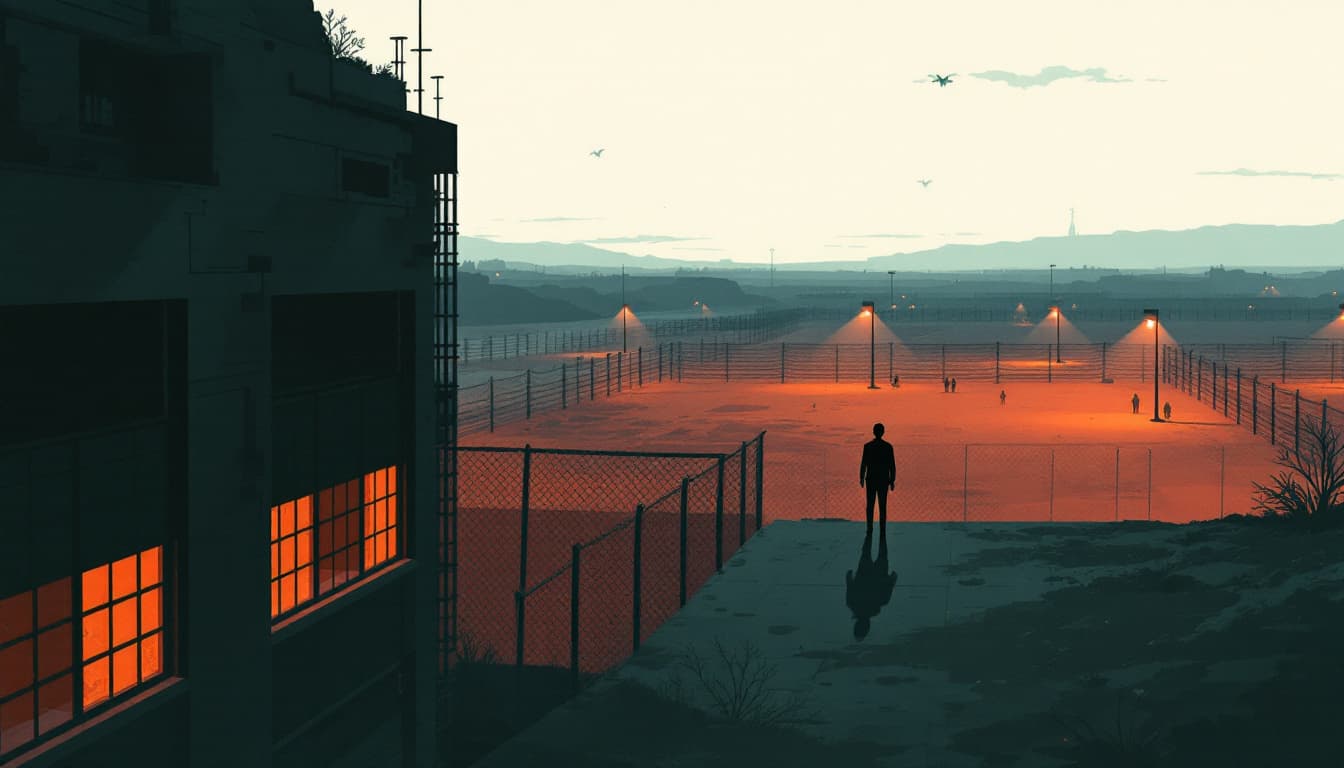
The premise, stripped bare: a U.S. government experiment involving death-row inmates and a virus of South American origin goes catastrophically wrong, producing beings of terrifying speed, strength, and something like consciousness. Within years, civilization collapses. The novel then jumps nearly a century forward to a small, fortified community of survivors who have kept the lights — literally — on against the creatures they call "virals." A young girl whose origins are tied to the original experiment becomes the linchpin of everything.
That structural leap, roughly a third of the way through the book, is the novel's boldest move and its most divisive. Cronin essentially writes two novels and stitches them together, and the seam shows.
Craft: what Cronin is actually doing
The first section of The Passage is, without qualification, excellent. Cronin's prose here has the controlled momentum of a thriller married to the psychological weight of literary fiction. He is particularly good at rendering institutional America — the bureaucratic texture of a federal facility, the particular loneliness of government secrecy — and his characterization is patient and specific in a way genre fiction rarely bothers to be. A young girl named Amy, orphaned and adrift, is handled with a delicacy that never tips into sentimentality. Her early chapters are quietly devastating. The reader becomes genuinely invested in her fate before the apocalypse machine even fully kicks in.
When the collapse comes, Cronin renders it with unusual restraint. He mostly keeps the camera close rather than panning out to civilization-scale carnage, and this is the right instinct: the horror accumulates in small, human details rather than exploding in spectacle. It is genuinely frightening in places, and frightening in an earned way.
The second section — the century-later community, the new cast of characters, the quest narrative that assembles — is considerably more uneven. Cronin's gift for psychological texture does not disappear, but it has to be spread across a much larger ensemble, and not all of them repay the investment equally. Some characters feel carefully observed; others feel assembled from recognizable parts. The prose loosens somewhat, becoming more conventionally propulsive. This is not necessarily a complaint — the story needs to move, and it does — but readers who fell in love with the first section's density may feel the shift as a kind of loss.
What works, and what earns the asterisk
What Cronin does extraordinarily well throughout is atmosphere. The world he builds has genuine texture and internal consistency: the logic of the virals, the social structures that have evolved around survival, the way mythology and rumor fill the space where information used to be. He is also, at his best, a fine writer of action sequences — not an easy skill — and the novel's set pieces are staged with real spatial clarity and tension.
The religious and mythological dimensions of the story are handled with more seriousness than the genre typically affords. Cronin is interested in what human beings make of catastrophe, how meaning-making and faith reconfigure themselves under existential pressure, and these themes give the novel weight that pure survival fiction often lacks.
The weaknesses are real, though. At 766 pages, The Passage has a pacing problem in its middle section that no amount of structural ambition can fully explain away. There are chapters that exist primarily to extend the book's duration rather than deepen its argument. Some of the romantic subplots feel obligatory, and a few character arcs resolve in ways that feel more convenient than earned. The novel is also the first volume of a trilogy, which means it does not so much end as pause — a legitimate narrative choice, but one that can leave first-time readers feeling that the investment they've made hasn't yet been fully honored.
Who should read it
The Passage is for readers who want their apocalypse fiction to have genuine literary ambition and don't mind if the execution is imperfect. It rewards patience. If you came to post-apocalyptic fiction through McCarthy's The Road and want something more expansive — more populated, more plot-driven, more interested in community than solitude — this is a natural next step. Fans of Stephen King's longer, mythology-heavy work (the Dark Tower comparison isn't wrong) will find the rhythm familiar. Pure genre readers looking for lean, fast horror may find the literary apparatus occasionally gets in the way.
At its best, The Passage is the rare big-canvas novel that genuinely earns its scale. At its middling stretches, it is an accomplished and readable near-miss. That gap between what it is and what it clearly wants to be is where the 3.5 sits.

