
The weight of what's left behind
There's a specific kind of grief that has no name — the grief you feel not for someone who died, but for someone who simply stopped being there. No body, no explanation, no ritual of mourning to contain it. That formless, unresolvable anguish is the emotional territory that The Leftovers occupies from its very first frames, and it occupies it with a ferocity that is alternately magnificent and maddening.
Based on Tom Perrotta's 2011 novel and developed for HBO by Perrotta and Damon Lindelof, the series arrives with a premise as strange as it is simple: three years ago, two percent of the world's population vanished simultaneously. No rapture confirmed, no scientific explanation offered, no resolution in sight. The show is not about what happened. It is entirely, stubbornly about what it means to keep living afterward.
The premise, without the clutter
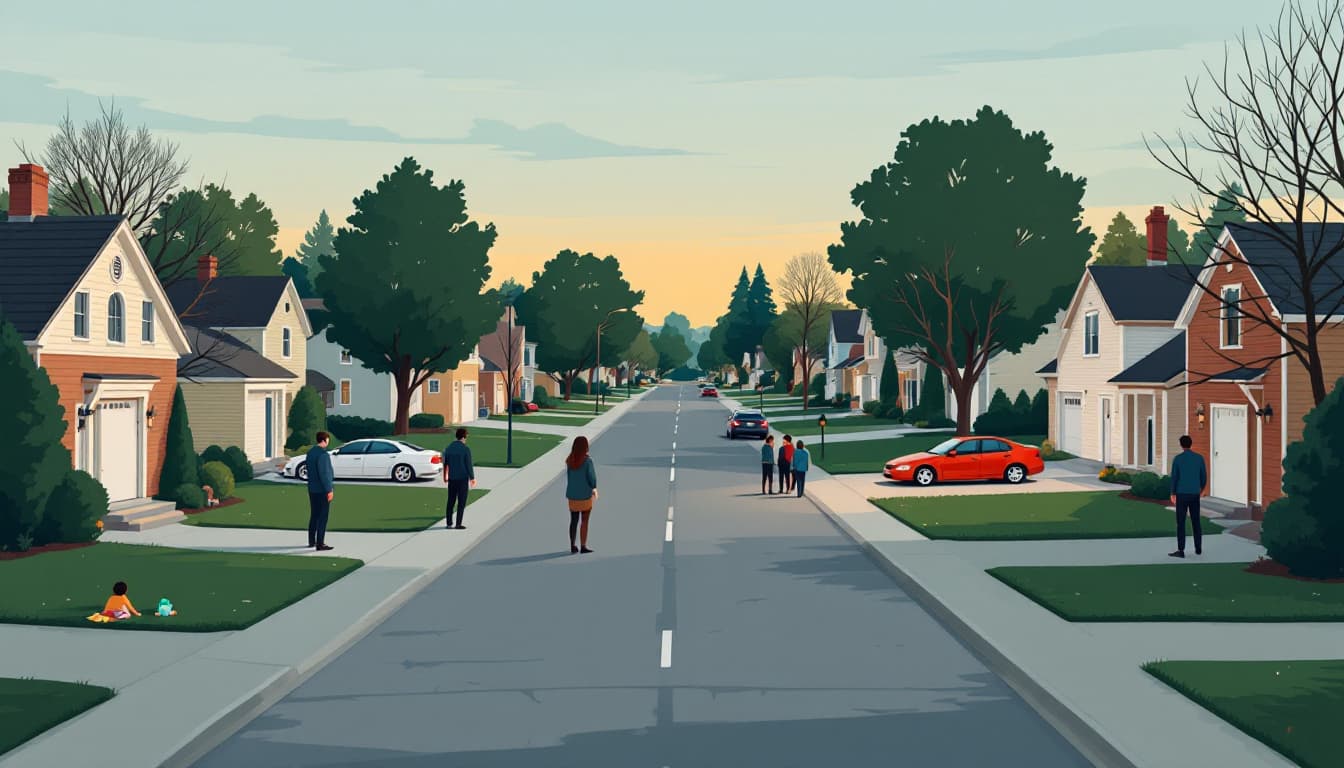
The story is set in Mapleton, a small New York town that has tried to reassemble itself in the years since what people call the Departure. Justin Theroux plays the town's police chief, a man holding himself together with visible effort while his family fractures around him. His daughter has fallen in with a charismatic cult figure; his son has attached himself to a self-styled prophet in a neighboring town; his wife has joined the Guilty Remnant, a white-clad nihilist cult that does not speak, does not explain itself, and exists apparently to remind everyone that normal life is a lie.
Perrotta's novel is a quieter, more ironic thing than what Lindelof has made of it. The television adaptation is rawer, more operatic, and willing to go to genuinely dark places the novel approaches more obliquely. Whether that's an improvement depends on what you're after.
Craft and performance
Justin Theroux anchors the series with the kind of physical, barely-contained performance that television rarely asks of its leading men. His character is not particularly articulate about his pain — he expresses it through runs that look like escapes, through flashes of violence, through long silences during which Theroux manages to communicate volumes. It's a genuinely impressive piece of work.
Equally striking is Carrie Coon as his estranged wife, who has joined the Guilty Remnant and cut herself off from everyone she loves. Coon, who was not yet a household name in 2014, is extraordinary — she brings interior life to a character who has renounced the right to speak it aloud, and watching her navigate that constraint is often the most compelling thing in any given episode.
The direction across the season is notably cinematic. There's a visual grammar of stillness and then sudden violence, of domestic spaces that feel slightly wrong, that suits the material well. The score, heavy on mournful piano and strings, occasionally tips over into melodrama, but more often it supports rather than underlines.
Where the craft falters is in pacing and structure. The show favors the standalone episode — one mid-season hour, essentially a self-contained portrait of a peripheral character, is the season's most formally daring piece and also very nearly its best. But this approach, while bold, means the season-long narrative momentum stalls repeatedly. You're never quite sure whether the diffuse, stop-start quality is intentional formal restraint or a sign that the writers haven't yet worked out what story they're telling at scale.
What works and what doesn't
What works, fundamentally, is the emotional honesty. The Leftovers takes grief seriously in a way that most genre television doesn't dare. It understands that grief makes people do irrational, self-destructive, sometimes cruel things. It refuses cheap catharsis. When characters hurt each other — and they do, often — the show doesn't rush to forgive them or punish them neatly.
The Guilty Remnant is a genuinely unsettling invention, and the show uses them to ask uncomfortable questions about how communities handle collective trauma. Their silent harassment of grieving families is disturbing precisely because the show doesn't entirely dismiss their point. Normal life, they are insisting, is a kind of sleepwalking. The show is too smart to agree, but too honest to simply refute it.
What doesn't work, at least not consistently, is the mythology. Lindelof is a writer with a well-documented tendency to generate mystery without committing to resolution — the Lost years left him, fairly or not, with a reputation for this — and season one occasionally slides into the same habits. A character associated with mysterious dogs, ambiguous visions, and apparent miracles is never satisfactorily integrated. These threads feel less like long-game storytelling and more like furniture that hasn't been placed yet.
There's also a tonal inflexibility that becomes wearing. The Leftovers, especially in this first season, has almost no lightness in it. This is a defensible artistic choice — grief isn't funny, and the show isn't pretending otherwise — but ten episodes of unrelieved despair tests even the most committed viewer. Later seasons would find more tonal range; season one has not yet learned that breathing room can coexist with seriousness.
Who it's for
This is a show for viewers who are willing to sit with ambiguity and discomfort, who don't need narrative payoff every episode, and who find genuinely good dramatic acting compelling in itself. It is not for those who want answers, momentum, or anything resembling comfort. If you bounced off the first two or three episodes, you probably won't be won over by what follows — and the show would likely say it has no interest in winning you over. That's admirable. It is also occasionally its own worst enemy.
The good news is that the series improves substantially in its second and third seasons. Season one is best understood as the foundation — necessary, often powerful, but not fully formed.

