
A genre that keeps giving, for better and worse
Zombie fiction has a particular burden to carry. The subgenre is so crowded, so thoroughly strip-mined by decades of film, television, comics, and paperback, that any new entry must justify itself almost immediately — must answer the implicit question: why this one? Craig DiLouie's The Infection, published in 2011, offers an answer that is better than you might expect and more uneven than you might hope. It is a novel written with genuine conviction, built around characters rather than set-pieces, and haunted by the kind of moral seriousness that the best apocalyptic fiction demands. It is also, at times, rough around the edges in ways that remind you it arrived during a period when horror imprints were churning out pandemic-and-zombie titles at a ferocious clip.
The shape of the catastrophe
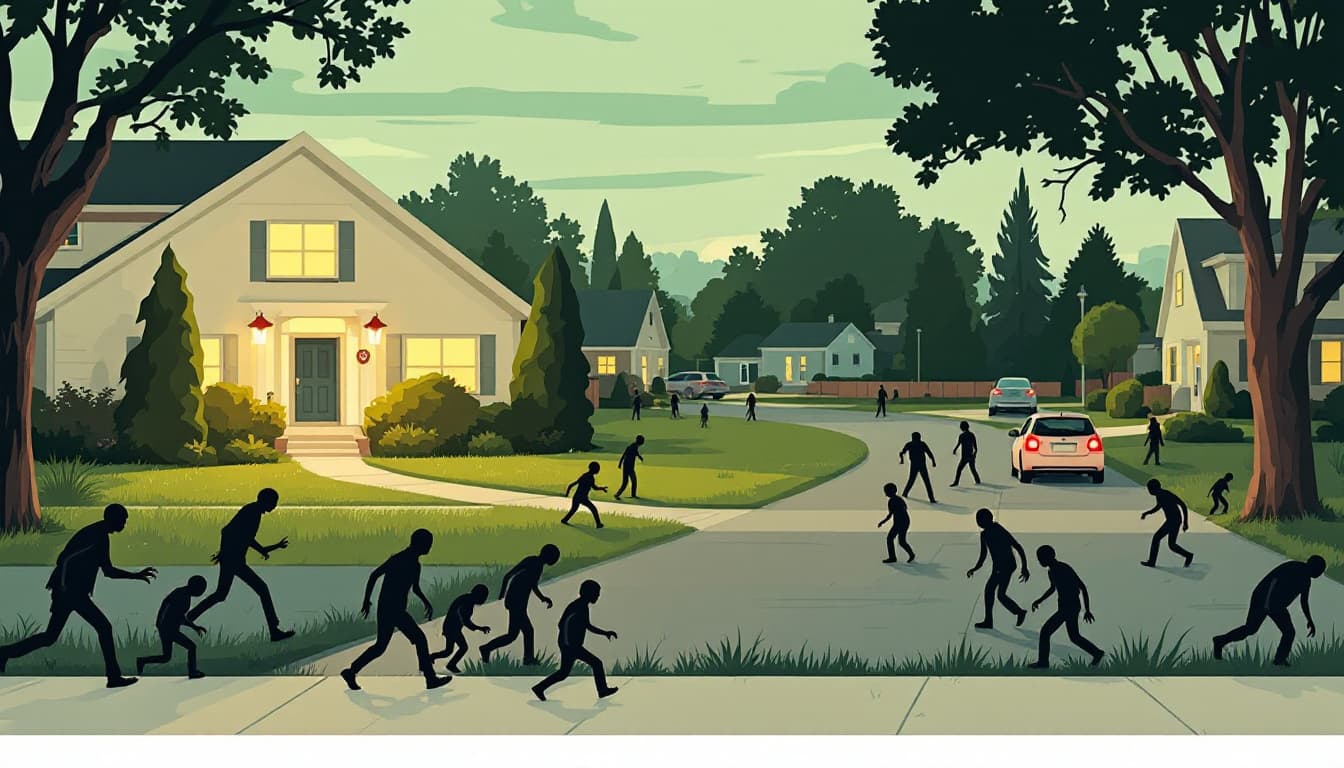
The setup is not especially novel: a wave of infection sweeps through the population, transforming the majority of humanity into something monstrous. DiLouie calls the infected by various names depending on their mutation, and this taxonomy — the notion that the infection doesn't produce one monolithic horde but a range of terrible creatures, some fast, some enormous, some stranger still — is one of the book's more interesting gambits. It keeps the threat feeling genuinely unpredictable in ways that standard zombie fiction does not.
What DiLouie is more interested in, however, is the small group of survivors threading through this ruined Ohio landscape: a cop, a soldier, a schoolteacher, a preacher, a handful of others, each carrying damage that predates the apocalypse by years. The story is structured as a road narrative — a push toward a rumored safe zone — and the external journey maps fairly deliberately onto internal ones.
Craft and character
DiLouie's prose is workmanlike in the best sense: clean, unpretentious, efficient. He doesn't reach for literary flourish and largely doesn't miss it. What he does instead is give each member of his ensemble a distinct interiority, rotating perspective in a way that illuminates rather than fragments. The cop who has held onto a vestige of professional identity in a world where law is meaningless. The pastor struggling with the theological wreckage of a creation that would permit this. These aren't especially original character types for the genre, but DiLouie is patient with them in a way that many of his peers are not. He lets scenes breathe. He lets conversations land.
The sequences of violence — and there are many — are rendered with a physical specificity that keeps them from feeling gratuitous. DiLouie understands that horror depends on stakes, and stakes depend on attachment, and so he earns the carnage rather than leading with it. When the novel's tension peaks, you feel it, because you've been traveling with these people long enough to have opinions about them.
Where it falls short
The book is not without real problems. The pacing in the middle third sags noticeably, burdened by passages that read more like survival logistics than narrative momentum. DiLouie has clearly thought carefully about how a group of people actually moves through a collapsed society — what they need, what they fight over, how decisions get made — but this conscientiousness occasionally tips into a kind of procedural flatness that works against the emotional propulsion the story needs.
The female characters, while not absent from the page, are less fully inhabited than their male counterparts. This is a persistent limitation of the novel that's difficult to dismiss as a minor quibble — in a book where interiority is the primary tool, gaps in perspective matter.
The genre taxonomy of monsters, while initially intriguing, also creates a subtle problem: DiLouie's more elaborate infected creatures gesture toward a mythology that the novel isn't quite willing, or perhaps ready, to fully develop. You get the sense of a richer worldbuilding effort restrained by the demands of a single-volume survival narrative. (DiLouie did return to this world in subsequent books, which presumably addresses some of this.)
What the book is genuinely doing
The most interesting thing about The Infection is its preoccupation with what it means to keep going after a catastrophe that has rendered ordinary moral frameworks useless. The preacher character, in particular, carries the book's thematic weight with more subtlety than you'd expect: his crisis isn't simply "does God exist," which would be tropey, but something closer to "what does a calling mean when the entire community it was meant to serve is gone?" That's a sharper question, and DiLouie sits with it uncomfortably rather than resolving it cheaply.
There's also an underlying argument in the book about community — about the difference between a group of people who happen to be surviving together and a group of people who have chosen to constitute something. The novel's best passages are about the friction and negotiation of that choice, the daily work of deciding who you are to each other when civilization has stopped enforcing the answer.
Who this is for
If you've read The Road and found it too spare, or the early Walking Dead comics and found them too operatic, The Infection occupies a useful middle space. It's grimmer than most genre fare but more accessible than literary horror; it's character-driven but never slow enough to be called a character study. Fans of DiLouie's later work — he's developed considerably as a stylist — may find this early novel rougher than they expect. Readers new to the genre will find it a solid, morally engaged entry point.

