
A different kind of end-of-the-world novel
Most post-apocalyptic fiction is architecture — elaborate systems of collapse, factions, rules, maps. Peter Heller's The Dog Stars (2012) is more like a piece of music: melancholy, episodic, and built around a single sustained emotional note. It arrived in the same cultural moment as a wave of survivalist thrillers and quietly refused to behave like one. That refusal is both its greatest strength and the thing most likely to frustrate readers who come expecting plot mechanics.
This is worth stating upfront: if you want a tightly engineered scenario with faction politics and tactical problem-solving, look elsewhere. If you're willing to spend time inside a prose style that is genuinely original — fragmented, poetic, at times infuriating — you may find yourself thinking about this novel for weeks after you finish it.
The premise
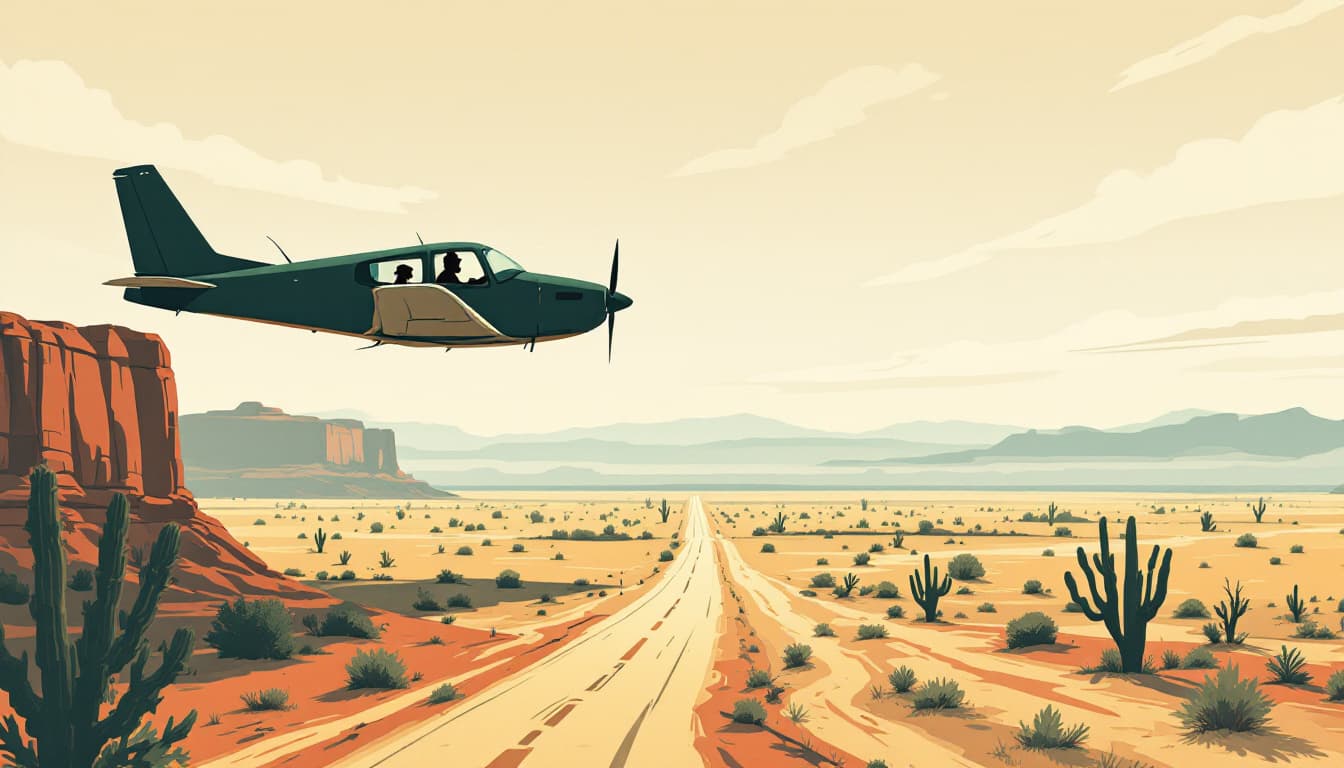
A flu pandemic has killed the vast majority of humanity. Our narrator, Hig, is a pilot — a small detail that matters enormously — living on a regional airstrip in Colorado with his aging dog Jasper and an armed, prickly neighbor named Bangley who is everything Hig is not: cold, tactical, unsentimental. Bangley shoots first and mourns nothing. Hig writes poetry in his head and grieves constantly.
That pairing is the engine of the novel's first half: two men who need each other for survival but who represent entirely opposing philosophies about what makes survival worth having. Hig flies patrol routes over the mountains and plains. He maintains a small perimeter of safety in a world that has gone otherwise silent. Then, almost by accident, he receives a fragment of radio signal from somewhere to the west — and the question of whether to investigate it becomes the axis around which the whole story slowly rotates.
Craft: the prose, the structure, the characters
Heller writes in a style that announces itself on the first page and never lets up. Sentences are clipped, sometimes unpunctuated, run together in ways that break conventional rules. Dialogue and description blend without clear demarcation. It reads like stream-of-consciousness that has been very carefully edited — which is exactly what it is.
This works better than you might expect. The style creates an immediacy that is almost physical; you feel the altitude, the cold, the particular loneliness of flying over empty land. Hig's interiority becomes completely credible through the prose rather than despite it. His grief for his wife, for civilization, for normalcy — it accumulates not through stated emotion but through syntax, through the way his thoughts skip and return and skip again, like a stone across water.
The relationship between Hig and his dog Jasper is handled with enormous restraint and care. Heller never overplays it, never turns it mawkish, and yet it becomes one of the emotional pillars of the book. Anyone who has loved a dog — especially an aging one — will find these sections genuinely affecting in ways that sneak up on you.
Bangley is a superb creation: a man stripped to pure function, whose competence is almost frightening, whose occasional moments of connection with Hig feel earned precisely because they're so rare. He could have been a simple foil or a villain-in-waiting; instead he's something more interesting — a man you understand even as you suspect you wouldn't like.
What works and what doesn't
The first two-thirds of the novel are close to excellent. The rhythm of Hig's days, the patrols, the relationship with Bangley, the sudden violent episodes that punctuate the pastoral — these sections achieve something rare in post-apocalyptic fiction: genuine atmosphere. The Colorado landscape feels like a character. The silence of a depopulated world is rendered with specificity and menace.
Where the book stumbles is in its final act. When Hig follows that radio signal west and the story shifts into more conventional territory — new characters, new relationships, a tentative reaching toward hope — the writing remains lovely but the emotional logic becomes somewhat thinner. The new characters don't carry the weight that Bangley does. The resolution, while not falsely cheerful, arrives in ways that feel slightly too tidy given everything that has preceded it. Heller has spent so much of the novel resisting easy narrative structure that when he reaches for some in the end, it feels like a concession rather than an earned arrival.
There's also an occasional tendency toward the self-consciously literary — a sentence that exists primarily to be beautiful rather than to do work — that a stricter editor might have pushed back on. These moments are infrequent, but they're noticeable precisely because the best passages are so unselfconscious.
Who it's for
The Dog Stars is for readers who care about prose as much as plot — people who read McCarthy and Dillard alongside their genre fiction, who think post-apocalyptic fiction can do the things literary novels do. It is not for readers who want a survival manual in story form, or who need momentum and incident to stay engaged.
It's also, quietly, one of the better novels about grief written in the last fifteen years. Strip away the plague and the airstrip, and you have a book about what people carry after catastrophic loss, and whether beauty and connection can survive the things that destroy us. That's not a small thing to accomplish, and Heller largely accomplishes it.

