
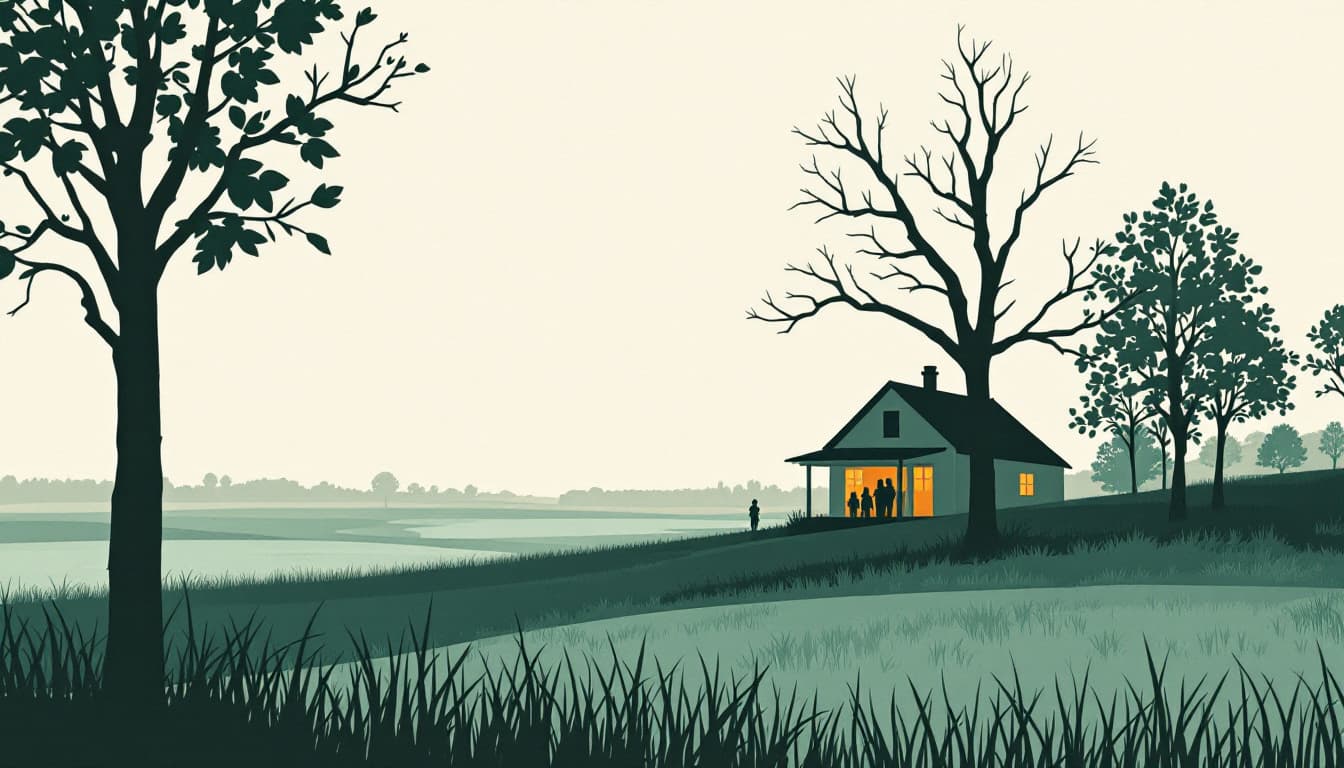
A quiet kind of dread
There is a particular flavor of rural American unease that good genre television has always known how to exploit — the isolation, the self-reliance, the creeping sense that what happens out here stays out here. Teacup, Peacock's 2024 limited series, arrives with that flavor baked into every frame. Muddy Georgia farmland, a fractured family, a threat that cannot be explained or outrun. For long stretches it works beautifully. Then it stops working, and you spend the back half wishing it had found a second gear.
The premise
Based on Robert McCammon's novel Stinger, the show centers on a farm family whose already-strained domestic life is catastrophically interrupted when something — some force, some presence — establishes an invisible boundary around their property and the surrounding land. Neighbors are warned not to cross. People who do cross do not fare well. What lies at the center of this perimeter, and what it wants, is the engine driving the series. The writers are smart enough to keep that engine running on mystery for most of the runtime, which is both the show's greatest strength and, eventually, its most significant weakness.
The family dynamics are deliberately messy from the opening scenes — a marriage in quiet crisis, children navigating adult tensions they only half understand, a sense of a household held together by habit rather than warmth. This is smart ground-laying. It means the external threat lands on already-fractured people, and the series is most alive when it uses the crisis to pressure those fractures open rather than seal them shut with easy heroism.
Craft and performances
The direction — largely atmospheric and patient in the early episodes — deserves real credit. The Georgia landscape is shot with genuine affection, all low morning fog and red clay and the particular quality of Southern light in late summer. There is none of the generic Pacific Northwest gloom that stands in for rural America in so much streaming television. This show looks like where it is set, and that specificity pays dividends.
The lead performances anchor things well. The actors playing the couple at the heart of the story bring lived-in weariness to roles that could easily tip into stock types — the stubborn man, the practical woman. They avoid that trap mostly by underplaying, by communicating history through silences and small gestures rather than expository argument scenes. The supporting cast — neighbors, a stranger who arrives with partial explanations, a local authority figure trying to manage the unmanageable — is uniformly solid, if not always given enough to do.
Where the craft starts to slip is in pacing, specifically across the middle episodes. Teacup is a limited series of eight episodes, which should be exactly the right length for this kind of tightly wound mystery-horror. But around episodes four and five the show develops a habit of cycling through the same emotional notes — fear, distrust, momentary connection, fresh crisis — without deepening them. Characters revisit arguments they have already had. The perimeter remains unexplained for so long that mystery tips into stalling. A show that earns its patience in the first act has to eventually spend that credit, and Teacup is slow to do so.
What works and what doesn't
What works, emphatically, is the show's commitment to keeping the horror grounded in human scale. The best sequences here are not the moments of spectacle — and there are a few — but the quieter ones: a conversation between neighbors across a fence line that neither of them dares cross, or a child testing the limits of the forbidden boundary with the particular reckless curiosity of someone who doesn't fully believe in consequences. These scenes have the texture of something genuinely frightening, because they feel real before they feel genre.
The family unit itself is well-drawn, and the show earns points for resisting the survivalist-fantasy version of this premise — the one where the crisis reveals who was secretly competent all along, where the man of the house finds his footing and the household clicks into efficient order. This family makes bad decisions under pressure. They miscommunicate at critical moments. That is honest, and it is more interesting than the alternative.
What doesn't work is the ending — or more precisely, the way the show handles its revelations. Without giving anything away, the explanations offered in the final episodes feel mismatched in scale with what the show has been building. Teacup has spent most of its runtime in a register of intimate, almost literary dread. When it cashes in its mystery chips, it moves toward a different kind of story, and the tonal whiplash is jarring. Not catastrophically so — the show does not collapse — but the final impression is of something that didn't quite trust the thing it was good at.
Who it's for
If you liked the first season of The Outsider, or found yourself wishing Yellowjackets would slow down and breathe more, Teacup is probably your frequency. It is a show for patient viewers who are willing to invest in character before crisis, and who can tolerate a mystery that resolves imperfectly. It is not for people who need momentum to be constant, and it will disappoint anyone hoping for big-canvas genre spectacle.
At eight episodes it is a comfortable weekend watch rather than a commitment, and that is probably the right way to approach it — engaged but not expectant. There is genuine craft here, and genuine unease, and performances worth spending time with. The show just doesn't land the jump it was building to.

