
A fairy tale that earns its dark edges
There is a particular kind of post-apocalyptic story that refuses to be grim about the apocalypse — that insists on wonder even inside catastrophe. Sweet Tooth belongs to that tradition, and it commits to the bit with a conviction that is both its greatest strength and, at times, its most frustrating limitation. Based on Jeff Lemire's DC/Vertigo comic series and developed for Netflix by Jim Mickle, the show arrived in 2021 to modest fanfare and quiet word-of-mouth affection, which turns out to be exactly the right scale for it. This is not prestige television trying to be The Last of Us. It is something softer, stranger, and more openly sentimental — and for about two-thirds of its eight-episode run, that is enough.
The premise
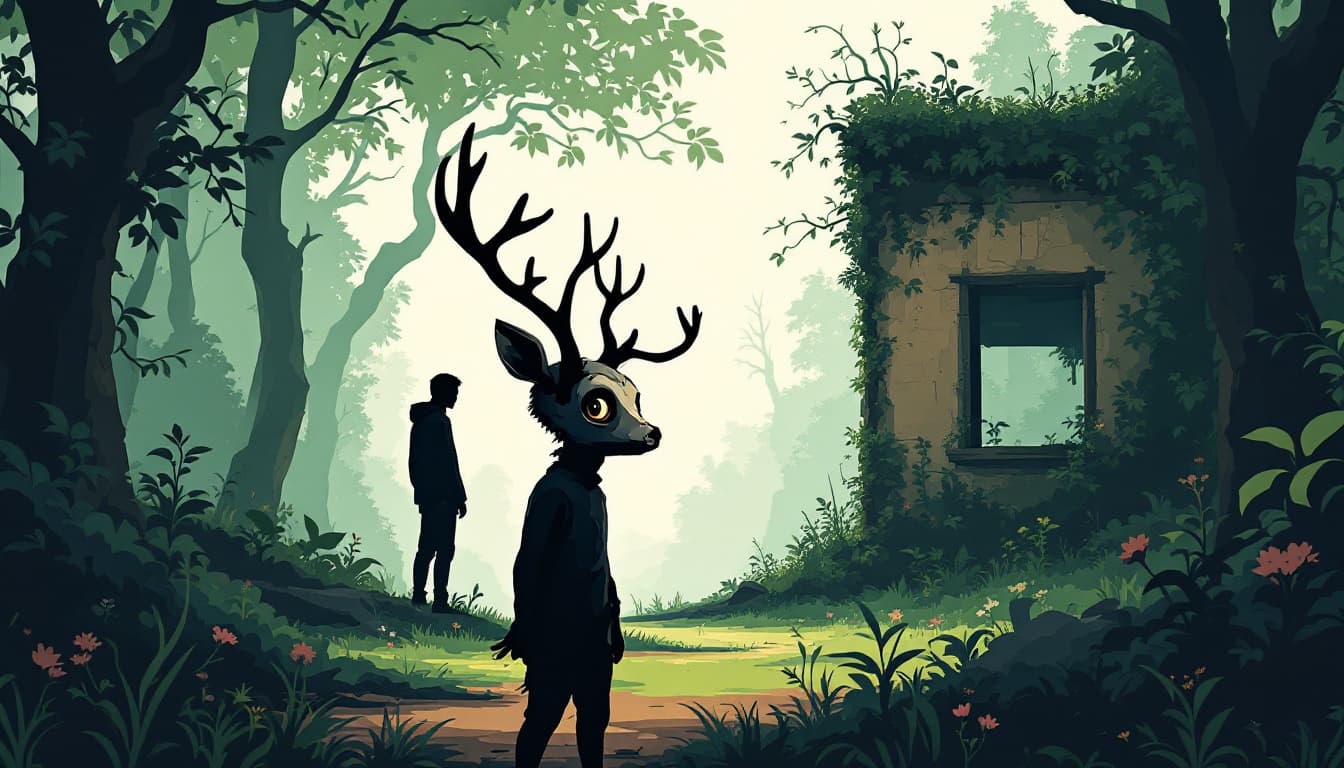
A decade after a pandemic called the Sick has reshaped human civilization, children are being born as hybrids — part human, part animal. Society, understandably, has not handled this well. Pure humans are dying; hybrids are feared, hunted, and corralled. Into this world comes Gus, a boy with antlers and the wide-eyed curiosity of someone raised in isolation by a fiercely protective father. When that shelter is taken from him, Gus heads into the wider world in search of answers about his origins, accompanied by a reluctant protector who would very much prefer not to be anyone's guardian.
The show's narrator frames all of this in the register of a children's adventure story told to frightened kids — which is simultaneously disarming and a little manipulative. You are being told, before a single scene plays, how to feel.
Craft: performance, direction, and tone
The production is genuinely beautiful. Mickle and his directors lean hard into the lush New Zealand landscape standing in for a rewilding North America, and there is real craft in the way the natural world creeps back through cracked pavement and rusted infrastructure. The color palette avoids the desaturated grey that plagues lesser post-apocalyptic productions; Sweet Tooth is green and gold and occasionally heartbreaking in its prettiness, which is entirely the point.
Christian Convery, who plays Gus, carries far more of the show than a child actor probably should. He is magnetic without being precocious — he plays genuine innocence rather than performed innocence, which is a harder thing to do. His antlers, achieved through a combination of prosthetics and effects, are used with intelligence; the show knows when to foreground them as a symbol of otherness and when to let them just be part of the boy. Nonso Anozie as his reluctant companion delivers grounded, laconic work that gives the show ballast whenever the whimsy threatens to float it into saccharine territory. Their dynamic is the engine of the season, and it runs reliably.
The supporting cast is more variable. A parallel storyline following a scientist and a woman searching for answers about the hybrids' origins is dramatically necessary but tonally awkward — it plays in a harder, more conventional thriller register that never quite integrates with the fairy-tale world Gus inhabits. When the show cuts between these threads, you can feel the edit straining. The villain infrastructure, too, is underwritten; there is a militia-style antagonist presence that functions more as a looming threat than a fully realized force, which keeps the stakes somewhat abstract.
What works and what doesn't
Sweet Tooth is at its best in small, quiet moments — a campfire scene that reveals character through gesture rather than exposition, a flashback that reframes everything you thought you understood about Gus's origin, a scene in an abandoned theme park that earns its melancholy without telegraphing it. Mickle clearly trusts stillness, and the show benefits when it slows down enough to let the world and its characters breathe.
What works less well is the pacing across the season's middle stretch, which sags as the show introduces more characters and locations without quite knowing what to do with the accumulation. The mythology around the Sick and the hybrids is deliberately parceled out — a sensible choice in principle, but the execution occasionally tips into vagueness that feels less like mystery and more like unresolved drafting. By the final episodes, threads that should cohere are still fraying at the edges.
The narration is also a genuine liability. It signals emotion rather than trusting the audience to feel it, and there are moments where a scene that would land cleanly is undercut by being told, at the same time, what it means. Post-apocalyptic fiction often struggles with the temptation to over-explain its own allegory; Sweet Tooth succumbs to that temptation more often than it should.
None of this is fatal. The show's warmth is genuine, not manufactured, and that is rarer than it sounds. It believes in the resilience of children, the possibility of chosen family, and the stubbornness of hope in genuinely bad circumstances — and it makes you believe in those things too, at least for the duration of an episode.
Who it's for
Sweet Tooth works best for viewers willing to accept a fairy-tale contract: you agree to meet the show's sentimentality halfway, and it agrees to give you real emotional stakes and occasional genuine darkness in return. Fans of Lemire's source material will find the adaptation affectionate if somewhat simplified. If you want something harder-edged and more rigorously plotted in the pandemic-apocalypse genre, you will be frustrated. If you want something that looks beautiful, cares about its central relationship, and leaves you more hopeful than you started, this is a reliable choice.

