
The Puzzle Box Opens
There's a particular kind of novel that operates less like a traditional narrative and more like an elaborate game — one whose pleasures come from the texture of the world-building and the momentum of the quest rather than from emotional depth or literary ambition. Ernest Cline's 2011 debut, Ready Player One, wears that identity openly and without apology. It is, in the best sense, a page-turner engineered with the precision of a theme-park ride. The question a critic should honestly ask isn't whether it aspires to be Gravity's Rainbow — it doesn't — but whether it succeeds on its own terms. Mostly, emphatically, it does.
The Premise
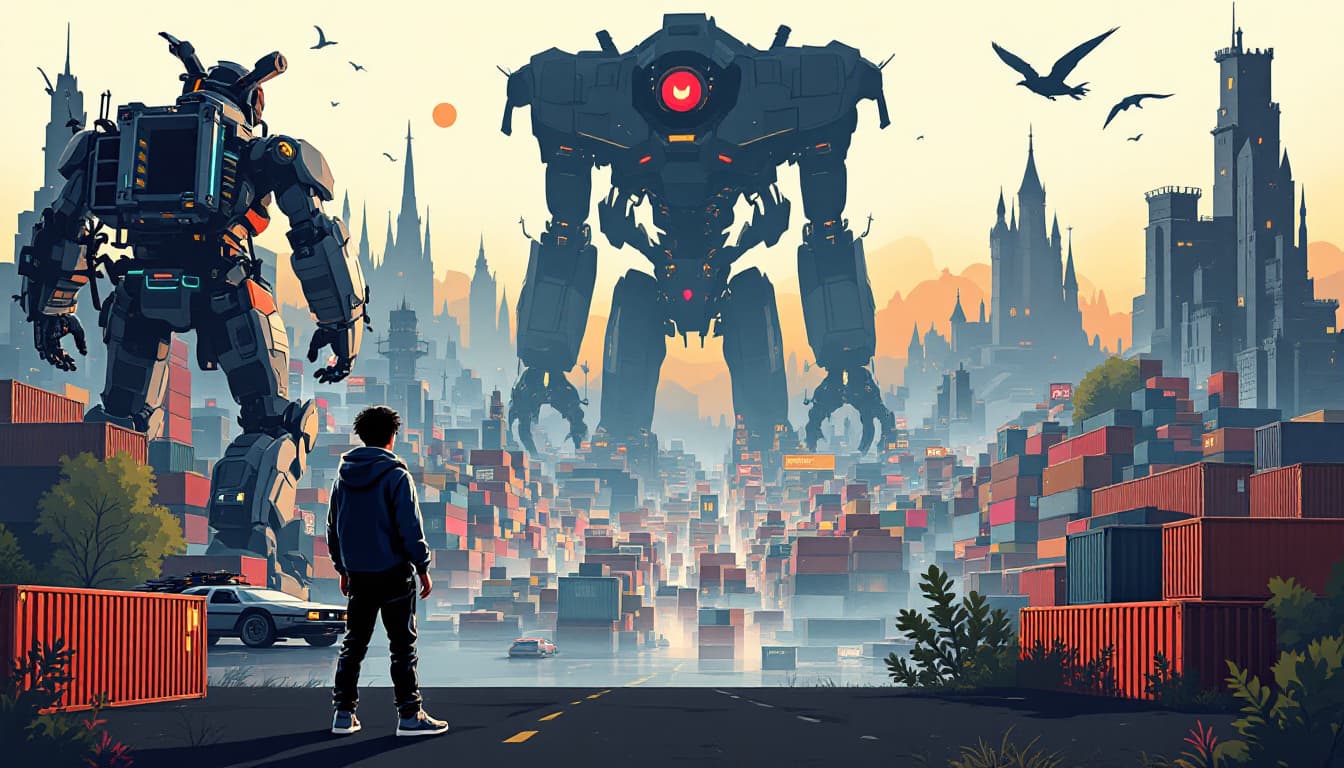
The near-future America of the novel is a country in managed decline — energy shortages, economic collapse, and social fragmentation have driven much of the population into the sprawling virtual-reality network known as the OASIS. Think of the internet, massively multiplayer gaming, and social media compressed into a single immersive universe where most meaningful human activity now takes place. When the OASIS's reclusive creator dies, he leaves behind an extraordinary will: hidden inside his vast digital world is an Easter egg, and whoever finds it first inherits his entire fortune and control of the network itself.
Our narrator, a teenage gunter (egg hunter) living in a trailer-stack outside Oklahoma City, becomes one of the first contestants to crack the opening puzzle — setting off a race against both fellow enthusiasts and a predatory corporation that wants to monetize the OASIS at any cost. The setup is economical and effective; Cline gets you into the chase quickly.
Craft and Construction
Cline's prose is workmanlike rather than beautiful. He writes in clear, functional sentences that prioritize velocity over style, and for this kind of novel that's largely the right choice. You are never confused, never bored, never lingering over a paragraph for its music. What he does exceptionally well is density of idea — the OASIS is so thoroughly imagined, so stuffed with consistent internal logic, that it achieves the rare feat of feeling like a real place rather than a backdrop. The rules of the world (economic, social, physical) are established early and honored throughout, which matters enormously in speculative fiction.
The novel's architecture is essentially a three-act puzzle: three keys, three gates, three escalating confrontations. This structure is rigid — perhaps too rigid — but it gives the story a satisfying momentum. Each puzzle sequence is built around a specific piece of 1980s pop culture, and Cline clearly did his homework. Whether he's reconstructing a specific Atari game, staging a scene from a beloved film, or embedding a riddle inside an album's lyrics, the research feels genuine rather than Googled. For readers who share that cultural DNA, these moments produce genuine delight — the literary equivalent of a perfectly placed Easter egg.
What Works, What Doesn't
The novel's greatest strength is also its most obvious limitation. The 1980s nostalgia is so specifically curated, so lovingly granular, that it reads like a secret handshake between Cline and a particular generation. If you grew up with Pac-Man high scores and VHS copies of John Hughes films, the book feels written for you personally. If you didn't, it can occasionally feel like being shown someone else's vacation slides — technically impressive, emotionally inaccessible. Cline is aware of this to a point; he builds the nostalgia into the plot rather than leaving it as mere decoration. But the risk remains that readers outside the target cohort will find certain set-pieces tedious rather than thrilling.
Characterization is the other genuine weakness. Our narrator is likable and clearly drawn, but he remains more avatar than person — we understand his obsessions perfectly and his interiority barely at all. The supporting cast, particularly the fellow gunters who become allies, are defined almost entirely by their functions in the plot and their pop-culture allegiances. The novel's antagonists, a corporate entity personified by a smoothly menacing executive, are effective but thinly sketched villains who exist mainly to generate stakes. The romantic subplot, while not unwelcome, resolves in ways that feel engineered rather than earned.
None of this is fatal — genre fiction has always traded character depth for plot propulsion — but it's worth naming honestly. When the novel pauses for emotional beats, you feel the machinery showing through in a way you don't during the action sequences.
Where Cline excels is in sustaining tension across a very long game. The final act is genuinely exciting, built on reversals that feel both surprising and logically inevitable. And throughout, there runs a more serious current than the premise might suggest: the dystopian backdrop isn't just set dressing. The OASIS is presented both as a marvel and as a symptom — a world so vivid and rewarding that the actual world has been allowed to rot. The novel doesn't belabor this point, but it doesn't ignore it either, and that restraint gives the entertainment some unexpected weight.
Who It's For
Ready Player One is ideal for readers who like their speculative fiction fast-moving, ideas-forward, and unabashedly fun. It rewards anyone with an affection for game design, 1980s popular culture, or the philosophical questions that gather around virtual worlds. Literary readers in search of prose style or psychological depth will find slim pickings. But readers willing to be swept along by a confident, inventive story told with obvious enthusiasm will have a very good time.

