
The Man Who Built Breaking Bad Tears the World Down
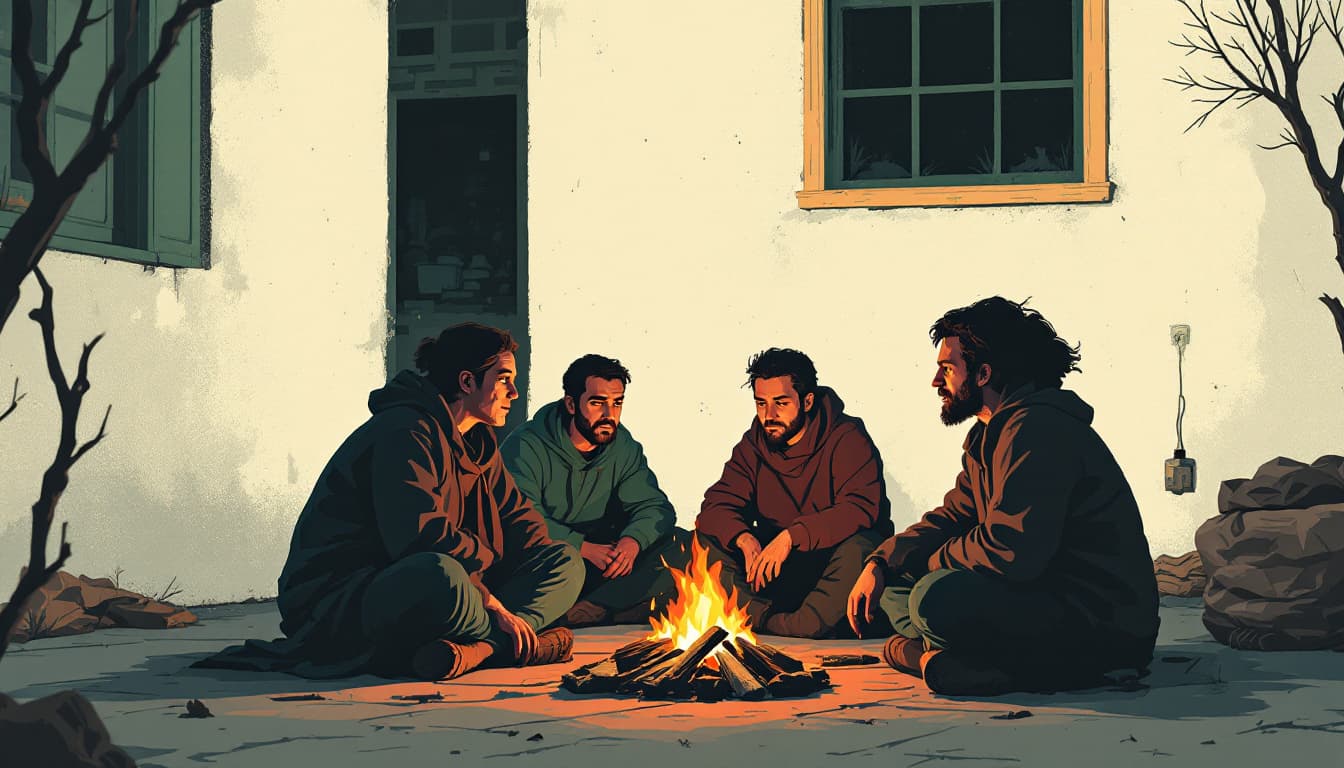
There's a moment — unhurried, almost casual — somewhere in the early run of Pluribus where a character pauses in the middle of a mundane, recognizable domestic ritual, looks out at a landscape that is no longer mundane or recognizable, and simply continues what they were doing. No swelling strings. No crash zoom. The world ended; the dishes still need doing. It is, in miniature, a perfect emblem of what Vince Gilligan is up to in his first major project since Better Call Saul wrapped: a post-collapse drama that is almost perversely uninterested in the apocalypse itself, and deeply, obsessively interested in the people left rummaging through its wreckage.
That Apple TV+ gave Gilligan the runway to do this — unhurried episode lengths, a limited-series structure, and the kind of production budget that means the ruined Americana on screen looks heartbreakingly real rather than conveniently art-directed — says something encouraging about what the platform is willing to back.
A World Remade, a Community Tested
Pluribus is set an indeterminate number of years after a cascading infrastructure collapse has fractured the United States into isolated pockets of settlement. The title refers to the remnant of the old national motto — e pluribus unum, from many one — and the show wears that irony deliberately. The drama centers on a mid-sized survivor community that has achieved something rare and precarious: functional governance, a food supply, rough rule of law. The central question isn't survival in the physical sense. It's survival of the social contract. What do you sacrifice to keep a community intact? Who decides? And what happens to the people who decide?
Gilligan, working with a writers' room he's described as the most collaborative of his career, resists the genre's gravitational pull toward warlordism and brutality porn. Violence exists in Pluribus, and some of it is genuinely shocking, but it is never the point. The show is far more interested in the committee meeting than the ambush.
Craft: Patience as a Storytelling Virtue
Direction across the season is assured and unusually consistent in tone — a notable achievement across a full prestige run. Gilligan himself helms the opener and the finale, and his fingerprints are unmistakable: the wide-angle compositions that make human figures look both small and significant against damaged landscapes, the long takes that force you to read faces rather than cut to reactions. The show has the confidence to be slow. Not every streaming drama earns that patience; Pluribus does, because the character work justifies every quiet scene.
The ensemble is doing something quietly extraordinary. The lead performance — anchoring the community's leadership — is layered in the specific Gilligan way: you understand every decision, even when you're horrified by it. There's a quality to the writing of these figures that recalls Walter White's tragic coherence, except here the show is more ambivalent about moral deterioration. Walter White was a case study. Pluribus is more like a referendum.
Supporting performances fill out a world that feels genuinely inhabited. A standout in the middle episodes is a character whose function in the settlement seems administrative until it doesn't, and the slow reorientation of how we read that person is a masterclass in withheld information deployed with precision rather than manipulation.
What Works, and What Occasionally Doesn't
The show's strengths are substantial. The writing trusts its audience with ambiguity in a way that prestige television often promises but rarely delivers. Moral positions are argued for genuinely by characters who hold them, not merely ventriloquized as counterpoint to the protagonist's obvious correctness. The community itself — its rhythms, its internal politics, its small economies of trust and favor — feels researched and lived-in.
Where Pluribus stumbles is in a secondary plotline, introduced around the season's midpoint, that tracks a group outside the main settlement. The intent is clearly to provide contrast and context. The execution is uneven. These sequences feel paced differently — more conventionally tense, more reliant on genre mechanics — and while they're never bad television, they sit slightly uneasily against the main drama's register. They occasionally feel like a concession to the network note that says but something has to happen, and Gilligan, to his credit, eventually folds this thread back into the main story in a way that partially redeems it. But those middle episodes drag in a way the rest of the show doesn't.
There's also a question about the show's ultimate willingness to follow its darkest implications to their conclusions. The finale is thematically rich and emotionally satisfying. It is perhaps slightly less brutal than the argument the show has been making for ten episodes might demand. Gilligan has earned enormous good faith, and the ending doesn't betray the story — but viewers who came prepared for The Road may find themselves watching something closer to Station Eleven in its final movement. That's not a fatal flaw. It may, in fact, be a choice that reflects the title's thesis. But it's worth naming.
Who Should Watch This
Anyone who found The Last of Us or Station Eleven emotionally compelling will find Pluribus even richer — less reliant on nostalgia mechanics, more interested in politics and ethics. Viewers who need kinetic plot momentum may find the pacing a genuine obstacle. This is a show for people who enjoy watching characters think. If you consider Better Call Saul's legal proceduralism its best feature rather than a detour, Pluribus was made for you.
It is, without much qualification, the best post-apocalyptic television drama in years.

