
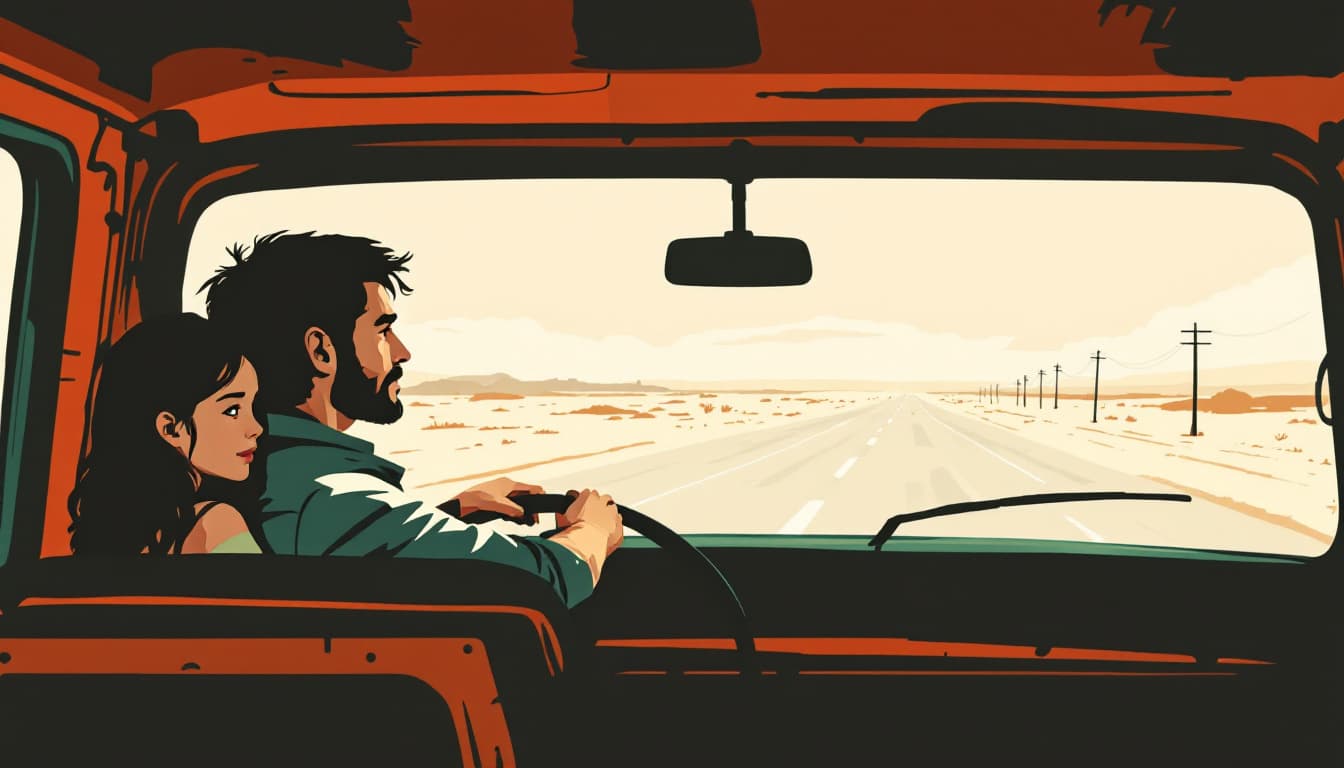
The quiet apocalypse
Not every end-of-the-world story wants to dazzle you with spectacle. Some of the most interesting post-apocalyptic films — The Road is the obvious touchstone — are essentially chamber pieces that use catastrophe as a pressure cooker for intimate human relationships. Casey Affleck's Light of My Life (2019) belongs firmly in that tradition: low-budget, deliberately paced, more interested in whispered conversation than in violence, and anchored by a relationship between a father and his young daughter that is, at its best moments, quietly devastating. The film isn't entirely successful, but its ambitions are honest and its best passages linger.
The premise
A plague has swept the world, killing almost all women. A man — known only as Dad — travels through a depopulated, wintry landscape with his daughter Rag, who is old enough to understand danger but young enough to still want bedtime stories. Because her survival depends on concealment, she passes as a boy. The world outside is male, desperate, and increasingly predatory. Dad knows it. Rag is beginning to understand it. Their entire existence is a negotiation between the need to hide and the impossibility of hiding forever.
It's a premise that carries obvious allegorical freight — about the value society places on women, about what men become without them, about the particular weight fathers carry when they know the threat to their daughters is, in the most literal sense, other men. Affleck is not subtle about this, but he's also not preachy. He lets the situation do most of the talking.
Craft: what Affleck gets right
The film opens with an extended sequence — nearly ten minutes — of Dad telling Rag a bedtime story, an improvised tale about Noah's ark reimagined for their world. It's a bravura piece of writing and performance: funny, tender, digressive, and completely believable as the kind of story a clever, loving father makes up on the fly for a child who keeps interrupting with questions. It establishes the relationship with a fullness that no amount of action-sequence shorthand could match, and it announces Affleck's confidence in his audience's patience.
Anna Pniowsky, who plays Rag, is remarkable. Child performances in survival dramas can tip easily into precocity or passivity; Pniowsky manages something rarer — a child who is watchful, intelligent, and genuinely present in every scene. Her chemistry with Affleck feels unforced and specific, the way real familiarity does. When she's frightened, you feel it. When she pushes back against her father's restrictions with adolescent irritation, that feels true too.
Affleck the director shows patience with landscape and silence in a way that suits the material. Cinematographer Adam Arkapaw — who has done remarkable work in television — shoots the Pacific Northwest forests as both sanctuary and threat, beautiful and cold. Scenes of father and daughter moving through empty terrain carry genuine unease without any of the genre signifiers (monsters, ruins, scavengers with face paint) that lesser films reach for.
What doesn't work
The problem is pacing in a more systemic sense. Restraint is a virtue until it becomes avoidance. Light of My Life spends a great deal of time in its midsection moving carefully from camp to shelter to threat and back again, and while each individual scene has merit, the cumulative effect is inertia. The film is around two hours long and would arguably be more powerful at ninety minutes. There are sequences that feel like Affleck the director trusts his atmosphere so thoroughly that he forgets to ask whether the narrative is actually moving.
The supporting cast — when other characters finally appear — is less successful. Male figures outside the central dyad exist mostly as ciphers or threats, which is thematically coherent but dramatically thin. A film genuinely interested in what patriarchy looks like after its logical extreme might have given us at least one man who complicates that picture more interestingly. The world Affleck builds feels real in texture but slightly schematic in sociology.
The third act, when danger finally becomes immediate and specific, is well-staged and tense. But it arrives with a suddenness that slightly misjudges how much goodwill the patient midsection has consumed. And the resolution — deliberately elliptical, in keeping with the film's tone — will frustrate viewers who have invested this much time in these two people. Some will find it appropriately honest; others will feel denied. I land somewhere in between.
Comparison and context
It is impossible to review this film without mentioning The Road (2009), which casts a long shadow over any father-child survival story. Light of My Life is gentler — less punishing, less mythic — and in some ways more emotionally accessible. But McCarthy's source material gave that film a moral architecture that Affleck's screenplay, for all its skill, doesn't quite match. Leave No Trace (2018), Debra Granik's film about a father and daughter living off the grid, is a useful comparison too: similar emotional register, similar patience with landscape, and arguably more fully realised as a complete work.
Who it's for
If you respond to quiet, character-driven survival drama and can accept a film that prioritises texture over propulsion, there is real reward here. Parents — particularly fathers of daughters — may find it hits harder than any of its action beats suggest. If your survival fiction needs momentum and incident, this will test you. Go in with realistic expectations.

