
The premise is as elegant as a doomsday clock
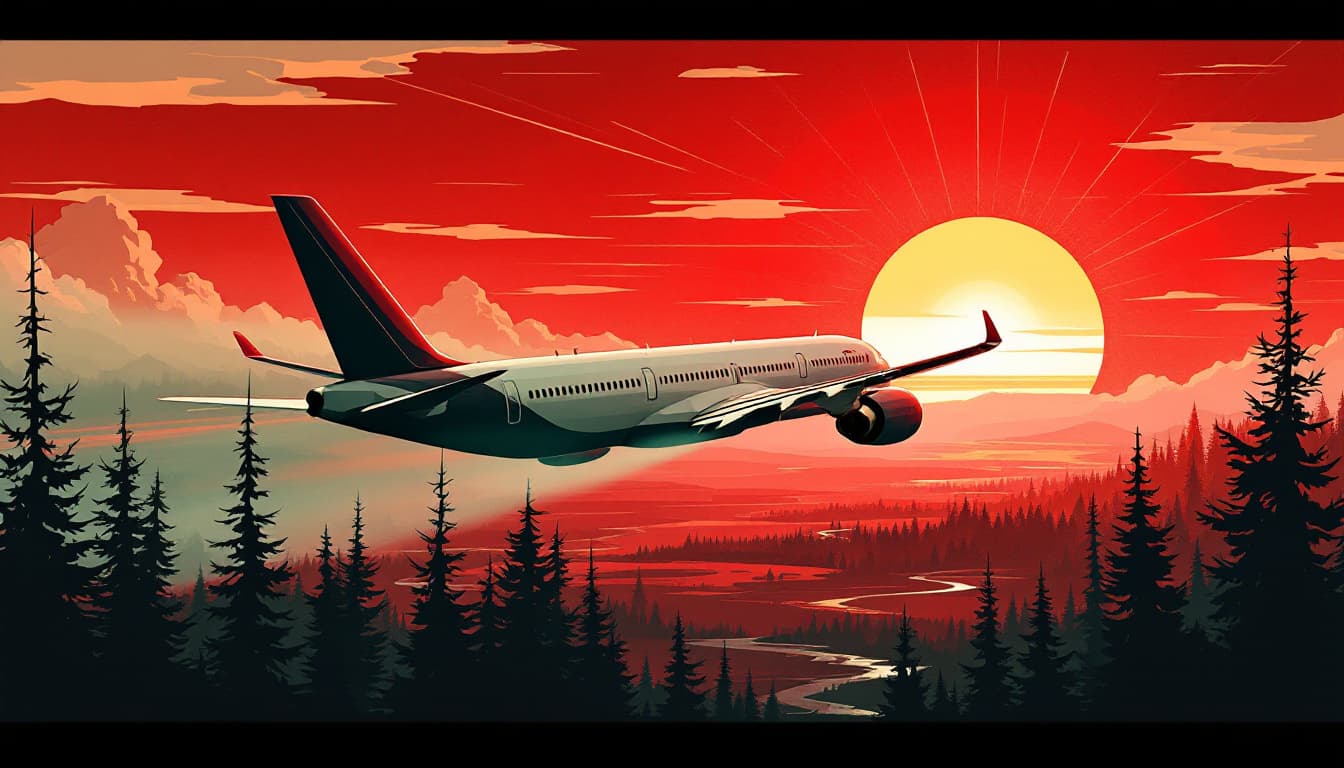
There is something wonderfully, almost classically elemental about the central conceit of Into the Night, Netflix's Belgian co-production that arrived in 2020 and quietly built a small but devoted audience. The sun has become lethal. Whatever catastrophe has altered its radiation, anything it touches dies — plants, animals, people — within minutes. The only refuge is darkness. And so a hijacked overnight flight out of Brussels becomes, improbably, humanity's last ark, racing westward to stay ahead of the dawn.
That is a premise you can explain in one sentence, and the show's best quality is that it never stops believing in it. In a genre crowded with slow-burn, mythology-heavy epics that mistake world-building for storytelling, Into the Night makes a different bet: it keeps moving, it keeps the stakes immediate, and it trusts the audience to fill in the corners. The result is a series that is, at its best, genuinely tense — and at its most frustrating, a reminder that narrative velocity is not the same as narrative depth.
What's actually going on
A NATO military officer, increasingly desperate and unhinged, forces his way onto a red-eye flight and diverts it at gunpoint. He knows what's coming. The passengers don't — not yet. What follows is less a hijacking drama than a survival procedural as the plane's crew, its frightened passengers, and its unstable new commander are forced into an uneasy coalition. They need fuel, they need landing strips, they need to keep making decisions in the dark — literal and figurative — about who to trust and how far to push the aircraft before dawn catches them.
The show is adapted from a Polish novel by Jacek Dukaj, and it wears its European co-production roots plainly. The passenger manifest is deliberately international — a Belgian soldier, an Italian flight attendant, a Turkish businessman, a young woman traveling alone, others — and much of the early dialogue crackles with the friction of people who don't share a language trying to survive together. It is, in this sense, a more cosmopolitan apocalypse than American audiences tend to get, and that specificity is one of the show's genuine assets.
Craft: where it earns its keep
The performances are a mixed but generally committed ensemble. Pauline Etienne as Sylvie, a flight attendant who gradually becomes the emotional and moral center of the group, is consistently good — understated where others overplay, grounded when the script tempts her toward melodrama. Laurent Capelluto as the volatile hijacker brings a quality of coiled, sweating desperation that makes him both threatening and pitiable; it is a harder balance to strike than it looks.
The direction, split across the two-season run, leans into confined spaces smartly. The aircraft cabin is the obvious constraint, and the production makes it feel both claustrophobic and dynamic — the lighting shifts as dawn approaches create a visual shorthand for dread that works without becoming repetitive. When the action moves to the ground — abandoned airstrips, military bunkers, depopulated European towns — the geography of the apocalypse opens up briefly before contracting again, which is a good structural rhythm.
Pacing is the show's clearest strength and, paradoxically, also a source of its problems. Episodes are short — often under thirty minutes — which keeps things propulsive but leaves almost no room for the quieter character work that would make you genuinely care about who survives. We learn fragments about the passengers' lives, their reasons for being on the plane, their relationships left behind. But fragments are what they remain.
What works and what doesn't
Here is the honest accounting: Into the Night is best understood as a thriller rather than drama. The mechanics of survival — where to land, how to negotiate with hostile survivors on the ground, whether to trust the information they receive — are handled with genuine intelligence. The show respects the logic of its own premise well enough that it rarely cheats, and there is real pleasure in watching a room full of frightened people try to reason their way toward another day of darkness.
What it cannot consistently deliver is emotional consequence. Deaths occur, alliances shift, betrayals unfold — and the show processes them too quickly for weight to accumulate. A second season extends the premise to a bunker setting, which is a logical evolution but also a concession that the original engine had limited range. The ensemble expands, new conflicts are introduced, and the show becomes busier without becoming richer.
There is also a tension, never quite resolved, between the show's instinct for moral ambiguity and its need for villains. The hijacker figure is handled with enough complexity to avoid caricature, but as the series continues and new antagonists enter, the characterization flattens. Survival fiction is at its most interesting when it refuses easy answers about human nature under pressure. Into the Night flirts with that refusal without fully committing.
Who should watch it
If you are looking for something to absorb a weekend afternoon — smart enough to engage, short enough to sprint — Into the Night fits the bill reliably. It is a good genre exercise, executed with more craft than most streaming survival fare, and its six-episode first season is nearly self-contained enough to treat as a standalone film. The concept is strong, the tension is real, and the European setting gives it a texture that distinguishes it from its American counterparts.
Go in expecting prestige drama and you will be disappointed. Go in expecting a well-made thriller that burns fast and leaves little residue, and you will find something that earns its keep on precisely those terms.

