
The book that made podcasting scary
Scott Sigler has one of the stranger origin stories in modern publishing. He built his audience by releasing Infected chapter by chapter as a free podcast, amassing tens of thousands of listeners before a major publisher came calling. That grassroots history matters because it shaped the book profoundly: every chapter has to earn the next one, has to end on a hook visceral enough to keep a listener coming back. What could easily have become a collection of cheap cliffhangers is instead a tightly wound machine of escalating dread — and that is Sigler's considerable achievement.
What it's about
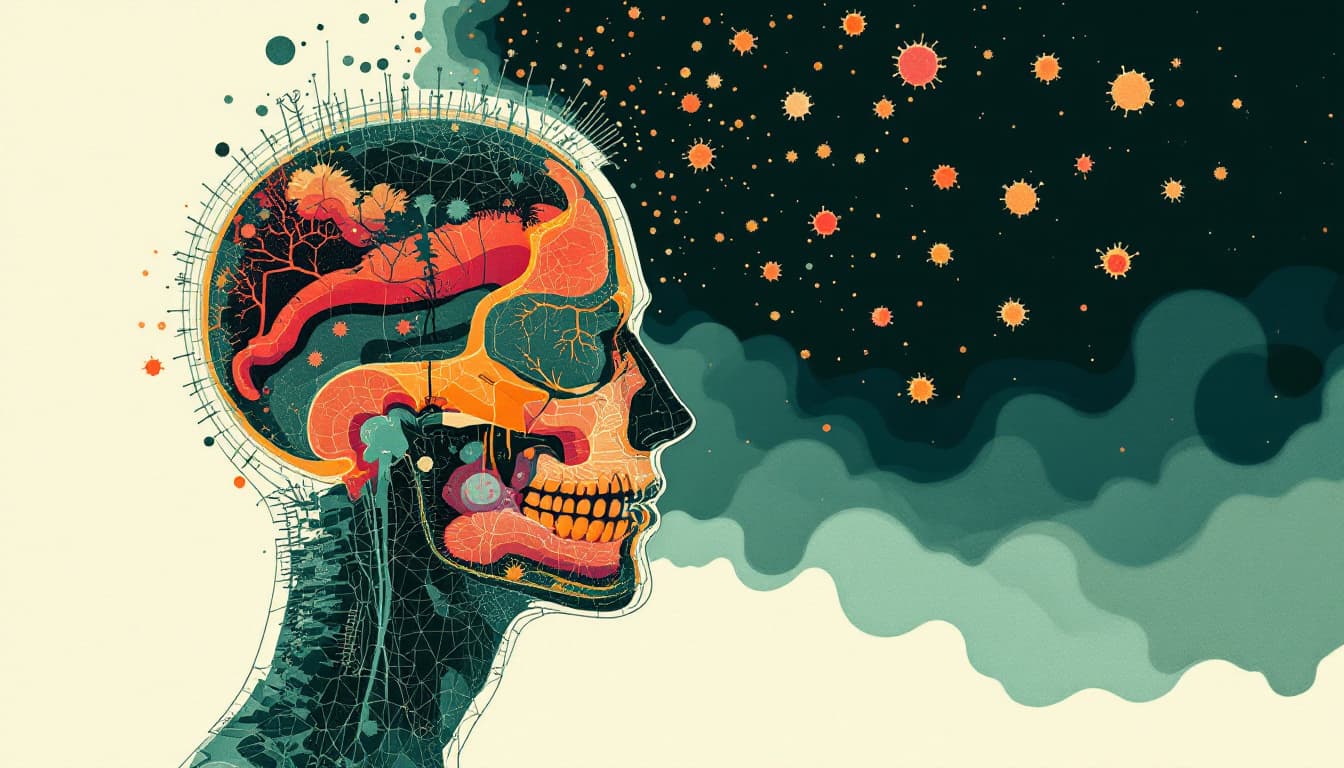
The premise sits at the intersection of pandemic thriller and cosmic horror, and Sigler navigates that junction with real confidence. Something is infecting people across America. The infected don't just get sick — they get changed, behaviorally and physically, in ways that are disturbing before they become catastrophic. The novel follows two converging threads: a government epidemiologist racing to understand the outbreak before it spirals beyond containment, and a former college football star named Perry Dawsey who discovers, to his mounting horror, that he is himself infected.
That dual structure is smarter than it first appears. The government thread gives Sigler room to establish scientific credibility — the procedural details feel grounded, the bureaucratic friction feels real — while the Dawsey thread is where the book truly lives.
Craft: character, prose, and pacing
Perry Dawsey is the engine that drives Infected from genre exercise to something genuinely memorable. He is not a conventional horror protagonist: he is large, physically capable, deeply damaged by an abusive childhood, and possessed of a volcanic anger he has spent years trying to manage. When the infection begins its work on his body and mind, Sigler is careful to make us uncertain, for quite a while, whether what Perry is experiencing represents the infection talking or simply Perry at his worst. That ambiguity is the novel's most sophisticated move, and Sigler sustains it longer than you'd expect.
The body-horror sequences are extraordinary — and I use that word deliberately, not as a euphemism for "gross." They are gross, often almost unbearably so, but they are also grounded in a specific, almost clinical imagination that makes them feel plausible in the worst possible way. Sigler clearly did his homework on biology and parasitology, and he uses that knowledge to construct scenarios that work on you like a slow poison. You find yourself reading passages through narrowed eyes, not because the writing is bad but because your body is responding to what your brain is processing.
The prose itself is efficient rather than literary — Sigler is not interested in sentences you linger over. He is interested in momentum, in the controlled release of information, in the ratcheting up of stakes. Within those self-imposed limits, he is very good. Dialogue crackles. Action sequences are spatially clear without becoming clinical. And he has an instinct — rare and valuable — for knowing exactly when to pull back and let the reader's imagination do the heavy lifting.
What works and what doesn't
What works, overwhelmingly, is the Dawsey material. It is easy to imagine a lesser writer turning Perry into a simple everyman victim, or alternatively into a badass who triumphs through toughness. Sigler does neither. Perry's toughness is real, and it matters, but it is also a liability — a blunt instrument applied to problems that resist blunt instruments. His backstory doesn't feel grafted on; it feels load-bearing. By the time the novel reaches its genuinely harrowing mid-section, you understand Perry completely, which makes what happens to him far more affecting than you signed up for when you opened a book with a biological horror premise.
The government procedural thread is serviceable but thinner. The scientists and agents are competent sketches rather than full characters, and while the procedural details are convincing, the emotional stakes on that side of the story never quite match what Sigler achieves with Perry. This is a common structural problem in dual-narrative thrillers — one thread simply tends to be more alive than the other — and Infected is not immune. Readers who find themselves skim-reading the government chapters to get back to Dawsey should not feel guilty about it.
There are also moments where Sigler's pacing instincts, so reliable throughout, tip briefly into excess. A small number of the horror set-pieces run a beat or two longer than they should, diluting their impact slightly. And the novel's ending, while satisfying within the rules Sigler has established, arrives with a finality that closes some doors perhaps too firmly — an observation that becomes moot if you continue into the sequels, which presumably pick up the threads.
Who it's for
If you have any tolerance for body-horror and you enjoy thrillers with genuine scientific texture — think early Michael Crichton with the dial turned toward darkness — Infected will reward you handsomely. It is emphatically not for the squeamish; Sigler is committed to making you feel the physical reality of what he's describing, and he succeeds. But readers who stuck with The Road, who made it through the more harrowing stretches of Station Eleven, who found themselves drawn into the visceral dread of something like The Andromeda Strain — those readers will find here a writer operating at the top of his game, delivering exactly what the premise promises and then a little more.
It's also, quietly, a study in how trauma shapes a person's capacity to survive, which gives it more emotional weight than its elevator pitch suggests.

