
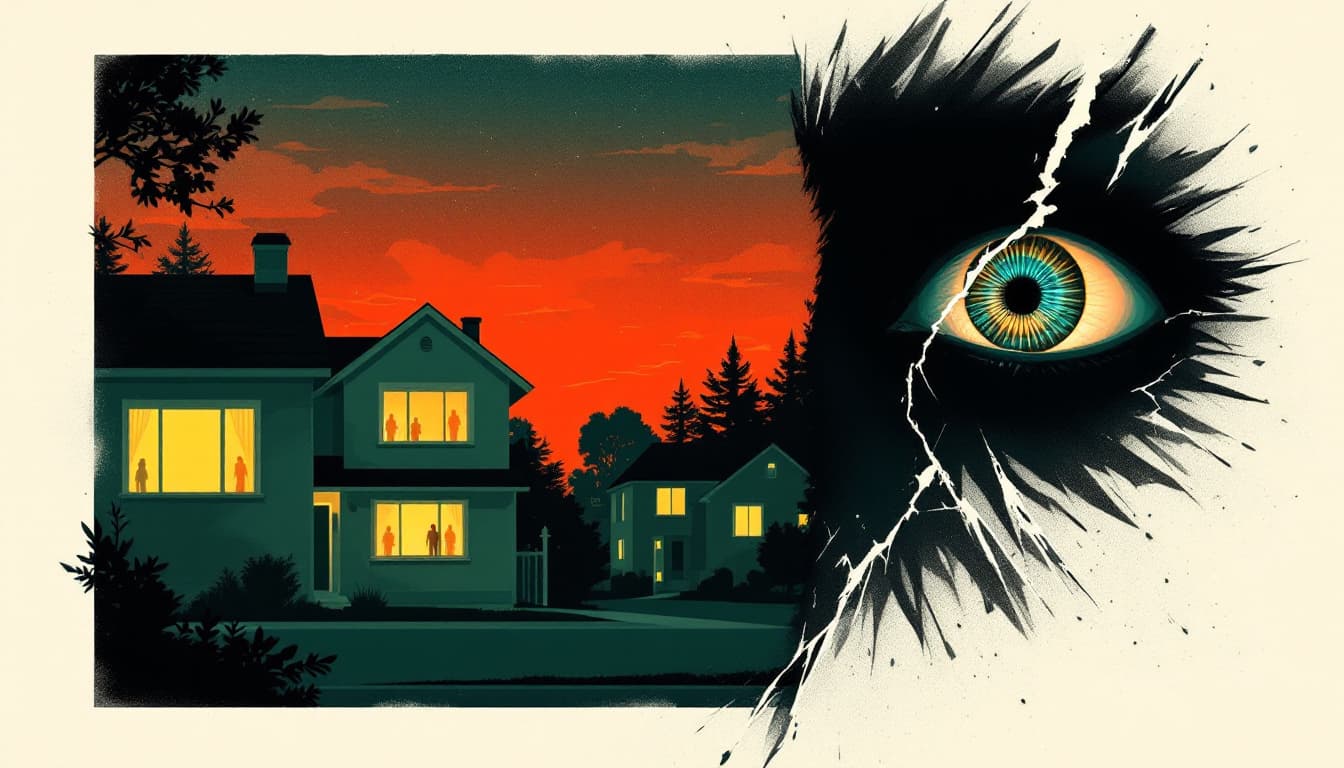
A film that knows one good trick
There's a particular kind of science fiction film that lives or dies by its central idea — the kind where you sense, about halfway through, that the screenwriters fell so deeply in love with their twist that they forgot to plan what comes after. Ben Young's Extinction, released on Netflix in 2018, is that film. It is competently made, genuinely surprising at the right moment, and ultimately a little hollow. Which puts it in distinguished, if frustrating, company.
The setup
Michael Peña plays a factory worker and family man in a near-future city who is tormented by recurring nightmares — vivid, violent visions of an invasion that his wife (Lizzy Caplan) worries are consuming him. He's withdrawn, distracted, struggling to be present for his two young daughters. Then the invasion he's been dreaming about actually begins. What follows is a harrowing chase-and-hide scenario through a devastated urban landscape as the family tries to survive.
That's all you need to know going in. The film's marketing deliberately withholds the pivot at the story's centre, and the right call is to watch with as little foreknowledge as possible. What I can say is that the premise is considerably more interesting than it initially appears, and the film earns a real moment of reorientation somewhere in its second act.
Craft and performances
Peña, best known for comic-relief roles in the Ant-Man films and End of Watch, is doing something more earnest here. He carries the film's early, quieter domestic tension well — the haunted quality he brings to the nightmare sequences is understated and effective, and he resists the temptation to play his character as simply neurotic. There's a heaviness to him that reads as genuine rather than performed. Caplan is underused, which is a recurring problem with the script: she's a capable, intelligent presence who the film keeps sidelining precisely when you want her perspective.
The action sequences, when the invasion begins, are directed by Young with real energy. Young made his name with Hounds of Love, a deeply unsettling Australian thriller, and he brings a similar commitment to spatial geography here — you always know roughly where characters are in relation to the threat, which sounds basic but is rarer than it should be in this genre. The grey, brutalist production design gives the city an appropriately alienating quality, and the aliens themselves, initially obscured and better for it, have a menace that the film wisely doesn't rush to explain.
The pacing of the first act is the film's strongest stretch. Young lets dread accumulate slowly before opening up into the invasion itself, and there's a sustained sequence in the family's apartment building — hiding, listening, making terrible decisions in the dark — that is legitimately tense. These are the twenty minutes or so that justify the film's existence.
What works and what doesn't
The twist, when it comes, is the best thing in the movie. It recontextualises everything you've watched and does so with genuine economy — a few lines of dialogue, a visual shift, and suddenly the emotional stakes are reconfigured. It's the kind of reveal that rewards a second viewing because it changes the meaning of the opening scenes entirely.
The problem is what comes after. The film's final third becomes increasingly talky and increasingly reliant on exposition to explain what the second act revealed. Characters who should be acting begin explaining, and the film's philosophical ambitions — which are real, if modest — get buried under the need to tie things up. There's a conversation late in the film that tries to carry the weight of everything the action sequences gestured at, and it sags under the load. The emotional resolution is rushed precisely because the conceptual one is so laboured.
The script also has a persistent habit of neglecting its supporting characters. The two daughters exist almost entirely as stakes — things to be protected — rather than people, which is a wasted opportunity given that the film's central concern is, at least nominally, about what we owe our families and what it means to build a life in the shadow of violence. That theme is there, but it's handled with more bluntness than the premise deserves.
Lizzy Caplan deserved better. That sentence could appear in more reviews than it does.
Who it's for
Extinction works well enough as a single-sitting Netflix watch — it's tight at around ninety minutes, it moves, and the central idea is genuinely inventive. If you're the kind of viewer who enjoys sci-fi that prioritises concept over spectacle, and you're willing to accept an uneven final act as the price of admission, you'll find enough here to satisfy. It's not a film you'll return to for its emotional depth, but it's a film you might recommend to someone who enjoys a clean mid-film surprise.
It sits comfortably alongside the mid-tier of science fiction streaming releases — smarter than most, less fully realised than the best. A respectable effort that doesn't quite become what it promises.

