
The apocalypse as slow puncture
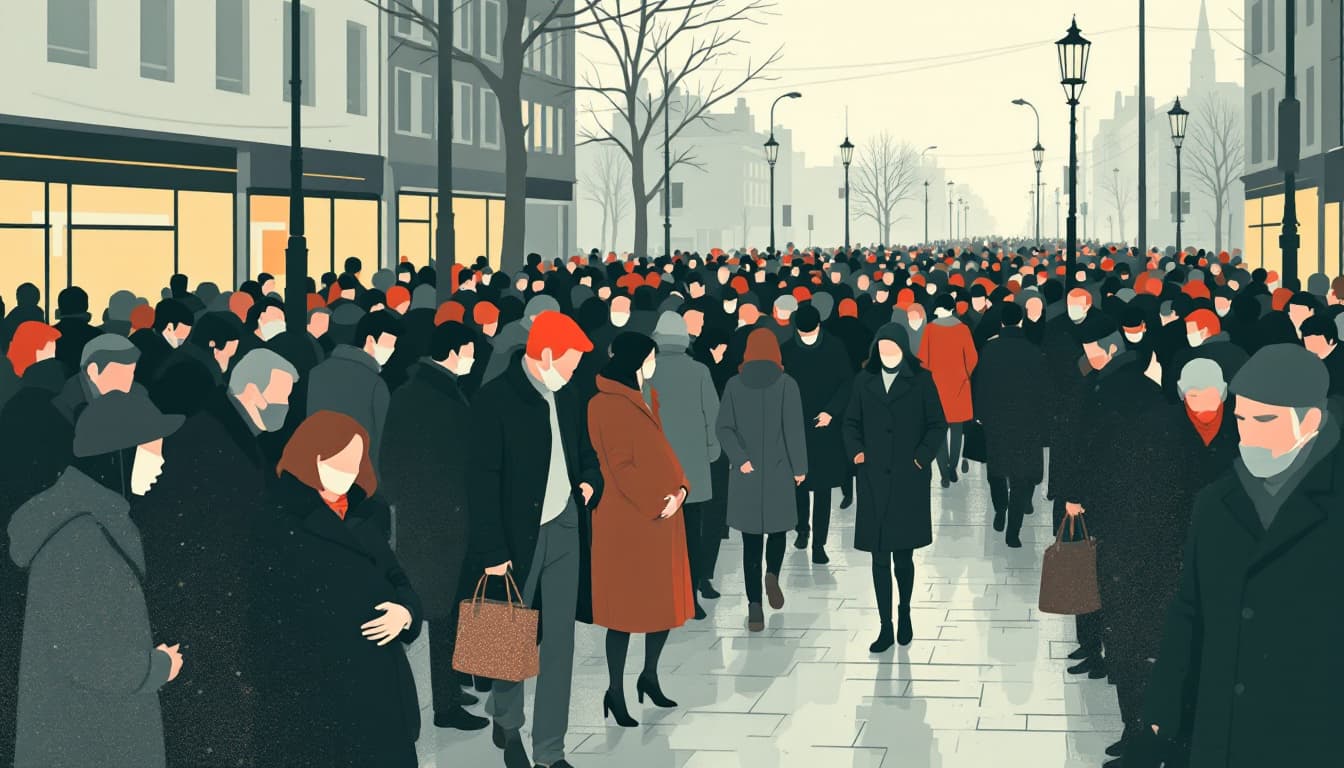
Most disaster films destroy the world in act one and then spend two hours rebuilding it. Alfonso Cuarón's Children of Men — now twenty years old and not one day less powerful — does something far more uncomfortable: it catches civilisation mid-collapse, in that grinding intermediate zone where systems still nominally exist but the will to maintain them has quietly evacuated. There are still governments, still bureaucracies, still a BBC radio signal. But the refugees are being herded into cages, the countryside is burning, and humanity hasn't produced a child in eighteen years. Not a bang. Not quite a whimper. Something more like a long, terrible exhalation.
That premise — global human infertility, cause never explained — might read on paper as a high-concept hook. On screen, in Cuarón's hands, it becomes the emotional architecture for something much more serious: a film about what people are actually made of when continuity with the future is severed.
The premise
The story follows Theo Faron, a civil servant in a 2027 Britain that has lurched toward authoritarian xenophobia in response to the wider world's collapse. Britain functions as a grim lifeboat state, brutalising immigrants, papering the national mood with propaganda that encourages citizens to feel lucky simply to be enduring. Theo is a man who has given up — on politics, on grief, on himself. He is pulled, not entirely willingly, into a mission to protect a young woman whose situation could theoretically change everything. The less said about the specifics, the better. The film earns its revelations carefully.
Craft: what Cuarón and his collaborators built
The technical achievement of Children of Men is discussed so often it risks becoming a cliché, but it genuinely cannot be overstated. Cuarón and his late cinematographer Emmanuel Lubezki constructed several extended single-take sequences — most famously a close-quarters urban battle in the film's final act — that rank among the most astonishing pieces of sustained filmmaking of the century so far. There's one particular sequence in a car that requires you simply to pause and ask how it was done. The point isn't showing off; it's that the camera's refusal to cut away creates an unbearable intimacy. You cannot blink out of the discomfort. There is no editorial rescue.
But pure technique in service of nothing would be mere spectacle. What Cuarón does with that technique is consistently, quietly moral. The film's colour palette shifts — early scenes are desaturated to a kind of institutional grey-green, but as Theo's investment in the mission grows, something almost imperceptibly warmer enters the frame. It isn't hope exactly. Call it the visual grammar of caring again.
The performances are exceptional across the board. The lead carries the film's essential task — playing a man rediscovering purpose — without ever tipping into sentimentality or heroism-movie cliché. The supporting cast, including a memorably strange and funny performance from a legendary British actor playing a hippie recluse deep in the countryside, provides both tonal relief and emotional anchor. The film knows when to breathe.
What works and what doesn't
What works is almost everything. The world-building is achieved almost entirely through texture rather than exposition: a chained dog, a cage bus, a graffitied wall, a classroom photograph. You absorb the state of this Britain the way you absorb the state of a room — by what's been left out as much as what's present. The politics are legible without being didactic. Britain's anti-immigrant regime carries clear contemporary resonances, but the film is careful not to reduce its human characters, on any side of the conflict, to mere symbols.
The action sequences, when they arrive, are visceral without being aestheticised. Violence here has weight and mess and consequence. People don't dodge. They're caught.
Where the film is slightly less certain is in its handling of the resistance movement subplot, which operates under some fairly convenient thriller logic. Characters' motivations shift in ways that the film needs more time to develop than it allows itself. And the theological undertow — the film is steeped in imagery of nativity, sacrifice, and deliverance — occasionally tips from suggestion into underscoring, moments where Cuarón seems momentarily unsure whether his audience will pick up what he's laying down and applies a little too much pressure. These are minor complaints against a film that otherwise trusts its audience completely.
The ending — which I will not describe — manages a genuinely difficult thing: it is neither falsely optimistic nor grimly defeatist. It simply stops at the right moment and leaves the essential question in your hands. That takes courage.
Who should watch this
Children of Men is for viewers who want science fiction that earns its premise — who believe that the genre at its best is really about the present moment examined under pressure. It is not comfortable viewing. There are scenes of refugee suffering that, in 2026, carry meanings Cuarón could only partially have intended in 2006. But discomfort, here, is the point. The film asks what we would do, what we would become, when the abstraction of "the future" is removed and all that remains is right now and the person in front of you.
That is not a question with an easy answer. Children of Men doesn't pretend it is.

