
A different kind of zombie show
Zombie fiction, by 2019, had accumulated so much mythology that newcomers almost needed a glossary. The Walking Dead had spent nearly a decade building political allegories and sprawling ensemble drama around its undead. Z Nation went comedic and self-aware. The genre had grown comfortable with itself, which is generally when a genre starts to die.
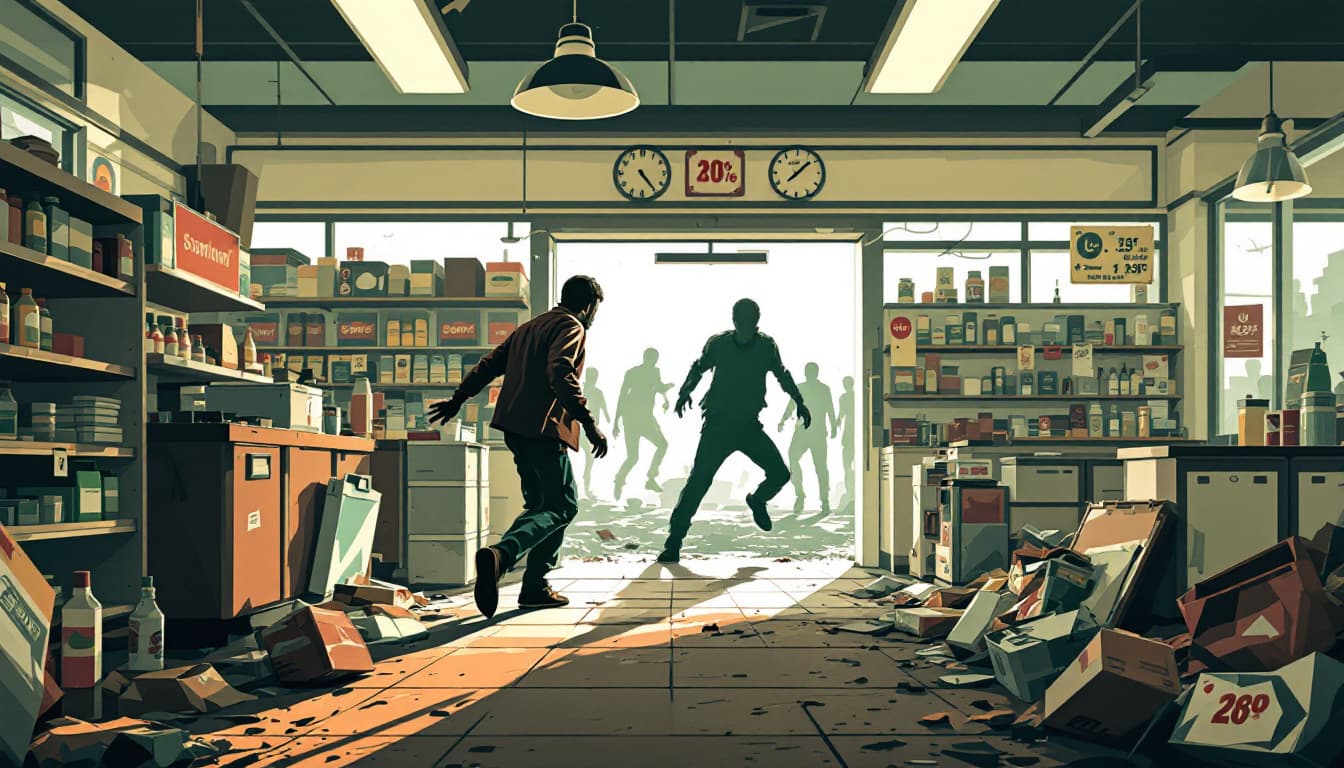
Black Summer arrives as a deliberate corrective. Created by John Hyams and Karl Schaefer for Netflix — loosely positioned as a prequel to Z Nation though it shares almost nothing in spirit — the show is set in the first savage weeks of a zombie outbreak, when no one yet knows the rules, society hasn't had time to organize a response, and every single human being on screen is operating purely on adrenaline and panic. It is a show almost militantly uninterested in world-building. There is no exposition about what caused the outbreak. No scientist character dispensing theory. No map of safe zones. Just running, hiding, shooting, and dying.
That discipline is both its greatest strength and the source of its limitations.
The premise
A mother is separated from her daughter in the chaos of evacuation. The daughter is loaded onto a bus headed for a stadium — a rumored safe zone. The mother sets out to find her. Along the way she falls in with a small, shifting group of survivors, none of whom know or trust each other, several of whom don't share a language. The destination is simple. The path is anything but.
That's essentially it. Black Summer is not interested in complicating its premise with subplots and mythology. It is almost stubbornly a chase story, and its eight-episode first season functions less like a conventional TV arc and more like a series of linked survival short films, each built around a discrete location or situation: a neighborhood, a school, a diner.
Craft: direction, pacing, tone
This is where the show genuinely earns attention. Director John Hyams — who has a background in action films — brings a kinetic, almost documentarian visual sensibility to the material. The camera feels handheld without being nauseatingly shaky. Long takes track characters through spaces in ways that force you to keep counting who's in frame, who's fallen behind. The editing is occasionally disorienting in ways that seem intentional: time jumps, repeated scenes from shifted perspectives, chapter-title cards that create an almost literary structure within episodes. It's formally adventurous in small ways that accumulate into something distinctive.
The zombies themselves are fast — genuinely fast, not the shambling crowd of classic horror — and the show uses this to devastating effect. One of the series' great achievements is in how it handles the transition from human to zombie. The interval is almost nothing. A person is bitten; a person runs; a person turns. The speed collapses any hope of moral deliberation. You cannot sit with someone through a long transformation and grieve. The show is structured around that cruelty.
Performances are largely from unfamiliar faces, which helps considerably. Jaime King anchors the early episodes with a performance that is almost entirely physical — she is frequently filmed from behind, running, and the show trusts that the body under pressure tells us everything we need to know. The ensemble work is effective precisely because these characters don't cohere into a warm group. Distrust is the baseline. People lie to each other constantly and reasonably.
What works, what doesn't
The first four episodes are extraordinary by genre standards. The school sequence in particular — tense, sustained, spatially inventive — is among the best zombie set-pieces in recent television. Hyams uses architecture beautifully, turning corridors and locked doors into instruments of escalating dread. The silence the show deploys is unusual; where most horror uses a swelling score to cue fear, Black Summer frequently just... quiets down, which is more frightening.
The back half of the season loses some of this focus. As the show moves toward its stadium destination, the pacing becomes uneven, and a few episodes feel like they are marking time between action beats rather than building toward something. Some characters who earn our attention early are shuffled offscreen abruptly — which can be read as brave realism, but occasionally just feels like the writers wrote themselves into a corner.
The language barrier storyline — several characters don't speak English, and translation is absent — is handled with admirable commitment for most of the season, only to be partially abandoned when plot convenience requires communication. This inconsistency is noticeable.
Season two, released in 2021, expands the canvas but arguably dilutes what made the first season special. The stripped-down claustrophobia gives way to something more conventionally episodic. The show seems, in its second outing, less certain of what makes it different.
Who it's for
Black Summer is best suited to viewers who are already genre-literate and specifically fatigued by the slower, lore-heavy end of zombie fiction. If you want character depth built over seasons, political allegory, or a mythology you can theorize about between episodes, this is the wrong show. If you want eight hours of sustained, muscular tension built on smart direction and committed performances, it repays the investment handsomely — particularly that first season.
It is not a comfortable or emotionally generous watch. There is no humor to speak of, little sentimentality, and the show's moral universe is relentlessly grey. People do terrible things for understandable reasons and sometimes inexplicable ones. That refusal to reassure the audience is genuinely admirable, if occasionally exhausting.

