
The terror of not knowing
There is a particular species of dread that comes not from the monster you can see but from the one you cannot identify in time to act. Kathryn Bigelow has built her best work around exactly that kind of fear — the IED under the road in The Hurt Locker, the intelligence gap at the center of Zero Dark Thirty — and her 2025 film A House of Dynamite refines that obsession to something almost unbearably pure. A nuclear weapon is inbound. No one knows who launched it. And the window to respond is closing.
That premise is not new. What Bigelow does with it is.
Seventy-two minutes, three rooms, no answers
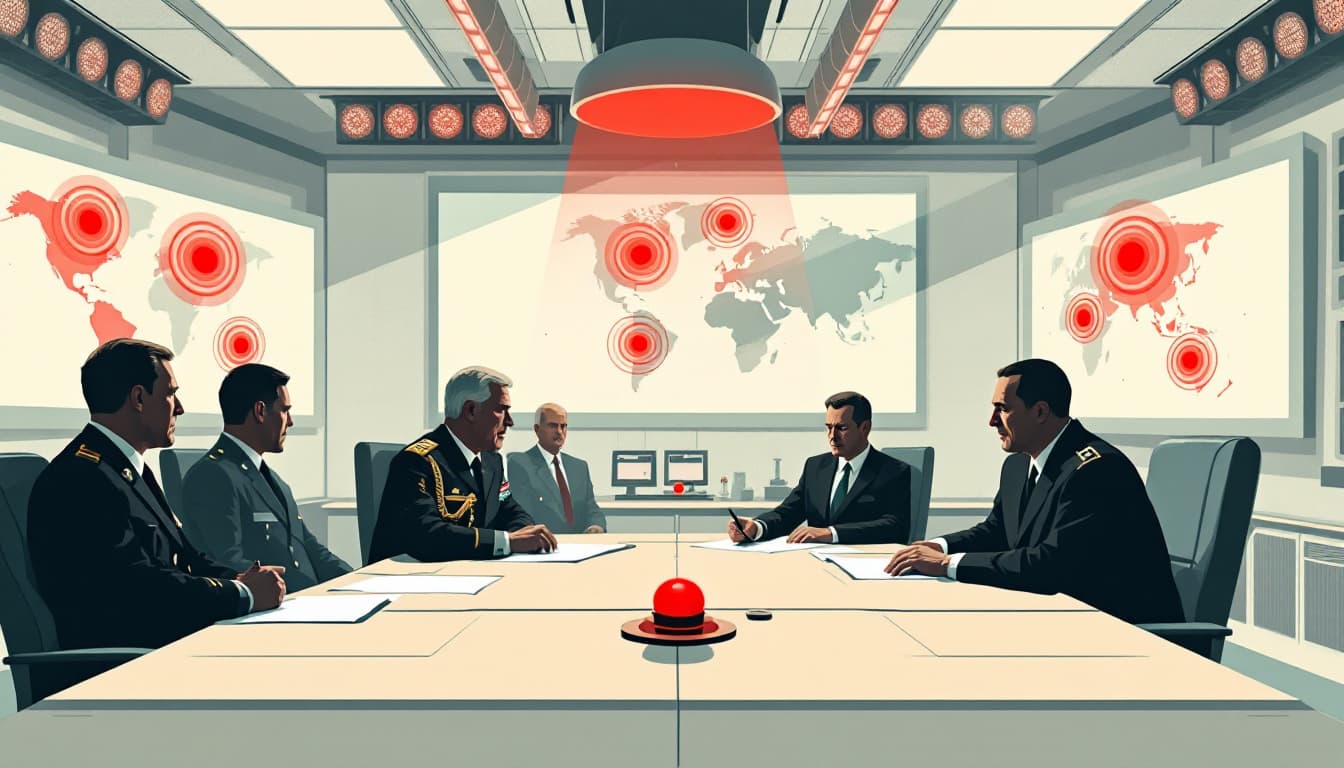
The film confines itself almost entirely to a single crisis: an unattributed ballistic missile launch detected over the Pacific, with a projected impact zone that could encompass one of several major cities. The story is told in overlapping segments from the perspectives of different decision-makers — a president, a secretary of defense, a foreign counterpart on the other end of a secure line, and the uniformed officers whose job is to translate political authority into launch codes. Each segment covers roughly the same window of time, returning to the same horrible juncture from a different angle.
The structure is not gimmick. Bigelow and her screenwriter are making an argument: that the same seventy-two minutes look completely different depending on where you stand, what information you have, and what you've been asked to protect. A decision that looks reckless from one perspective looks like the only rational option from another. This is the film's core moral insight, and it earns it.
Craft: performances and the procedural machine
The ensemble is the engine, and it runs remarkably clean. The standout performance comes from whichever actor is occupying the president's chair in a given scene — the film has the wit to cast someone who projects exhausted competence rather than cinematic gravitas, and the effect is deeply unsettling. This isn't a president who delivers stirring speeches; this is a person doing a job that has suddenly become impossible. The body language alone — the slightly-too-long pause before answering a general, the hand pressed flat on the conference table like someone trying to stop themselves from shaking — is more frightening than most action sequences.
The supporting cast matches the material. The military advisors are written and played with genuine procedural specificity; they don't behave like thriller archetypes but like people who have rehearsed this nightmare a hundred times and are now discovering that the rehearsal didn't cover everything. One quietly devastating exchange — a two-hander between a senior general and a much younger targeting officer — accomplishes more in three minutes than most films manage in an act. No raised voices. No heroic monologue. Just two people trying to determine whether a course of action is lawful and realizing the question may not be answerable in the time available.
Bigelow's direction is characteristically kinetic but disciplined. She resists the temptation to use the camera to tell you how to feel. The editing is tight without being frenetic — she understands that genuine suspense requires room to breathe, that the cut to a clock means nothing if you haven't first made the audience forget to watch the clock. The production design deserves special mention: the situation rooms, the secure communications setups, the whole physical grammar of crisis management feels painstakingly researched. You believe in the machinery, which makes you believe in the stakes.
What works, and where it strains
The repeated-perspective structure is both the film's greatest strength and its most significant liability. At its best, the device is revelatory — you watch a decision get made in segment two, then in segment four you understand why the person on the other end of the phone heard something completely different from what was said, and the dramatic irony is quietly devastating. But the structure also means the film's pacing sags in its middle third. The second and third iterations of the same crisis window carry an unavoidable sense of diminishing returns before the final perspective snaps everything into focus. Viewers accustomed to conventional thriller momentum may find themselves checking out precisely when Bigelow needs them most invested.
There are also moments where the screenplay leans too heavily on expository dialogue — characters explaining acronyms and protocols to each other in ways that feel faintly like a briefing document rather than a conversation. These are minor cuts, but they occasionally let air out of scenes that were otherwise airtight.
What Bigelow gets absolutely right, and what separates this from the long tradition of nuclear-threat films, is the film's insistence on the epistemic problem at the heart of the crisis. The question is never really can we survive this? The question is how do you act morally when you cannot know? There is no intelligence asset, no last-minute satellite ping, no whistleblower who conveniently arrives with the answer. The leaders in this film are not failed by incompetence or corruption. They are failed by the simple, terrifying fact that the world does not always give you enough information before it demands a decision. That's a harder, more honest thing to put on screen than villainy, and the film is braver for committing to it.
Who should see this
A House of Dynamite is for anyone who considers themselves serious about political cinema and wants a thriller that respects their intelligence. It is emphatically not a popcorn film. It rewards patience and repays attention. If you found Thirteen Days or Z or The Fog of War essential viewing, you will find this essential too. If you need catharsis and resolution, you may leave the theater in a dark mood.
That dark mood, for what it's worth, feels entirely appropriate.

