
The weight of decades
There is something almost audacious about returning to the world Danny Boyle and screenwriter Alex Garland built in 2002. 28 Days Later didn't merely reboot zombie cinema — it redefined it, stripping the genre back to something feverish and intimate and distinctly British. A sequel followed. Then silence. Now, nearly a quarter-century on, Boyle is back, and the question the film has to answer isn't just what happened next but why now, and does it matter?
The answer, mostly, is yes. 28 Years Later is not a nostalgic victory lap. It is a grimmer, stranger, more ambitious piece of work than that — sometimes to its great credit, occasionally to its detriment.
A Britain sealed off from the world
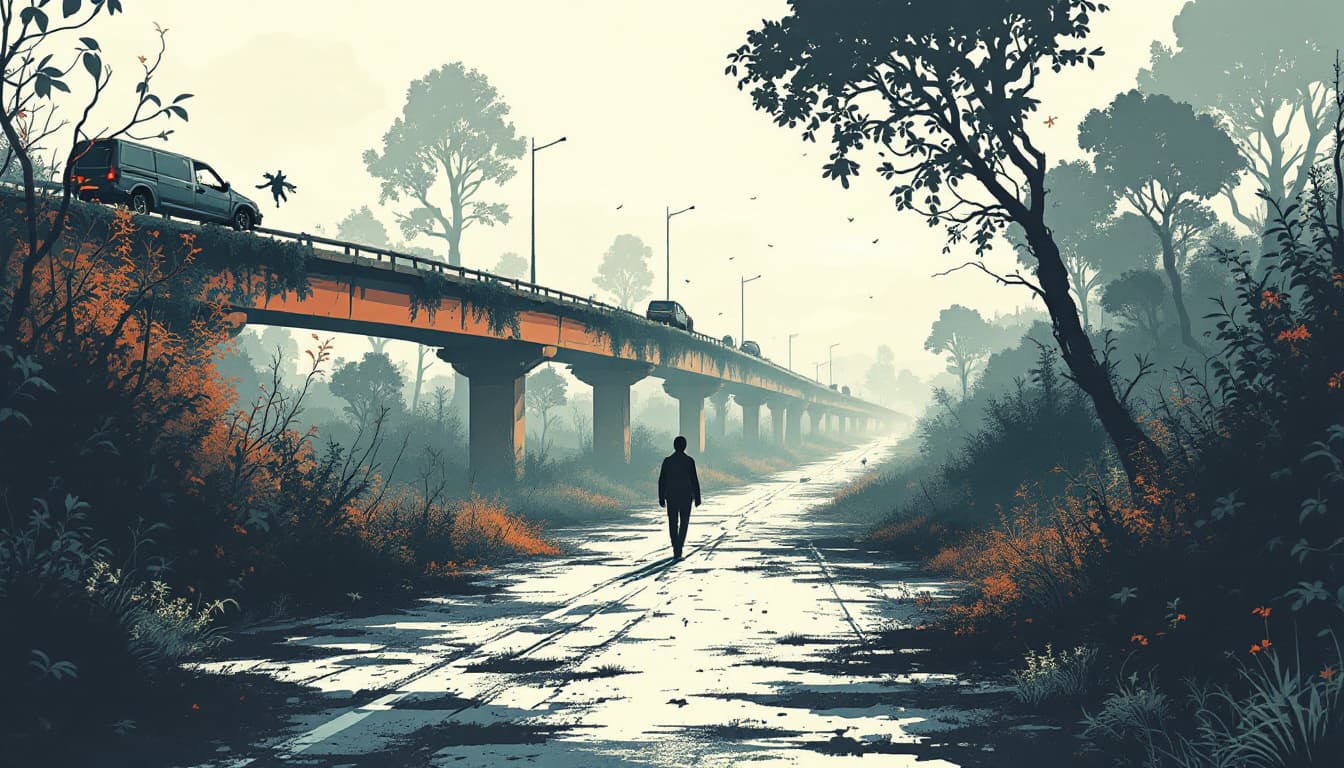
The film's central premise is elegantly simple and quietly devastating. Twenty-eight years after the Rage virus tore through the United Kingdom, Britain remains under quarantine — a cordon maintained by the outside world, leaving survivors to build whatever communities they can on an island that has, in many ways, reverted. We are introduced to a small, insular settlement that has developed its own rituals and hierarchies, functioning with the uneasy coherence of people who have stopped waiting to be rescued. When circumstances force one of its members out into the infected mainland, the film becomes a road movie of sorts — a traverse through a landscape that is simultaneously reclaimed by nature and still deeply, lethally dangerous.
Boyle is smart enough not to linger too long on exposition. The twenty-eight years are felt rather than explained, accumulated in details: the overgrowth, the silence, the way characters speak about the world before with the vague reverence of people describing a religion they were too young to practice. There is real craft in that restraint.
Direction and craft: Boyle at his most operatic
Cinematically, this is Boyle operating somewhere between the raw handheld urgency of the original and the more formally composed work of his later career. The film looks extraordinary in places — lush, almost hallucinatory sequences in the English countryside where beauty and menace occupy the same frame. He has always understood that horror lands harder when it's placed against something lovely, and here he leans into that instinct with confidence.
The sound design and score deserve particular mention. The Rage infected, when they appear, are shot and scored with the same disorientating intensity that made the originals so effective — fast, shrieking, barely human. But Boyle also allows for long stretches of near-silence, and those stretches are, if anything, more unsettling. The film breathes in a way that horror sequels rarely do.
Performances anchor what could easily become an aesthetic exercise. The principal cast works with material that asks them to convey decades of psychological adaptation — people who have grown up in or grown into apocalypse — and they largely succeed. There is an understated quality to the acting that suits the world: these are not people prone to melodrama, because melodrama is a luxury that survival doesn't permit.
What works, and what strains
The film's greatest strength is its willingness to be genuinely weird. Boyle is not simply rehashing 28 Days Later. He is interested in what twenty-eight years of isolation does to culture, to belief, to the stories communities tell about themselves. There are sequences in the film's middle section that veer toward folk horror, toward something almost ritualistic, and they are among the most memorable things in the picture. This tonal range — oscillating between visceral action horror and something more contemplative and strange — is a risk, and it mostly pays off.
Where the film stumbles is in pacing. The second act sags in places where it should crackle. There are character beats that feel underdeveloped, relationships gestured at rather than earned, and the script occasionally reaches for profundity and lands instead on portentousness. A few scenes seem to exist to set up sequels — the film is the first of a planned trilogy — and that structural obligation creates a hollowness in certain moments that a self-contained story wouldn't suffer.
The ending, too, will divide audiences. Without venturing into spoiler territory: it is bold, it is thematically coherent, and it is not entirely satisfying. Whether that is a flaw or a virtue probably depends on what you came looking for.
Genuine horror, genuine ideas
What separates 28 Years Later from most contemporary horror sequels is that it is clearly made by people with something on their minds. The rage virus was always a metaphor — for social breakdown, for the violence latent in civil society — and this film extends that metaphor into new territory: what happens to community after catastrophe, how institutions form and calcify and exclude, what we owe to the world that existed before us. These themes are not always handled with equal subtlety, but they are present and they are engaged with seriously.
That seriousness is what earns Boyle a degree of forgiveness for the film's wobblier moments. He is not coasting. He is trying to do something difficult, and he manages it more often than not.
Who should see it
If you have any affection for the original films, this is not optional viewing. It is imperfect in the ways that ambitious films are imperfect, and those imperfections are forgivable in the context of what it gets right. For general horror audiences willing to sit with a film that values atmosphere and ideas alongside its scares, it rewards patience. Those wanting a lean, propulsive creature-feature might find it occasionally frustrating — though it delivers on that front too, when it wants to.
28 Years Later is the rare sequel that expands its world rather than merely revisiting it. It isn't the equal of the original, but it doesn't need to be. It has its own disquieting vision, and that vision lingers.

