
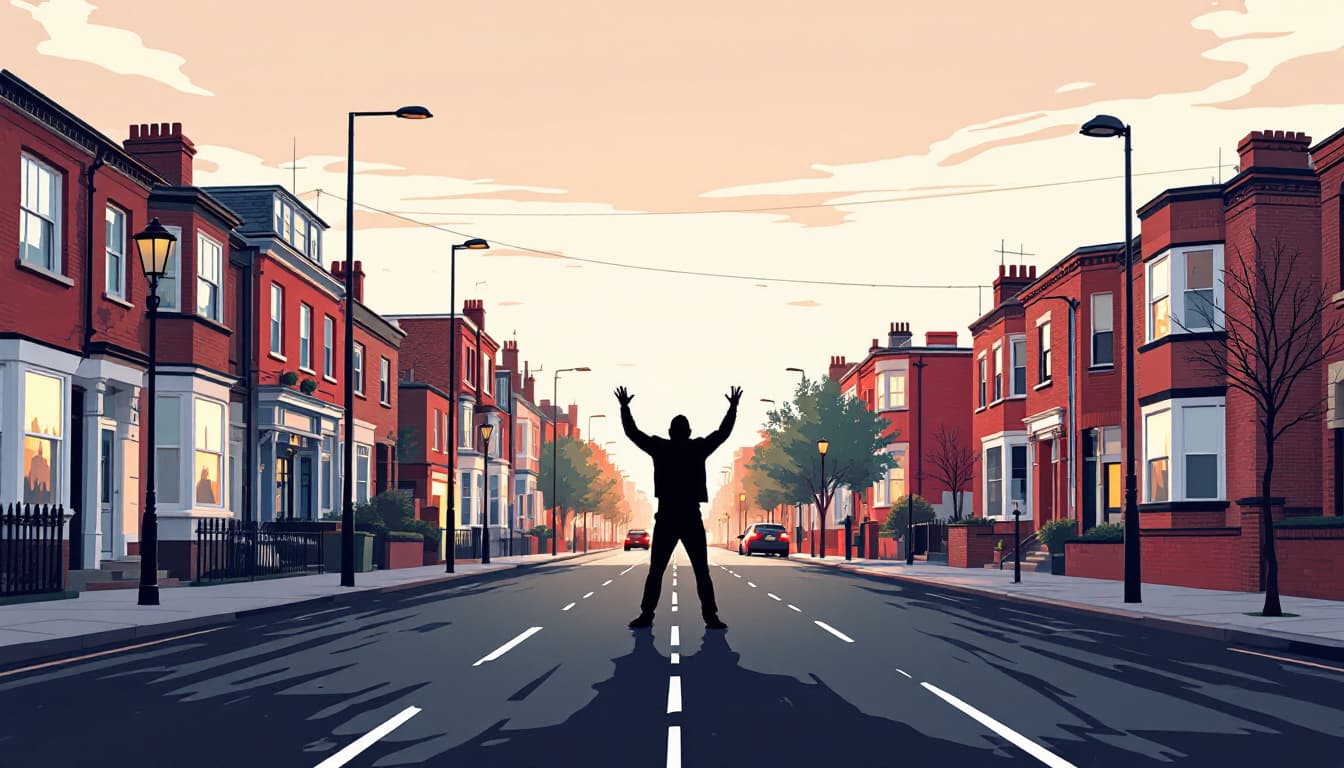
The empty city at the heart of it
There is a shot early in 28 Days Later — Cillian Murphy's Jim, dressed in a hospital gown, walking across a deserted Westminster Bridge — that remains one of the most quietly devastating images in British cinema. No digital crowd removal, no elaborate effect; director Danny Boyle and his crew simply rose early on Sunday mornings and filmed a London that had not yet woken up. The result is unsettling in a way no monster could fully replicate: the world we know, made strange by absence. That instinct — to ground the extraordinary in the genuinely mundane — runs through the whole film, and it's what separates it from a dozen lesser imitators.
Released in 2002 from a script by Alex Garland, the film arrived at a moment when the zombie genre had gone a little soft and self-referential. Boyle and Garland didn't exactly reinvent it; they turbocharged it, and in doing so gave the next two decades of horror cinema its operating vocabulary.
What you need to know
Jim wakes from a coma to find London empty. A virus — transmitted by a single drop of blood, spreading rage rather than undeath — has effectively collapsed British society in under a month. He falls in with a small group of survivors: Selena, a pragmatist who has already stripped herself of sentiment in order to survive; and Frank and his teenage daughter Hannah, who represent a more fragile, domestic kind of hope. The foursome travel north toward a military radio signal promising salvation. Whether that salvation materialises, and at what cost, is the film's second-act engine.
Craft: the DV aesthetic and what it earns
Boyle shot on digital video — a controversial choice at the time — and the resulting image quality is grainy, slightly queasy, and oddly intimate. It's tempting to dismiss this as a budgetary workaround (the film cost around £5 million), but that would be uncharitable and also wrong. The DV grain makes every frame feel like found footage without surrendering editorial control; it lends the hospital scenes an almost documentary stillness, and it makes the infected sequences viscerally immediate in a way that smooth 35mm might have aestheticised into safety.
Anthony Dod Mantle's cinematography is inventive in ways that reward attention. The palette shifts deliberately as the story moves — from the cool grey-blues of an abandoned London to warmer, more pastoral light in the Midlands, and finally to the deeply ominous red-and-amber tones of the film's military third act. It's a chromatic map of the story's moral deterioration.
Murphy, then not yet a household name, carries the film largely on the strength of watchful bewilderment. Jim is not a competent survivalist — he's a bicycle courier who is actively learning how to exist in catastrophe — and Murphy plays that learning curve with vulnerability and, eventually, something genuinely frightening. Naomie Harris as Selena is, if anything, more interesting: she's given the film's most demanding tonal work, oscillating between protective hardness and the risk of feeling again, and she does it without a single false beat.
What works and what doesn't
The first hour is close to flawless. Garland's script is economical in the best sense — it trusts the audience, establishes character through behaviour rather than exposition, and generates dread through implication as much as incident. The infected themselves are used sparingly enough that they retain genuine menace; Boyle shoots them in bursts of violent motion, the editing jagged in a way that prevents your eyes from fully tracking them. It's controlled chaos, and it's terrifying.
The film stumbles — and it does stumble — in its third act. The arrival at the military compound introduces a set of ideas about masculine violence and institutional collapse that are interesting in principle, and the casting in those roles is perfectly adequate, but the screenplay grows slightly schematic. Characters who have been richly ambiguous become more predictable; the thematic statement about what survives in human beings when civilisation falls is made a little too loudly, a little too insistently. For a film that has been so restrained, it's a jarring gear change.
That said, Boyle navigates the climax with enough formal inventiveness — including an extraordinary sequence shot in an almost stroboscopic night-vision style — that the film never loses its grip entirely. And John Murphy's score, ranging from delicate piano to enormous, swelling rock-influenced orchestration, remains one of the great horror soundtracks of its era. In the House, In a Heartbeat has been borrowed by dozens of filmmakers since, and you can hear exactly why.
Who is this for?
Anyone who takes horror seriously. Anyone interested in how genre filmmaking can carry genuine thematic weight without becoming pretentious. And anyone who has never quite bought the argument that low budgets and digital cameras can't produce cinema of real consequence. This is not comfortable viewing — it earns its 18 certificate — but it is purposeful and often beautiful in its bleakness.
For audiences new to post-apocalyptic film, 28 Days Later is one of the best possible entry points: it's rigorous about how panic spreads, honest about how quickly social structures fail, and — crucially — it keeps its human relationships at the centre throughout. The monsters, in the end, are almost beside the point.

