It is mid-June, and Washington already has named wildfires on the map.
A report this week from IQAir spotlights three active fires in the state — the Tule, Juniper Dunes, and Twin Sisters fires — flagging them for air quality impact across surrounding communities. Juniper Dunes sits in Franklin County in the Columbia Basin, an area that regularly sees hot, dry conditions by early June. The Twin Sisters fire is burning in the foothills terrain that drains smoke toward lower valleys. None of these fires is making major national headlines, which is exactly the problem. The quiet fires are the ones households aren't ready for.
What's actually changing
Washington's fire season has been creeping earlier for years. The state's east side — Okanogan, Chelan, Grant, Kittitas, Benton, and Franklin counties — carries the highest structural risk, but smoke does not stay east of the Cascades. The passes funnel air west. Puget Sound households in King, Pierce, and Snohomish counties have spent multiple recent summers watching their AQI spike into unhealthy ranges while no fire burned within 200 miles of their zip code.
What IQAir's real-time fire mapping makes visible is that air quality events are not single-day problems. A fire that ignites in Franklin County on a Tuesday can push PM2.5 into Yakima on Wednesday and into the Willamette Valley corridor by Thursday, depending on wind. The relevant preparedness window is the 24 to 72 hours before smoke arrives — not after you can smell it.
The other thing worth naming: wildfire smoke is not just unpleasant. Short-term PM2.5 exposure at AQI levels above 150 has measurable cardiovascular and respiratory effects, particularly for children, adults over 65, and anyone with asthma or heart disease. Washington's Department of Health maintains an air quality advisory page that is updated regularly, but it is reactive by design. Households need to be slightly ahead of it.
What we'd actually do
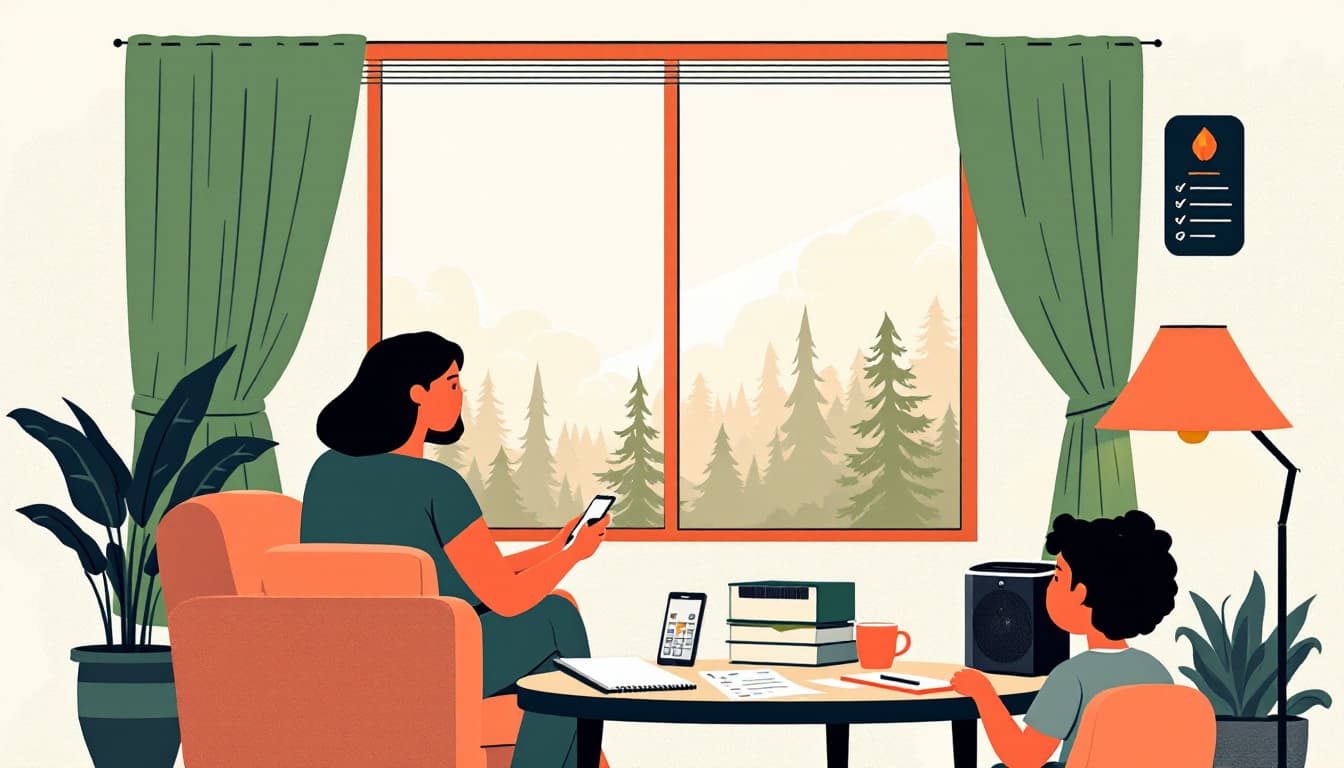
Set up an AQI alert for your specific zip code today. AirNow.gov and the IQAir app both allow location-specific notifications. The default threshold on most apps is "Unhealthy for Sensitive Groups" (AQI 101). Move that trigger down to 100 or lower if anyone in your household has asthma, a heart condition, or is under 12. You want a notification with enough lead time to close windows before the smoke arrives — not after.
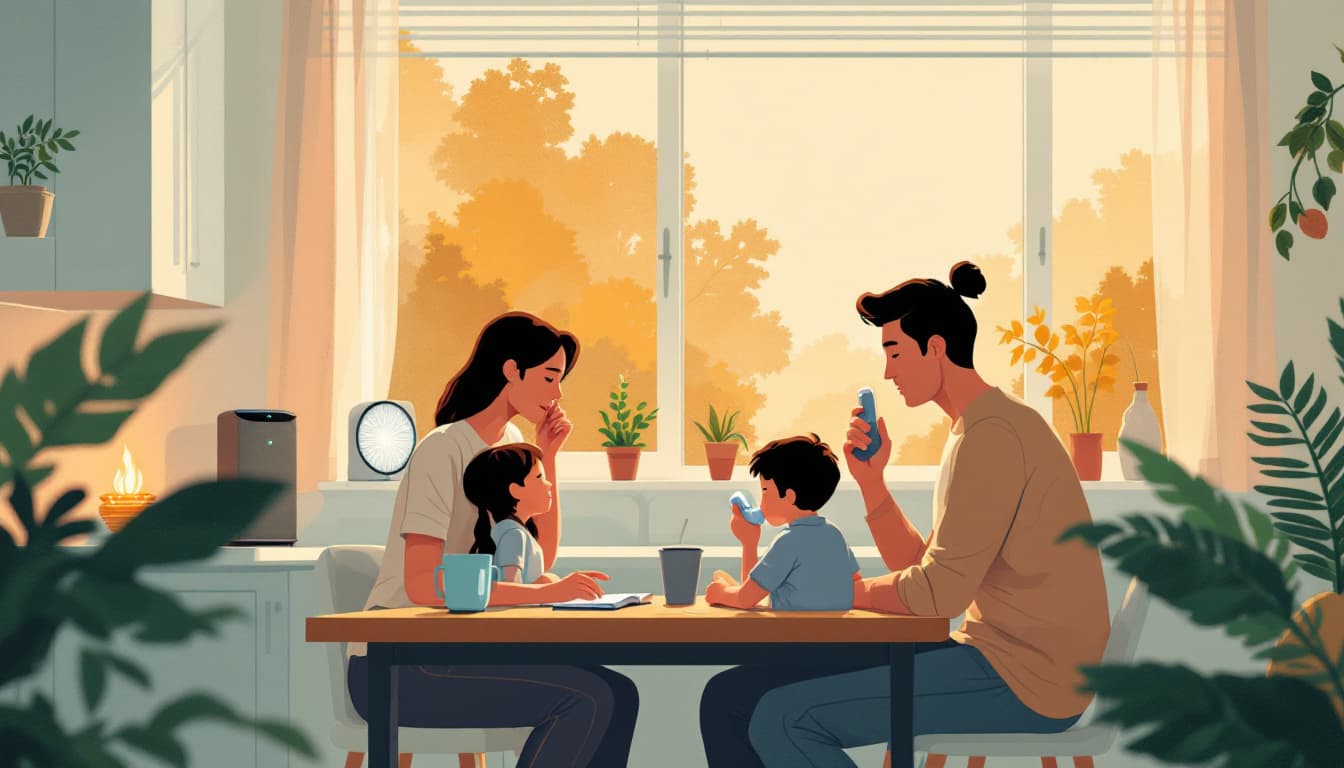
Identify which room in your home you would seal and use as a clean air space. Pick a room with fewer windows, ideally on a lower floor since PM2.5 can be slightly denser near the ceiling level of a poorly sealed home. Tape and plastic sheeting are not glamorous, but a single sealed interior room with a HEPA air purifier running can maintain acceptable indoor air quality even when outdoor AQI climbs above 200. If you don't own a HEPA purifier, a box fan with a MERV-13 furnace filter taped to the intake face is a documented and cheap alternative — Washington State University Extension has published guidance on this exact setup.
Check your HVAC filter and set your system to recirculate, not draw outside air. Many Washington homes run central air or forced-air heating with an "outside air" intake. During a smoke event, that intake pumps contaminated air directly through your home. Locate your system's fresh-air damper and know how to close it. A MERV-13 or higher filter in the air handler catches a meaningful fraction of PM2.5 that makes it past a closed damper. If your filter hasn't been replaced since last fall, do it this week — filters are $15 to $30 at any hardware store.
Stock a 72-hour supply of any respiratory medications. This is not about doomsday. It is about the very ordinary scenario where smoke descends on a Saturday, pharmacies get busy, and someone in your household realizes their rescue inhaler is nearly empty. A 72-hour buffer on prescriptions is something most Washington insurance plans permit via early refill during declared air quality emergencies.
Know your county's evacuation zone designation if you live east of the Cascades. Washington uses a zone-based system — Zones 1, 2, and 3 roughly correspond to "leave now," "be ready," and "be aware." Okanogan, Chelan, and Kittitas counties all have online lookup tools where you can enter your address. Do this once, write the zone on a sticky note on your refrigerator, and do not wait for a fire to find out what it means.
The bigger picture
Washington's three named fires in mid-June are not a catastrophe. They are a calibration signal. The households that handle smoke season well are not the ones with the most gear. They are the ones that did a few boring maintenance tasks in June — a filter swap, a notification setting, a medication refill — so that when AQI hits 180 on a Tuesday afternoon in August, the response is automatic rather than frantic.
Durability looks like that: small, completed tasks that remove decision-making from high-stress moments.