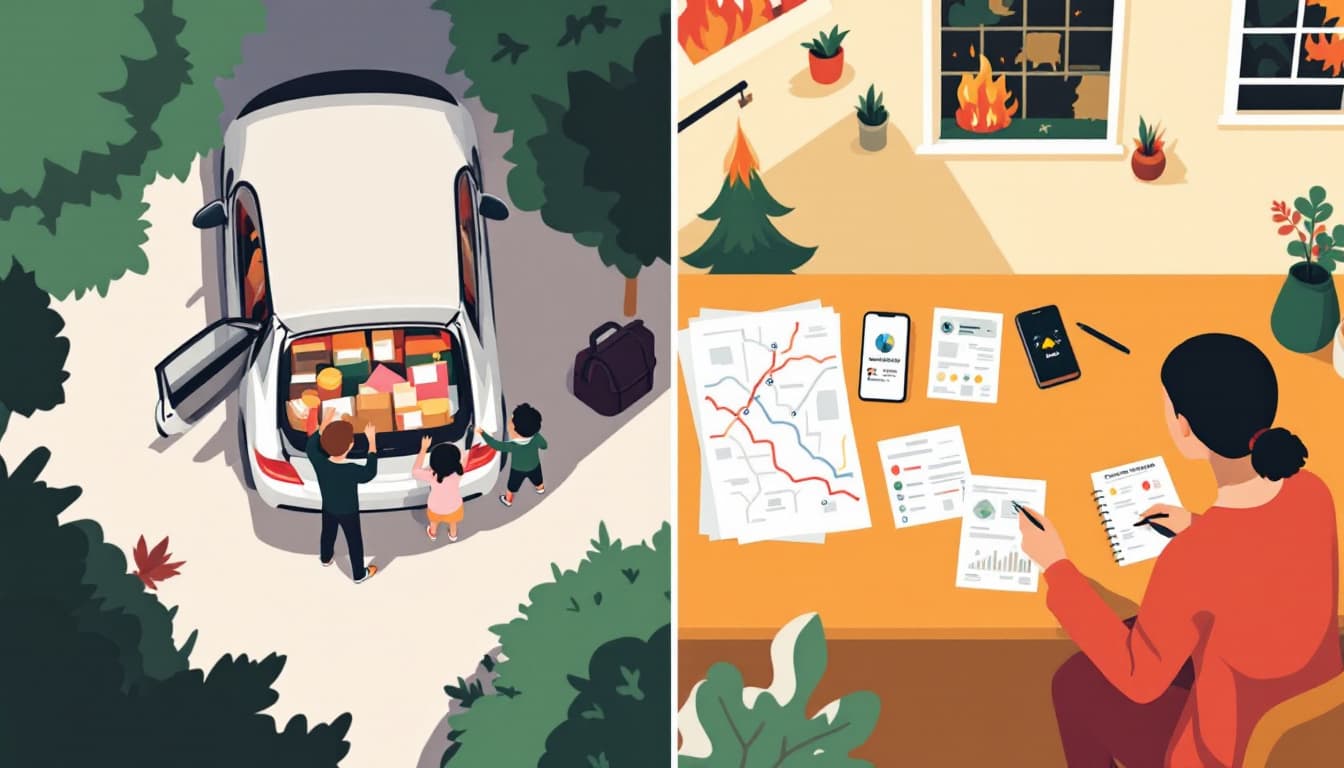
A report this week from KSHB 41 Kansas City described the full evacuation of the Great American State Fair due to rapidly developing severe weather. Thousands of people had to move off fairgrounds quickly, in the kind of chaotic, crowded conditions that make even simple decisions — which exit, where to shelter, how to reach your group — suddenly hard.
Washington isn't Kansas City, but the scenario maps directly onto summer here. The Washington State Fair in Puyallup runs from late August through September. Bumbershoot, county fairs from Walla Walla to Whatcom, outdoor music venues along the Puget Sound corridor — July through September is peak crowd season, and Washington's weather can turn on short notice. The Cascades create localized storm cells that don't always show up on a morning forecast. Eastside counties can hit triple digits and then see afternoon thunderstorms roll through within the same afternoon.
What large-crowd evacuations actually expose
The Kansas City incident is worth thinking through not as a freak event but as a systems test. When a fairground evacuates, three things tend to fail simultaneously: communication (people don't know where to go), transportation (parking lots gridlock, ride-shares surge or go dark), and shelter (everyone rushes the same covered structures at once).
Emergency managers use the term "convergence" to describe what happens when large groups move toward the same exits, the same shelters, the same cell towers. It's not panic — most people behave reasonably. It's physics. Bottlenecks form. Kids get separated. People with mobility limitations fall behind.
Washington's own Emergency Management Division publishes crowd-event guidance, but that guidance is written for organizers, not attendees. There is no parallel document that tells families what to do when they're already inside the gates and the sky goes green.
What we'd actually do
Before you enter any large outdoor venue, identify two exits that aren't the main gate. Large events post site maps — download one, screenshot it, spend two minutes finding exits on the west or service side of the grounds. Main entrances are where everyone will funnel. Secondary exits are where you'll move.
The practical reason: when crowds surge toward the entrance they came in through, secondary exits are often half-empty for the first critical minutes. That window closes, but it exists. Knowing where it is before the evacuation starts is worth more than any gear you bring.
Designate a physical meeting point before you separate. Not "we'll text each other" — cell networks at large events are already strained, and a severe weather event will knock them out entirely or make them unreliable. Pick a landmark outside the main footprint: a specific gate post, a parking structure pillar, a named intersection on the perimeter road. Tell everyone in your group before you go in.
In Washington, you cannot count on SMS during a stadium or fairground event even on a clear day. The combination of tens of thousands of devices in a small cell radius plus weather disruption is a reliable recipe for dropped messages.
Know the difference between shelter-in-place structures and marketing structures. At most fairs, the large open-sided vendor tents are not safe shelter in wind or lightning. Permanent buildings — exhibition halls with solid roofs and walls, restroom blocks, administration buildings — are what you're looking for. Scan for them when you arrive, not when you're running.
Washington fairgrounds vary. Puyallup has substantial permanent structures. Smaller county fairs may have almost none. Adjust your read of the venue accordingly.
Have a return plan that doesn't depend on your original ride. If you drove, your car may be inaccessible during the evacuation. Know the transit options — Pierce Transit routes near the Puyallup fairgrounds, or the Sounder commuter rail connection — and have the app downloaded and funded before you go. King County Metro, Sound Transit, and most Eastside agencies have apps that work offline for basic route data.
Check the National Weather Service Seattle forecast zone for your county before leaving home. NWS Seattle issues zone-specific forecasts, and in summer, afternoon convective outlooks are posted by mid-morning. A "slight risk" day from the Storm Prediction Center is not a reason to cancel plans — it is a reason to know where the exits are.
The bigger picture
Families that build situational awareness into ordinary outings don't need specialized gear or elaborate plans. They need two exits, one meeting point, one shelter building, and one backup transit option. That's a ten-minute conversation in the car on the way there.
Severe weather evacuations at public events are not rare. They are a routine feature of outdoor summer life in the Pacific Northwest. The goal isn't to avoid the fair. It's to walk in knowing how you'll walk out.