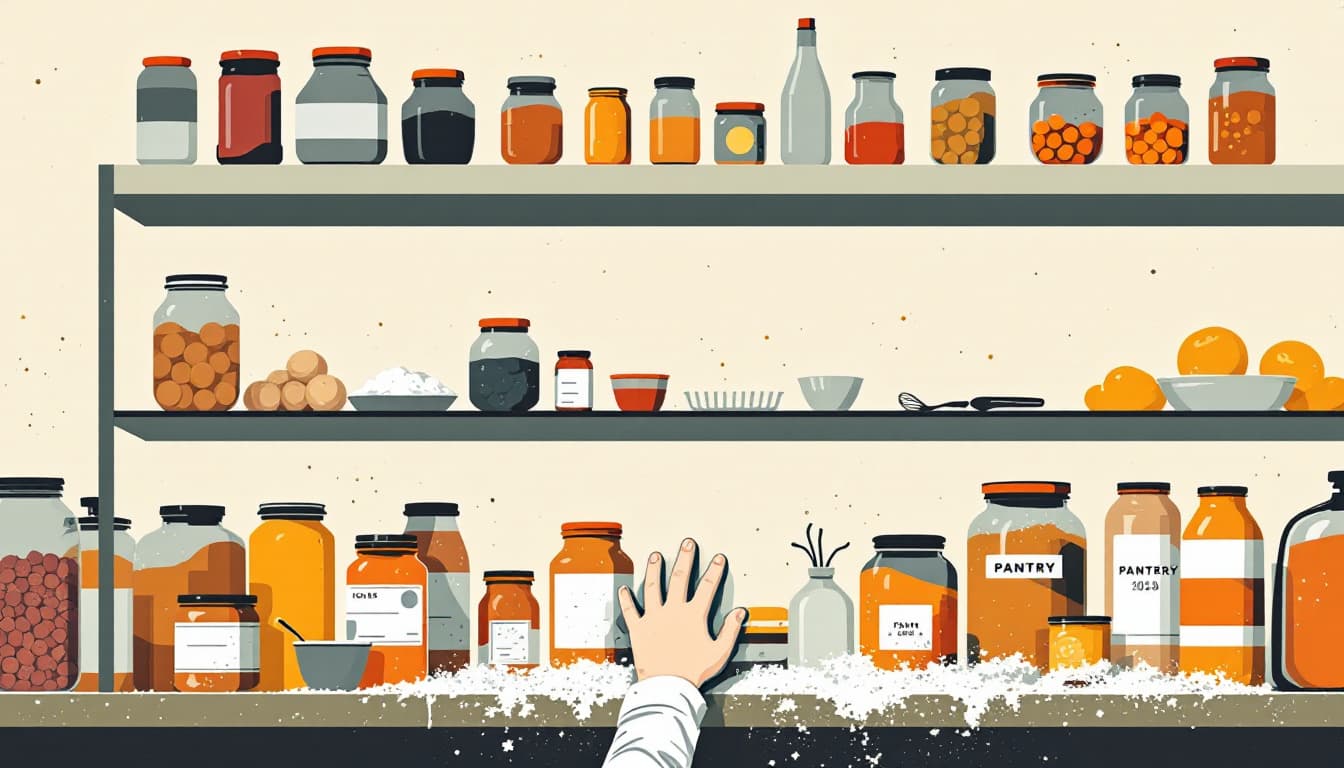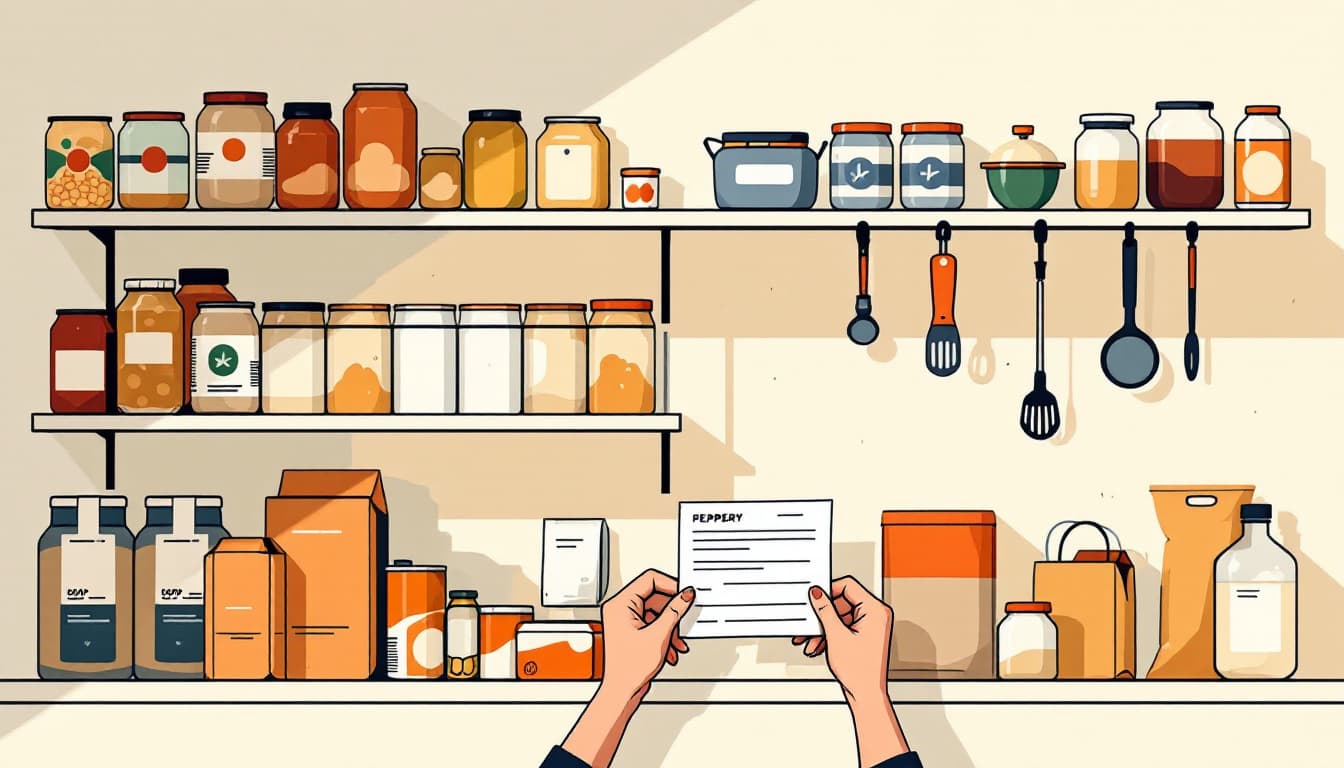
Walk into two different households that both self-describe as "prepared." In the first, there's a rotating pantry of about three weeks of food, a small cash reserve, a filled gas can for the lawn mower that doubles for emergencies, and a binder with insurance documents and prescriptions. In the second, there are 47 categorized tote bins in a climate-controlled room, a fuel cache that would require a pump to access, a Faraday cage for unspecified electronics, and a calendar reminder to rotate ammo.
Both households have invested real time and money. Only one of them is likely to function better during the disruptions that statistically happen to families — a job loss, a five-day power outage, a medical event, a burst pipe in February.
The first household built a practice. The second built a personality.
The distinction matters because preparedness, at its most useful, is about reducing the cost and cognitive load of foreseeable disruptions. It is fundamentally economic — a hedge against variance. The practical unit of preparedness isn't gear; it's decisions per dollar per risk-hour. And that math has a natural ceiling.
Most of the variance a middle-class American household faces in any five-year window is boring: unemployment or underemployment, a medical bill that exceeds the deductible, a weather event that cuts power for two to ten days, a car failure at an inconvenient moment. Recent labor statistics consistently show that job displacement events, even in strong economies, affect something like one in ten households per year. The median power outage in the U.S. lasts under four hours; the 90th-percentile outage is under two days. These are the distributions that should shape household investment.
The gear-as-identity reflex targets a different distribution — the tail events, the civilizational disruptions, the scenarios where conventional supply chains no longer function and community bonds dissolve. Preparing for those events isn't irrational in isolation, but it competes directly with preparing for the mundane disruptions that are nearly certain to arrive. A household that spends $800 on a solar generator it will never use has not spent $800 on resilience; it has spent $800 on a scenario it found emotionally compelling.
Here is what makes this hard to see: the two households look almost identical from a distance, and the one with 47 bins looks more prepared by any naive count of assets. This is the central confusion. Preparedness culture, when it becomes a culture, rewards visible accumulation. The forums, the YouTube channels, the comment sections — they trend toward showing and counting. The household that quietly maintains a working emergency fund, a document binder, and a pantry that would bore a cameraman never gets a thumbnail.
The fragility of identity-preparedness shows up not in the gear, but in the behavior. A household organized around a preparedness identity has a strong prior that the next disruption will be the kind they've prepared for. When the actual disruption arrives — when it's a layoff, not a grid attack — the mismatch between preparation and situation produces a specific kind of paralysis. The ammo is inventoried; the resume is not updated. The fuel cache is rotated; the cash position is thin because the gear fund ran long.
There is also a subtler cost. Households with strong preparedness identities tend to resist revising their threat models. The sunk cost of the Faraday cage makes it harder to say, clearly, that a Faraday cage is almost certainly not load-bearing in any disruption this family will face. Identity-protective cognition — well-documented in behavioral economics — applies as readily to preppers as to any other group that has built self-concept around a practice.
The durable household, by contrast, tends to hold its preparedness posture loosely. It knows roughly what it's hedging against and roughly how much hedge is appropriate. It revisits those assumptions when circumstances change — a new mortgage, a chronic diagnosis, a different job, an aging parent. It does not add a bin because the bin feels good; it asks what gap the bin closes and whether that gap is in the top five things likely to hurt this family in the next three years.
That kind of ongoing calibration is genuinely hard. It requires treating preparedness as a means, not a destination — which means it never feels complete, never generates the satisfaction of a finished inventory. The incompleteness is the feature. A practice that stays open to revision stays useful.
The families that navigate disruption best, in the literature on household financial resilience and in the anecdotal record, are not the most elaborately prepared. They're the most accurately prepared — which usually means they look, to casual observers, a little underequipped.
Being underestimated is fine. Being miscalibrated is expensive.