Somewhere in a garage in suburban Columbus, there is a five-gallon bucket of hard red winter wheat purchased during a brief pandemic panic in 2020. The couple who bought it spent about $80 on it, stacked it in a corner, and have not thought about it since. The wheat is probably still edible — properly sealed, it can last decades. But the hand-crank grain mill they would need to use it is broken. The family no longer owns a camp stove. Their neighborhood gets municipal water, which requires electricity to pressurize, and they own exactly one flashlight with batteries that have corroded inside it.
The bucket is not preparedness. The bucket is a museum exhibit about a moment of anxiety.
This is the maintenance window problem, and it is far more common than either the fragility it was meant to solve or the paranoia that characterizes doom-prepper culture. It is what happens when preparedness is treated as a purchase rather than a practice — specifically, a practice with the same rhythmic maintenance demands as a car, a garden, or a marriage.
Software engineers have a term: maintenance window. It refers to the scheduled period when a system gets updated, patched, tested, and verified. Miss enough maintenance windows and the system doesn't fail dramatically — it drifts. It accumulates silent debt. Then one day it fails in a way that surprises everyone, though it shouldn't have surprised anyone.
Household preparedness systems drift in exactly this way. The rotating food supply that isn't rotated. The backup water filter with a cartridge rated for 1,000 gallons that has sat in a box for four years. The first-aid kit that still contains a CPR card certified to 2019 standards. The generator that starts — probably — but hasn't been run under load since the last ice storm.
What separates genuinely resilient households from both the fragile and the performatively prepared is not the size of the initial investment. It is whether the household has built in the equivalent of a maintenance window: a recurring, modest, boring audit of what they have, what still works, what has expired, and what has changed about their actual risk profile.
The counterintuitive part is that most preparedness content — including, frankly, a lot of what circulates in serious preparedness communities — is overwhelmingly weighted toward acquisition. Buy this. Store that. Build up to X weeks of food. The implicit model is that preparedness is a destination: once you've arrived, you can stop thinking about it.
But a household is not static. A family of four becomes a family of five. Someone develops a gluten intolerance. A teenager gets a severe allergy diagnosis that wasn't on anyone's radar when the first-aid kit was assembled. The household moves from a flood-prone area to a wildfire interface zone, and nobody updates the go-bag.
The acquisition bias also feeds a secondary failure mode: the paranoid household that keeps adding without ever evaluating. More freeze-dried meals, more redundant tools, more categories of risk addressed — but no coherent picture of what the system is actually for, how the pieces interact, or whether the family could execute any of it under stress. Complexity without maintenance is not resilience. It is a different kind of fragility, one that tends to collapse under cognitive load precisely when cognitive load is highest.
The durable household — the one that actually functions when a ten-day power outage or a two-week illness hits — tends to look almost boring from the outside. Modest stockpile. Known quantities. Clear rotation habits. Someone in the household who could explain the system to a neighbor in five minutes.
What makes it work is not the gear. It is the fact that the system gets touched regularly enough that the household knows its actual state, not its imagined state. That is a meaningfully different thing.
There is a useful analogy in aviation. Pilots do not trust their memory of an aircraft's condition; they do a preflight walkaround before every single flight, regardless of how recently it flew. The walkaround is not a sign of distrust in the ground crew. It is a structural acknowledgment that systems drift, and that the person who will bear the consequences of drift is the person who should verify its absence.
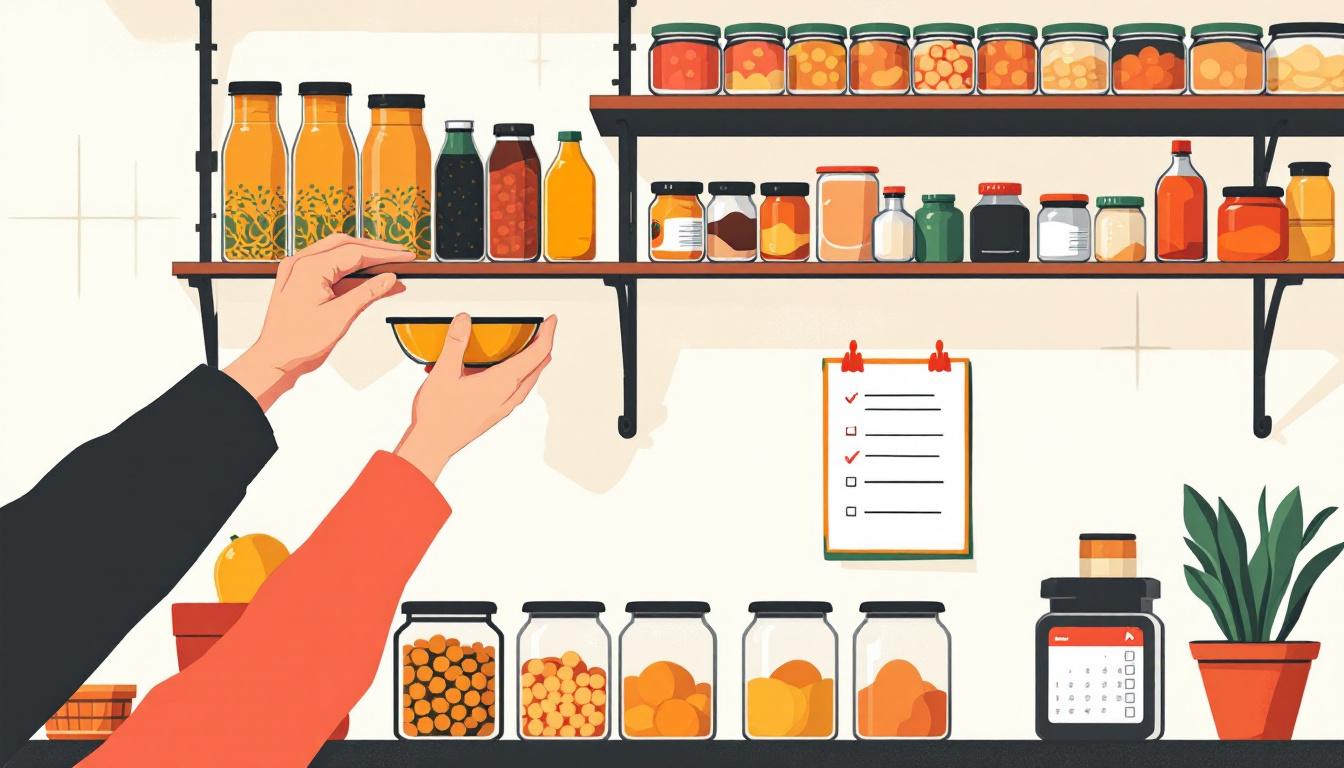
A twice-yearly household preparedness audit — nothing elaborate, just a systematic check of what you have against what you think you have — is the walkaround. It is not dramatic. It will not make for compelling social media content. It is, however, the actual thing.
If you haven't done one recently, our water and food calculator is a reasonable place to start quantifying the gap between your assumed state and your actual one.
The goal is not a perfect system. The goal is a known system — maintained, understood, and sized to your actual household, not to a fear you felt in 2020.