The family had three months of food, a hand-crank radio, a first aid kit with a tourniquet, and a Sawyer filter still in the box. When a gas leak forced them to evacuate their apartment building at 11 p.m. on a Tuesday, they left without their phone chargers, couldn't find their insurance documents, and spent forty minutes on the sidewalk arguing about whose parents they should call first.
The cache was impeccable. The plan was nonexistent.
This is not a hypothetical. Talk to any emergency manager who works at the local level — county emergency services staff, hospital incident commanders, fire captains who have run neighborhood door-to-door checks — and the story they tell about prepared-looking households is almost always a version of this one. The gear is present. The thinking is absent.
The inventory fallacy
The preparedness internet has a hardware problem. Walk into any forum, subreddit, or YouTube channel aimed at household readiness, and you will find elaborate debates about water storage quantities, the correct rotation schedule for freeze-dried protein, and whether a specific model of flashlight justifies its price. These are real questions with real answers. But they share a hidden assumption: that the limiting factor in an emergency is stuff.
It usually isn't.
What actually limits a household in the first four to twelve hours of a disruption — the window that determines whether a situation stays manageable or becomes genuinely dangerous — is decision quality. Who leaves and who stays. Where you go. Who you call in what order. What you do if the primary route is blocked. Whether everyone in the household knows the answer to those questions without asking you first.
Gear does not answer questions. Gear sits in a closet waiting for someone to ask the right question about it.
Why we default to accumulation
There is a psychological reason the preparedness conversation orients around stuff. Acquiring things is concrete, completable, and legible. You can look at a shelf and confirm it. You can feel the weight of a full water jug. You can cross items off a list.
Planning is none of those things. A household meeting to talk through evacuation scenarios is socially awkward. Writing down your insurance policy numbers is unglamorous. Telling your teenager what to do if there is a fire when you are not home is a conversation most parents defer indefinitely because it surfaces anxieties that are easier to sublimate into buying a better flashlight.
The preparedness industry understands this, and it has built itself around it. The message — implicit, sometimes explicit — is that readiness is a product category. It is not.
The decision architecture that actually matters
Think of household preparedness as having two layers. The first layer is physical capacity: the food, water, medications, documents, and tools that extend your household's ability to function without normal infrastructure. The second layer is decision architecture: the shared understanding of what to do, who does it, and in what order, across the range of situations your household might actually face.
Most households have some of the first layer and almost none of the second.
Decision architecture does not have to be elaborate. The households that tend to fare best in disruptions — based on what FEMA's own post-incident surveys have documented over decades of disaster research — are not the ones with the most supplies. They are the ones where more than one adult knows where the important documents are, has a copy of critical phone numbers that does not live exclusively on a phone, and has talked through at least one non-fire scenario with everyone else in the household.
That is a low bar. Most households have not cleared it.
What to do this week
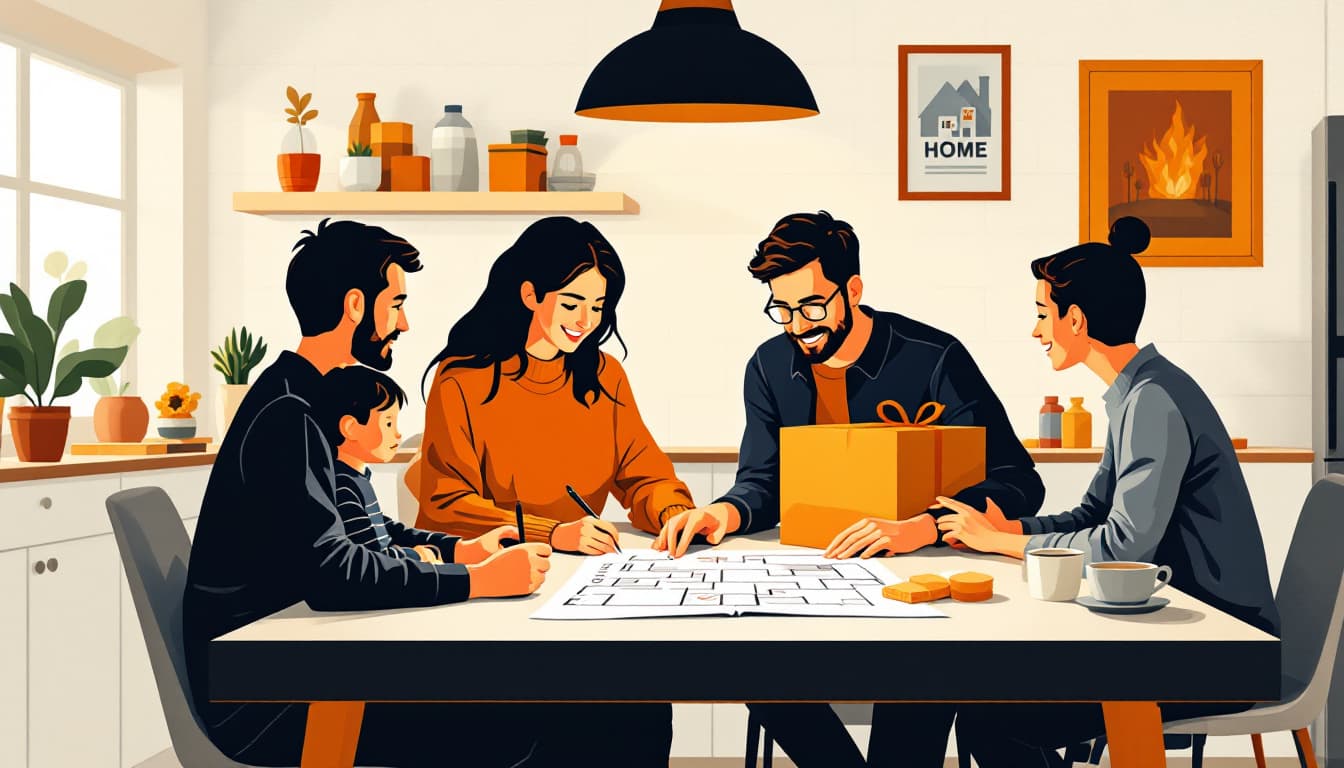
One conversation, not a meeting. Pick one scenario your household plausibly faces — extended power outage, sudden evacuation, one adult incapacitated — and ask out loud: what do we actually do? Do not try to solve everything. Just expose one gap.
Write down three phone numbers. Your insurance agent, an out-of-state contact, and the nearest family member who does not live with you. Put them on paper, not just in your phone. Keep one copy in your car.
Locate your documents. Passport, insurance cards, the deed or lease, the car title. If you cannot put your hand on all of them in under two minutes, that is this week's problem to fix.
Tell one other person. The plan only exists if more than one person in your household knows it. That is not a metaphor — it is a redundancy requirement.
None of this is as satisfying as ordering a new piece of gear. It does not arrive in a box and feel substantial in your hands. But it is the work that determines whether the gear on your shelf ever gets used correctly, or just gets left behind on a sidewalk at 11 p.m.
The cache is what you fall back on. The plan is what gets you there.