A Click2Houston report this week flagged an FDA recall of Farm Rich pizza snack products over possible metal contamination. No serious injuries have been publicly confirmed at time of writing, but the recall covers a frozen snack product that shows up in a lot of Texas households — particularly in homes with school-age kids who treat the freezer as a vending machine.
Metal contamination recalls are not exotic. The FDA issues dozens of them each year across the food supply. What makes this one worth pausing on isn't the Farm Rich brand specifically. It's what the recall reveals about how most households manage their food inventory — which is to say, not at all.
What's actually happening
The recall is a Class I or Class II action (FDA classification determines severity based on health risk probability). Metal fragments in food can cause lacerations to the mouth, throat, or digestive tract, which is why the agency acts quickly even when confirmed injuries are rare.
The mechanism here is almost certainly a production line equipment failure — a broken blade, a worn seal, a fragment from a conveyor component. This is not a supply-chain conspiracy or an ingredient sourcing problem. It is a manufacturing quality-control failure, and they happen at plants that produce high-volume, low-cost frozen snacks more often than the industry likes to admit.
For Texas families, the immediate question is simple: do you have this product in your freezer? Check your packaging against the FDA's recall notice on fda.gov — look for the UPC codes and lot numbers listed. If you have a matching product, do not serve it. Follow the recall instructions for return or disposal.
The larger question is the one worth sitting with.
What this means for your pantry
Most households — in Texas and everywhere else — have a freezer full of items they haven't examined in weeks. A recall like this exposes a structural problem: when your emergency food supply or your everyday meal rotation depends heavily on a narrow set of branded frozen products, a single recall can leave a real gap. This is especially true for households in Houston, the Metroplex, or the Rio Grande Valley where grocery runs are long or irregular.
This is not a reason to panic-buy or overhaul your kitchen. It is a reason to do something most prepper content skips: audit what you already have, understand where it came from, and build a rotation that isn't fragile.
What we'd actually do
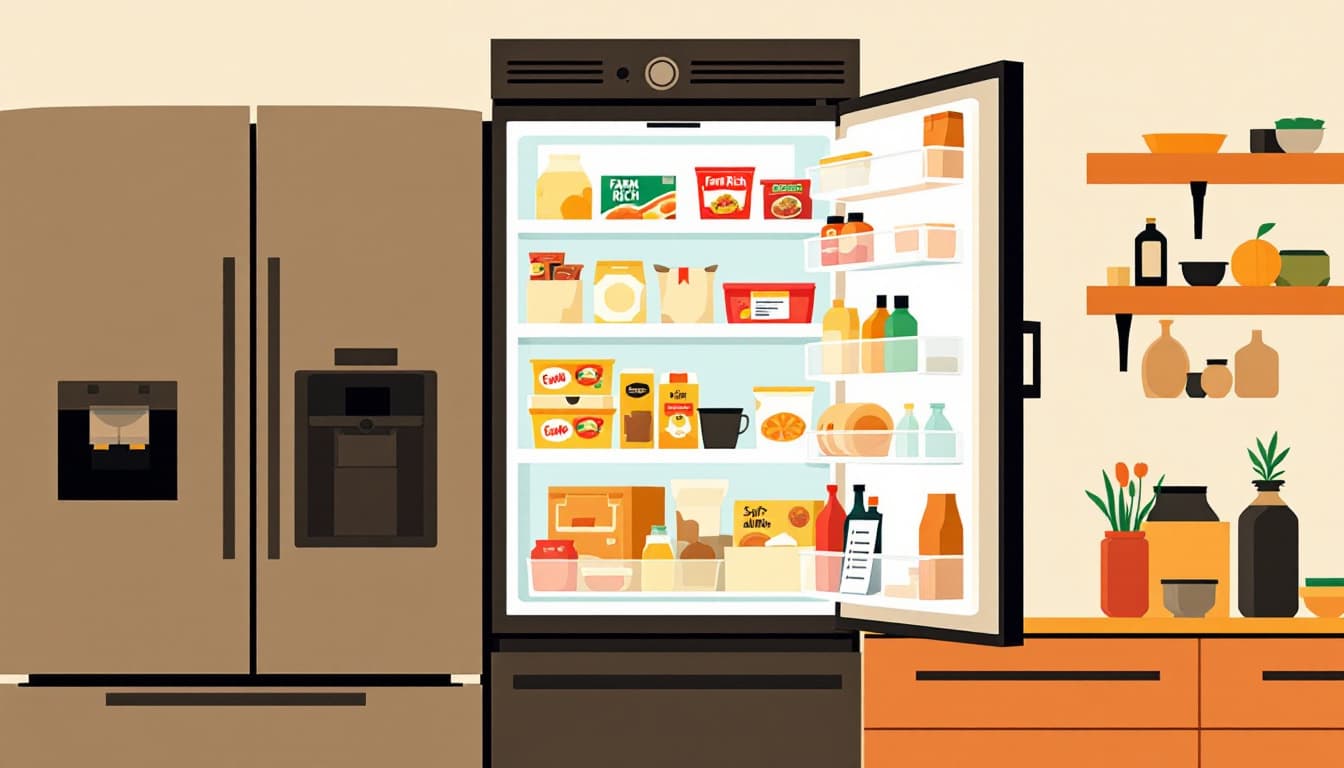
Pull and check your freezer inventory this weekend. Take fifteen minutes to go through every frozen item and match lot numbers against open FDA recalls. The FDA maintains a searchable recall database at fda.gov/safety/recalls-market-withdrawals-safety-alerts. This is not dramatic — it is the same logic as checking your car's recall status. Do it quarterly.
Replace high-dependency frozen snacks with shelf-stable equivalents for at least one category. If your household leans on frozen pizza snacks as a quick meal for kids, keep a parallel option that doesn't require a freezer — crackers and canned fish, peanut butter and shelf-stable flatbread, or similar. Texas summer heat and the grid stress that comes with it means your freezer is already one outage away from a problem. Redundancy here is practical, not paranoid.
Set a recall alert for your household's regular brands. The FDA and USDA both offer email alert subscriptions for food safety recalls. Takes two minutes to sign up. If you buy Farm Rich, Totino's, or any other high-volume frozen brand regularly, you want to know the moment a recall drops — not when you read about it three days later in a local news roundup.
Log what you have. A simple note on your phone — brand, product, date purchased — means you can cross-reference a recall in under a minute. Texas Emergency Management (TDEM) recommends maintaining a basic household inventory as part of general preparedness, and this is the least painful way to start one.
The bigger picture
Recalls are a feature of a food safety system that mostly works. The FDA catching a contamination issue before a wave of injuries is the system functioning. The household failure point is not that recalls happen — it is that most families find out too late, or not at all, and have no fallback when a staple disappears from the shelf or the freezer.
A durable household is not one that never faces disruption. It is one that absorbs small disruptions — a recall, a power outage, a grocery run that gets delayed — without a crisis. That is a lower bar than most prepper content suggests, and it starts with knowing what's in your freezer.