A report this week from WSMV is tracking both heat and strong storms moving through Middle Tennessee over the July 4th holiday weekend. That combination — high temperatures followed by or mixed with severe thunderstorms — is one of the more genuinely disruptive weather patterns a household can face. Heat strains the grid. Storms knock it out. And a holiday weekend means utility crews are stretched, stores are picked over, and your neighbors are distracted.
This is not a reason to panic. It is a reason to spend 90 minutes today making sure your household is not caught flat-footed.
What this combination actually does to a household
Heat alone is manageable if the power stays on. Storms alone are manageable if it's not 97 degrees before they hit. When both arrive in the same 48-hour window, the failure mode is a power outage that starts during peak afternoon heat and takes 12 to 36 hours to restore — long enough for food to spoil, for a vulnerable family member to overheat, and for a freezer full of July 4th groceries to become a loss.
Middle Tennessee's grid is not uniquely fragile, but the Nashville Basin and surrounding counties see enough storm activity each summer that the Tennessee Valley Authority and local co-ops are familiar with rapid multi-county outage events. The question is not whether outages happen here — they do — but whether your household has a 24-hour buffer that makes the outage an inconvenience rather than a crisis.
What we'd actually do
Fill every large container with water before the storms arrive. City water pressure can drop after a major storm event, and well pumps are dead the moment power goes out. Fill your bathtub, your largest stock pots, and any clean jugs you have on hand. This costs nothing and takes ten minutes.
This is not about drinking water for a week. It is about having enough water to flush a toilet, wet a towel for cooling, and give your pets a bowl when the tap is unreliable. A standard bathtub holds 40 to 60 gallons. That buys you real time.
Charge everything now, not when the watch is issued. Phones, battery banks, rechargeable lanterns, and any medical devices that run on power should be at 100% before the first storm cell arrives. A NOAA weather radio — a $25 to $35 device sold at most hardware stores — gives you alerts when your phone battery is dead. If you don't own one, your local Ace Hardware or Tractor Supply almost certainly stocks them.
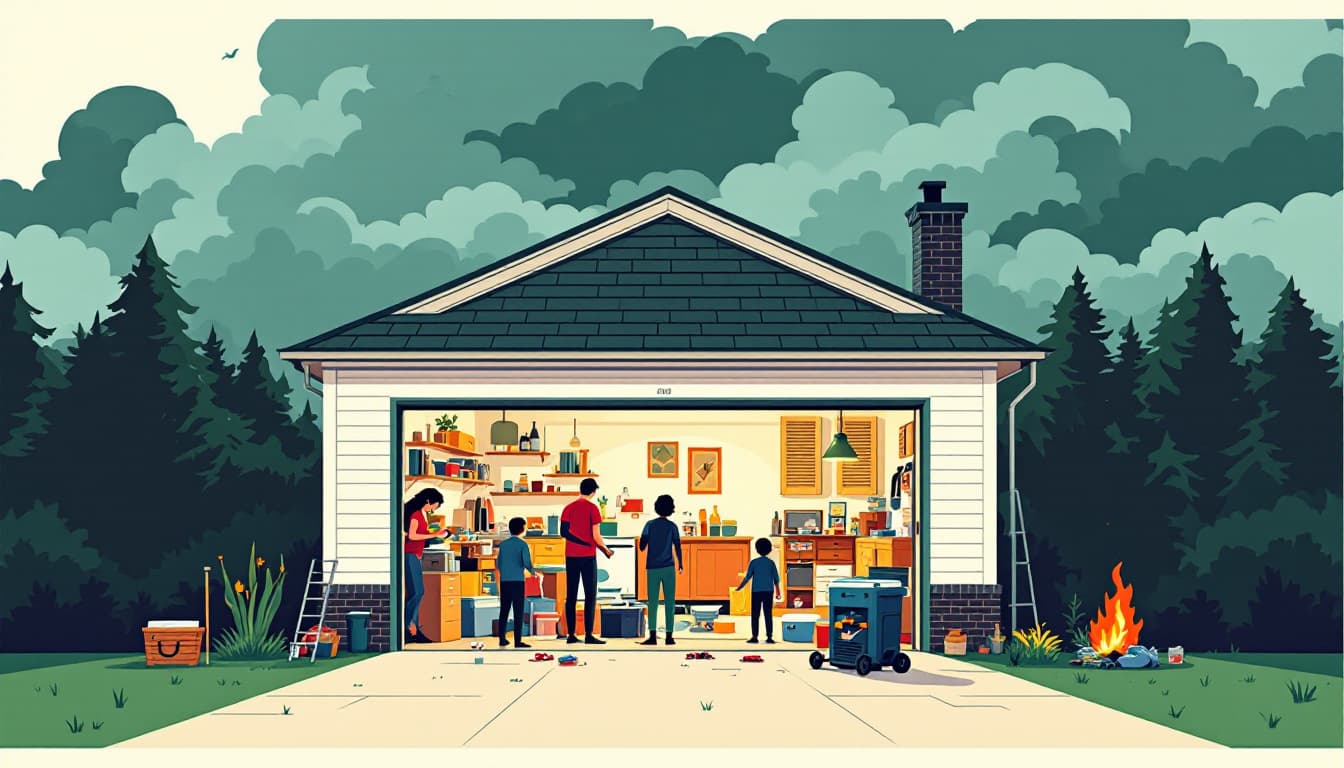
Move your grill plan indoors or forward it. If your July 4th involves a gas or charcoal grill, plan to cook before the afternoon heat peaks or before storms roll in, not during. Carbon monoxide poisoning from grills moved into garages during rain is a genuine and preventable cause of holiday-weekend deaths. Cook outside early, or eat cold food and call it intentional.
Know your household's heat threshold before you need to. If you have anyone in your home over 65, under 2, or on medications that affect heat tolerance (common blood pressure and psychiatric medications both do this), identify your nearest cooling center now — not after the power goes out. Tennessee's county health departments maintain cooling center lists during heat events; Metro Nashville's emergency management page is updated in real time during declared heat emergencies.
Set your refrigerator to its coldest safe setting today. A refrigerator that starts a potential outage at 37°F holds safe temperatures significantly longer than one running at 40°F. The USDA's guidance is that a full refrigerator holds temperature for roughly four hours after power loss; a full freezer holds for about 48 hours. Running colder buys margin. Filling empty space with jugs of water buys more.
The bigger picture
Middle Tennessee households who live through enough summers here develop a quiet, practical readiness that has nothing to do with prepper culture. They keep flashlights where they can find them. They don't let the gas tank fall below a quarter tank in July. They check on older neighbors when the heat index climbs. That is the model: durable habits, low drama, no gear hoarding required.
A holiday weekend with heat and storms is a dress rehearsal for more serious events, not the main event itself. Use it as one.