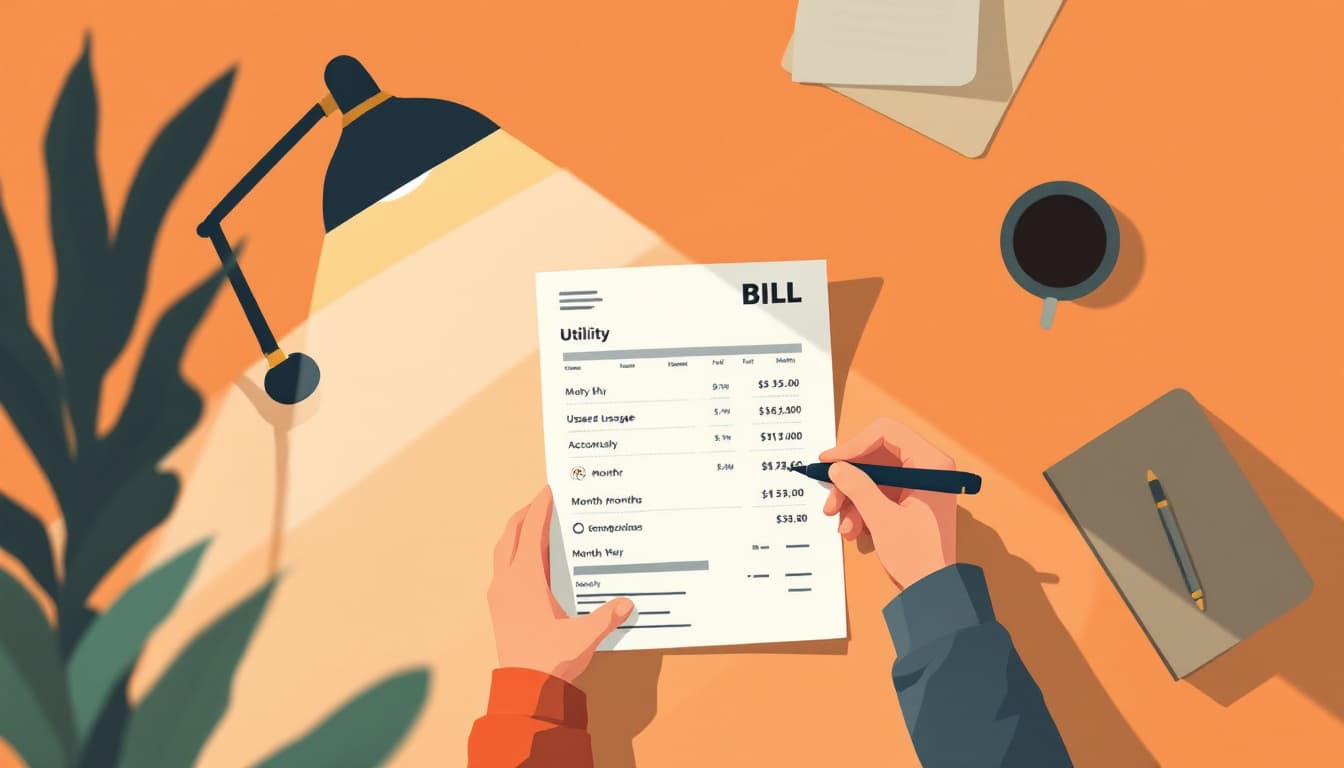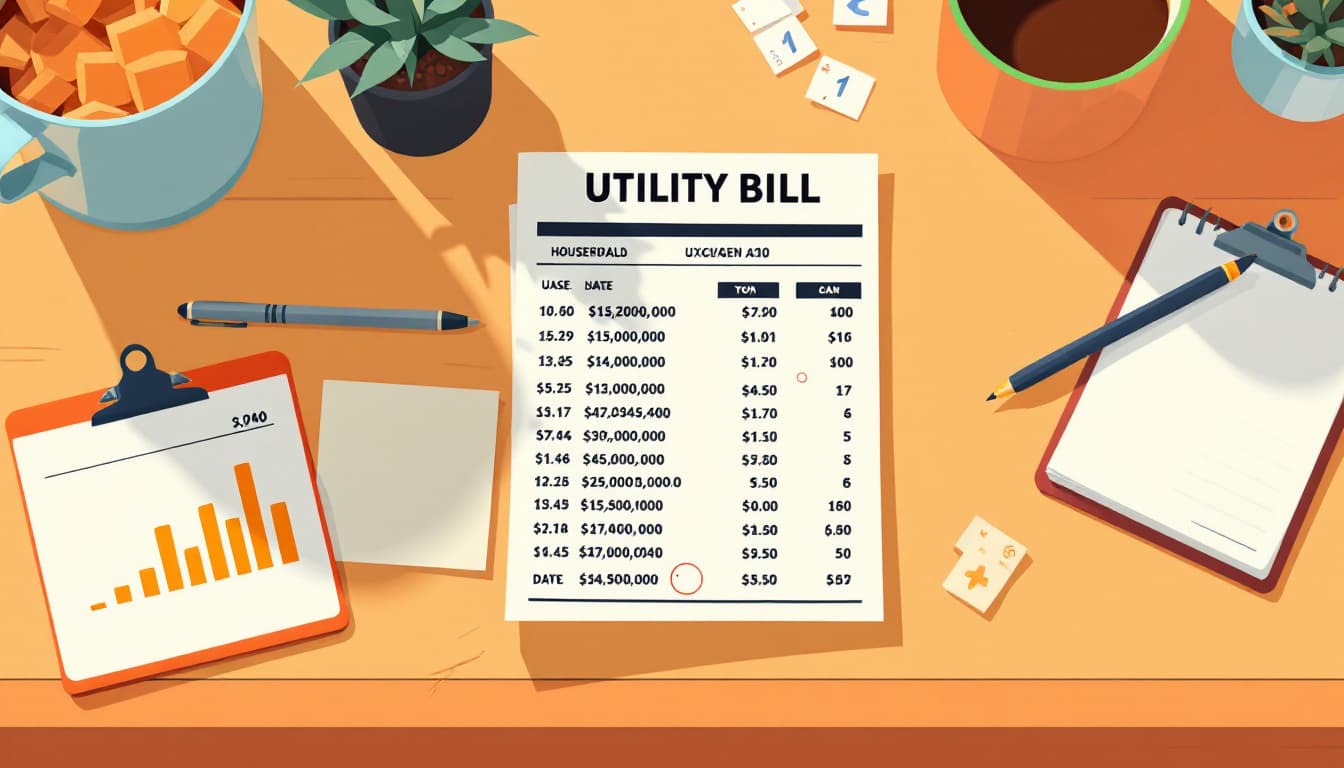
Somewhere in your email inbox — or in a stack of paper near the front door — is a document that arrived this month, got paid within a few days, and was forgotten immediately. It is your electric or gas bill. It is also one of the most information-dense documents your household receives, and almost nobody reads it.
Not skims it. Reads it.
This is not a complaint about consumer habits. It is an observation about a specific kind of literacy that pays modest dividends in ordinary times and pays large ones when something shifts — a rate increase, an extreme heat stretch, a landlord dispute, a household trying to cut $200 a month because the economy got uncertain. The skill is not "tracking your energy use" in a vague wellness-app sense. The skill is knowing what your bill is actually telling you, line by line.
What the bill actually contains
A typical residential electric bill has several distinct components, and most people only look at the total.
There is usually a base or customer charge — a flat fee you pay regardless of how much power you use. There is an energy charge, which is your consumption in kilowatt-hours multiplied by a rate. There may be a demand charge, more common in commercial accounts but creeping into some residential tiered structures. There are often riders — small line items with names like "fuel adjustment," "infrastructure surcharge," or "low-income assistance" — that float independently of your consumption. And there is the applicable tax layer on top of all of it.
Most households notice the total. Almost none notice that the rate per kilowatt-hour changed, or that a fuel adjustment rider doubled over eighteen months, or that they crossed into a higher pricing tier in July and August but not in the other ten months.
That last point matters practically. In tiered rate structures — which most large utilities use — the first several hundred kilowatt-hours you consume each month are priced at one rate, and everything above a threshold is priced at a higher rate, sometimes 40 to 60 percent higher. A household that consistently sits just above that threshold is paying a disproportionate amount for a relatively small slice of its consumption. Shifting two or three appliance habits — a dishwasher run moved from 6 p.m. to 10 p.m., a second refrigerator unplugged — can drop total consumption below the tier line for most of the year. The savings are not dramatic, but they are real and they recur monthly without ongoing effort.
Why most people get this wrong
The honest answer is that utilities do not design these documents for readability. The format varies by state, by utility, and sometimes by account type. Some bills present usage history in a small bar chart that is genuinely useful. Others bury it. Rate schedules — the documents that actually explain how you are being charged — are usually not included in the bill at all; they live on a utility's website under a tab called something like "Tariffs" that nobody visits without being directed there.
The preparedness community tends to skip this category entirely, treating energy as an infrastructure problem — backup generators, solar panels, battery banks — rather than a fluency problem. Generator talk is everywhere. Bill literacy is almost nowhere.
That is backwards for most middle-class households. The generator question is worth asking eventually. But if you do not know what your baseline consumption looks like, what drives your seasonal spikes, and what you are actually paying per kilowatt-hour versus what your neighbor on a different rate plan pays, you are making those larger infrastructure decisions without the foundational data.
What to do this week
Pull your last three bills. Paper or PDF — either works. You want three months of history to see a baseline.
Find the rate per kilowatt-hour on each one. If it changed between months, note by how much. This alone will tell you whether you have experienced a rate adjustment you did not notice.
Locate your utility's rate schedule online. Search your utility's name plus "residential rate schedule" or "tariff." Download the current schedule. Find your rate plan and read the tier thresholds. Note the exact kilowatt-hour number where you move into the higher tier.
Compare that threshold to your actual usage. If you are consistently 50 to 150 kilowatt-hours above the threshold, that is the most actionable number in your household energy picture. A home energy monitor — the plug-in kind that shows real-time draw on individual circuits — costs around $30 and will help you find which appliance or habit is pushing you over.
Set a calendar reminder for next month. Read the bill when it arrives, before you pay it. One minute. That is the practice.
The bigger picture
Bill literacy is a small skill with a specific character: it is boring enough that almost nobody builds it, specific enough that it actually transfers to real decisions, and durable enough that it compounds. A household that understands its utility bill is a household that can respond intelligently to a rate increase, catch a meter error, model the payback period on a heat pump, or make a real case to a landlord about an inefficient HVAC system.
None of that is survival. All of it is resilience.
The preparedness instinct often reaches for the dramatic solution — the generator, the solar array, the off-grid daydream. The more reliable path runs through the document that arrived in your inbox last week and took thirty seconds to pay and zero seconds to understand.