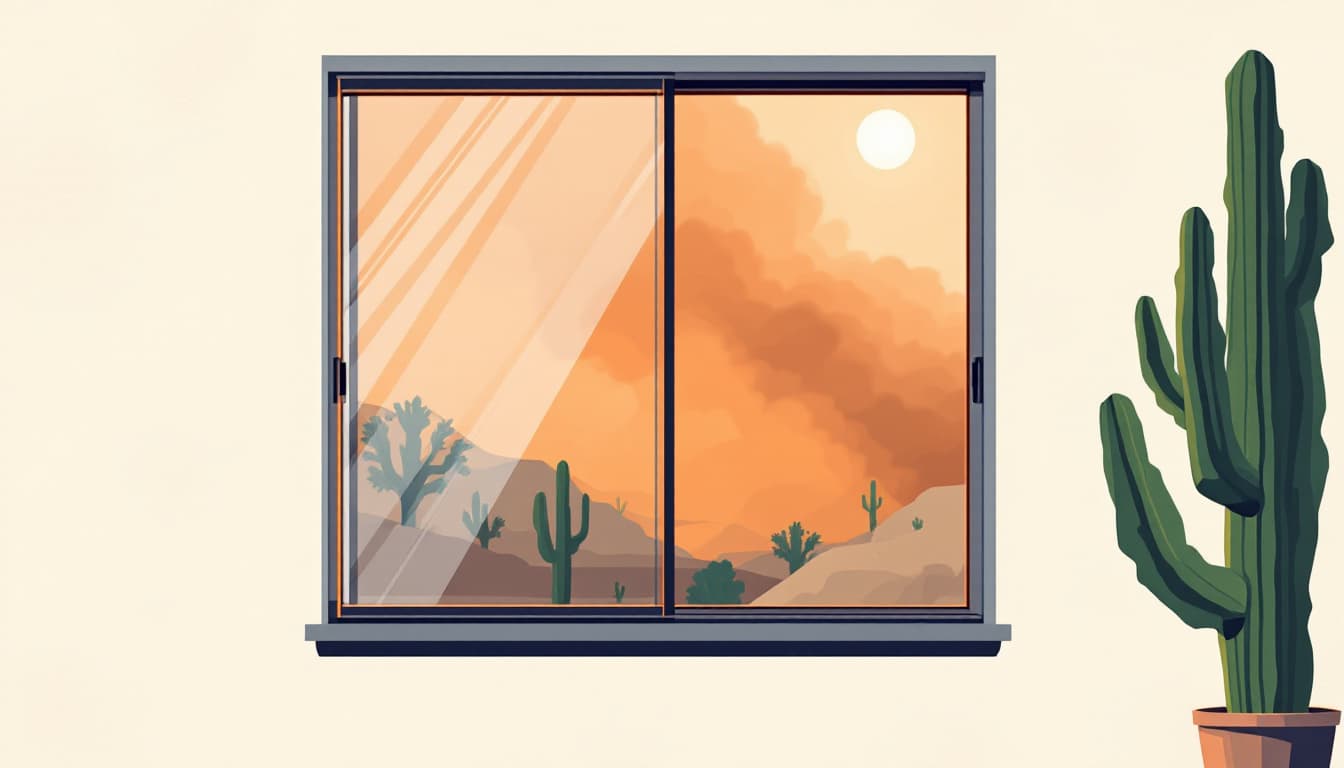
A report this week from AZ Family put two hazards on the same page: extreme heat blanketing the Phoenix metro and hazy, dust-laden air with more haboobs still possible. Most households treat these as separate problems. They aren't. When a haboob rolls through during a heat advisory, the standard advice — "go inside and seal up" — runs directly into the reality that sealing a house during 110-degree weather without proper prep can turn your home into a slow cooker.
That tension is what the weather coverage doesn't address. Here's what Arizona households should actually think through.
What's actually compounding here
Dust storms in the Valley arrive most frequently during the monsoon season, roughly June through September, when moisture collides with dry desert air and kicks up walls of particulate matter. The Arizona Department of Environmental Quality monitors PM10 levels — coarse particles — during these events, and they routinely spike to levels that are dangerous for anyone with respiratory conditions, and merely unpleasant for everyone else.
The heat layer makes this worse in three specific ways. First, people who would normally open windows to cool their homes at night have already been keeping them shut, so dust intrusion during a storm hits a house that's been running its HVAC hard. Second, dust clogs HVAC filters faster than normal, reducing efficiency exactly when you need it most. Third, power demand across the grid peaks during heat events — and dust storms have historically caused localized outages when they damage lines or trip equipment. APS and SRP both publish outage maps, but neither can tell you in advance how long your specific neighborhood will be down.
The combination — sealed house, dirty filter, possible outage, 110-degree ambient temperature — is where the real household risk lives.
What we'd actually do
Check and replace your HVAC filter before the next storm, not after. A filter that was adequate in May is probably already working harder than rated by August. Pull it out and look at it. If it's gray and dense, replace it now. During active dust events, a clogged filter forces your unit to work harder and can cause it to freeze or shut down on the hottest days. Keep one spare filter on hand — a standard MERV-8 or MERV-11 for most residential systems — so you're not scrambling after a haboob when hardware stores sell out.
Build a 72-hour power outage kit calibrated for heat, not cold. Most generic outage lists were written for hurricane or winter storm contexts. In Phoenix in August, the critical gap is cooling, not warmth. A battery-powered fan, a supply of electrolyte powder or tablets, and a plan for where you'll go if the outage extends past four hours (a friend's house with power, a 24-hour casino, a library) matter more than candles. If you have elderly family members or anyone on medications that require refrigeration, that four-hour threshold shrinks fast.
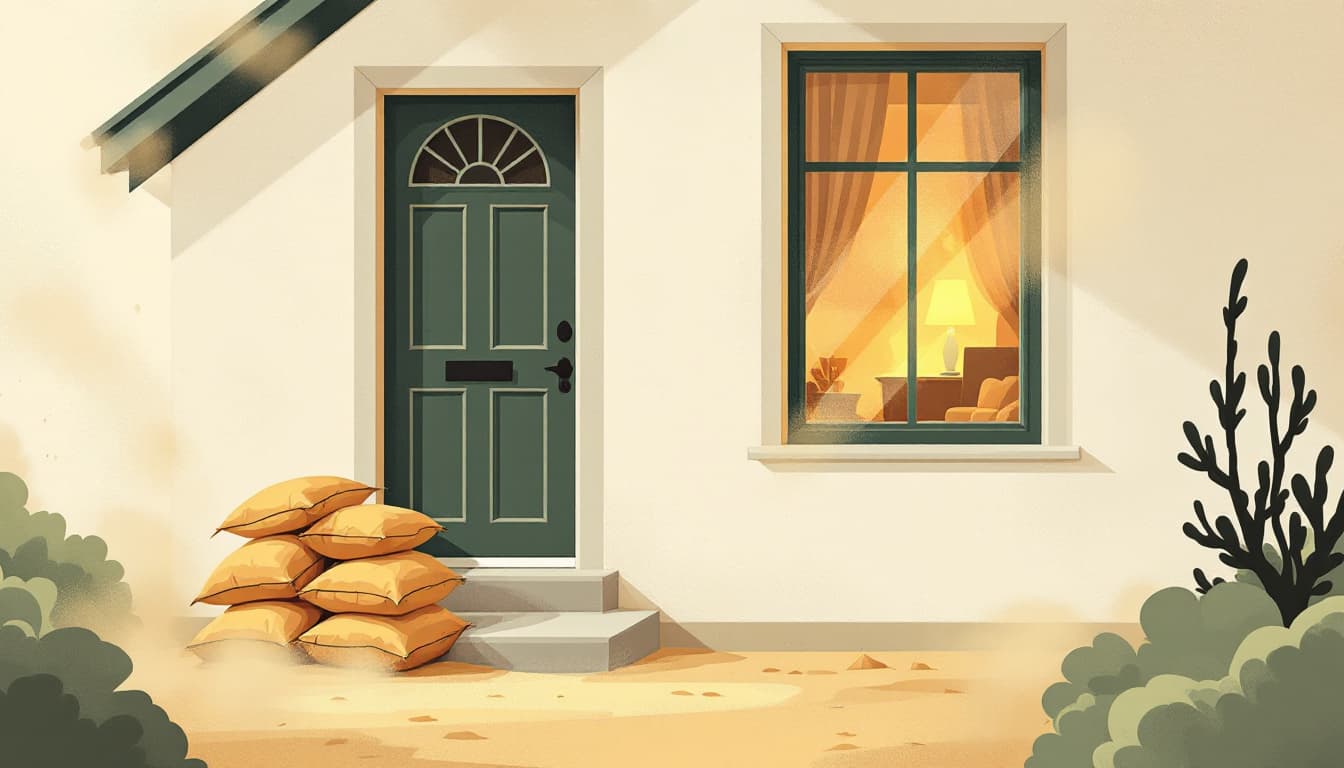
Seal the gaps dust actually uses to enter your home. Dust finds its way in through door sweeps, window AC units, attic vents, and dryer exhaust flaps. Walk your home's perimeter after the next minor dust event and look for fine silt lines — they'll show you exactly where the infiltration is happening. A tube of weatherstripping foam and a quality door sweep cost under $20 at any hardware store and meaningfully reduce both dust intrusion and cooling load.
Register vulnerable household members with your county's special needs registry. Maricopa County and Pinal County both maintain registries that flag addresses for priority welfare checks during extended outages or extreme heat emergencies. Registration takes about five minutes online. Most people don't know these exist. If you have an elderly parent, a family member with a serious medical condition, or anyone who relies on powered medical equipment, this is a low-cost safety net worth activating now.
Keep your vehicle's gas tank above half during peak season. This isn't about dramatic evacuation scenarios. It's about the practical reality that dust storms reduce visibility to near zero on I-10 and US-60, sometimes for 20 to 40 minutes. If you need to shelter in your car or take an alternate route, a near-empty tank creates options problems. The half-tank rule is a simple habit that costs nothing beyond slightly more frequent fill-ups.
The bigger picture
Arizona's summer hazard season has always required a different kind of readiness than what works in other regions. The gap in most household prep isn't gear — it's calibration. Generic lists assume rain, cold, and flooding. Phoenix households need lists that assume heat, dust, and grid strain arriving at the same time, compounding each other.
Durability here looks like a house that stays livable for 72 hours without grid power in August, a car that can sit in a haboob without stranding you, and lungs that aren't compromised by a dirty filter on the worst air-quality day of the year. None of that requires a bunker. It requires a filter, a sweep, and a plan.