Walk into any preparedness forum and spend twenty minutes reading. You will almost certainly find someone describing the next pandemic flu as a civilization-ending event — a 1918-style wave that kills 50 million people, collapses supply chains, and leaves the unprepared scrambling in the dark. The implicit sales pitch that follows usually involves stockpiling antivirals, N95 respirators by the case, and a sealed safe room.
We are not here to tell you that flu pandemics are nothing. They are real, they cause genuine disruption, and 1918 was genuinely catastrophic. We are here to tell you that the doom-prepper framing fundamentally misreads the historical record — and that misreading leads families to prepare for the wrong things.
The actual distribution of pandemic outcomes
Since 1918, the world has experienced six pandemic influenza events significant enough to earn the designation. The 1918 H1N1 pandemic remains the catastrophic outlier, with global mortality estimates ranging from 20 to 50 million deaths. Every other influenza pandemic in the century since has produced mortality rates that, while serious, were orders of magnitude lower.
The 1957 H2N2 "Asian flu" and the 1968 H3N2 "Hong Kong flu" each killed roughly one to four million people globally — terrible numbers in absolute terms, but representing a global case fatality rate well below one percent. The 2009 H1N1 pandemic, which preparedness circles had been predicting for years, ultimately produced a case fatality rate lower than seasonal flu in most age groups. The WHO declared a pandemic, and then the world largely went on.
That is the actual distribution you are drawing from: one severe outlier in the past hundred years, and five events that caused disruption and death but did not collapse modern infrastructure.
Why the fear is overblown — and why it persists
The 1918 comparison is doing enormous work in pandemic flu anxiety, and it does not earn that work. The 1918 pandemic hit a world without intensive care units, without mechanical ventilators, without modern antibiotics to treat secondary bacterial pneumonia (which drove a significant portion of deaths), and without any coordinated public health surveillance infrastructure. It also hit populations immunologically naive to that particular strain in a way that produced an anomalous age-mortality curve — young adults died at unusually high rates.
None of those conditions are straightforwardly reproducible today. This is not a claim that a severe pandemic is impossible. It is a claim that treating the 1918 worst case as the baseline planning scenario is a category error. You would not plan your household fire preparedness around the assumption that your home will definitely produce a structure fire that jumps to your entire block.
The persistence of the fear is partly explained by the preparedness industry's business model, which benefits from high-stakes threat framing. It is also explained by the legitimate trauma of the COVID-19 pandemic, which demonstrated that respiratory disease can cause serious social and economic disruption even without catastrophic mortality. But COVID also demonstrated something important: most households needed two to four weeks of food, the ability to work or school from home, and access to basic medications. They did not need a bunker.
What you actually got wrong in the last pandemic
The honest household audit from the 2020-2022 period suggests most families had gaps in three areas:
- Short-supply medications: Common over-the-counter drugs were periodically unavailable. Families who relied entirely on just-in-time pharmacy access had problems.
- Flexible income: Households with a single income source tied to in-person work were vulnerable. This is a financial preparedness problem, not a flu preparedness problem.
- Chronic condition management: People with ongoing medical needs discovered that healthcare access during disruption is harder than they expected.
None of these are solved by a case of N95s.
What to do this week
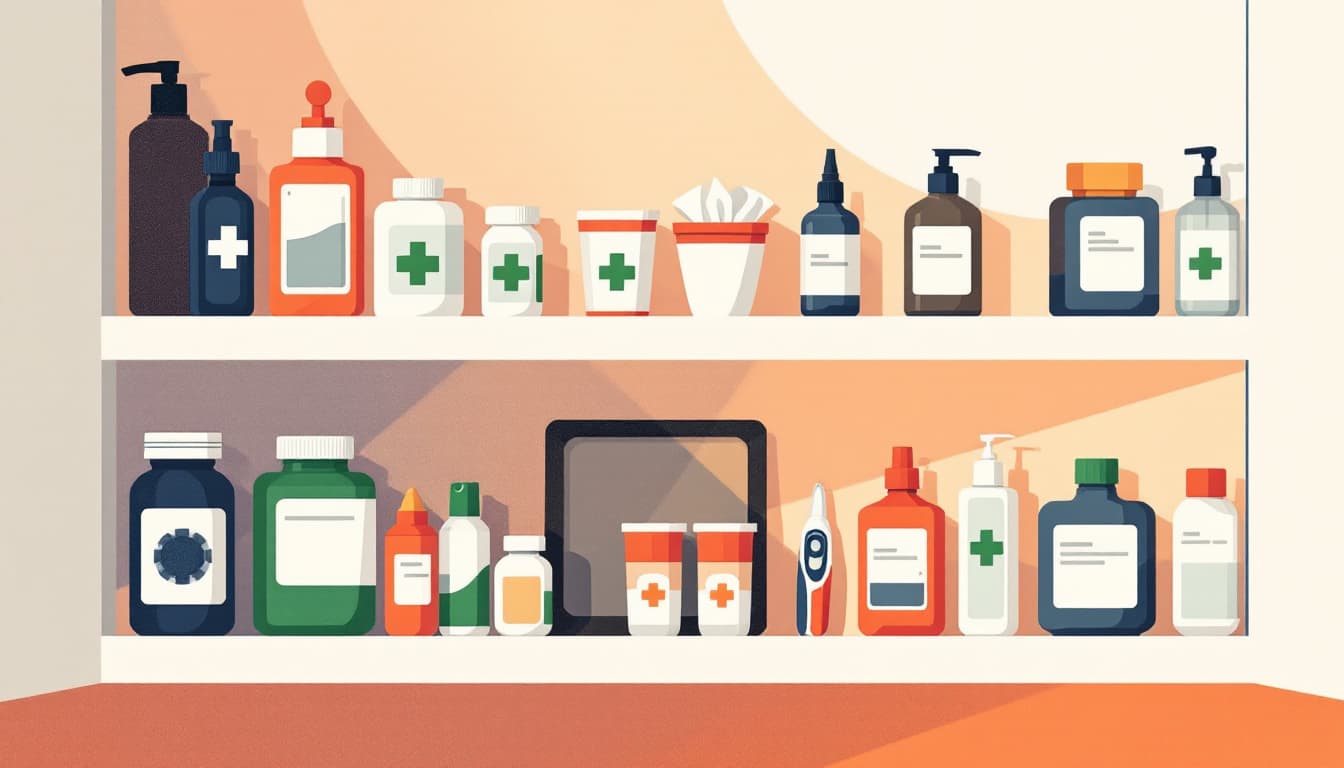
- Audit your medication cabinet. Keep a 30-day supply of any maintenance prescriptions, and a reasonable stock of OTC antivirals, fever reducers, and electrolyte supplies. "Reasonable" is two to three weeks worth, not six months.
- Write down your healthcare contacts. Your primary care physician, your pharmacy's direct line, urgent care options within ten miles. Paper copy, not just in your phone.
- Check your sick-day economics. Does your household have four weeks of expenses covered if one earner cannot work? If not, that is the actual pandemic preparedness gap worth closing.
- Update vaccines. This is boring advice that works. Annual flu vaccination and keeping your household's immunization records current is more protective than anything you can buy from a preparedness retailer.
The bigger picture
The pandemic flu threat is real and worth taking seriously — just not at the level the doom-prepper framing implies. A clear-eyed reading of the historical record shows a distribution of outcomes where the catastrophic tail is genuinely rare, and where the more likely scenario is four to eight weeks of significant disruption followed by gradual normalization. That is a different, more achievable, and more honest target to prepare for.
Preparing for the realistic scenario well is more valuable than preparing incompletely for an apocalyptic one.