The CDC's wastewater surveillance dashboard now publishes state-level respiratory virus data — SARS-CoV-2, influenza, and RSV — updated weekly. If you haven't used it, you've been missing one of the more useful free tools available for household planning.
Wastewater signal runs roughly one to two weeks ahead of clinical case counts. Sick people shed viral RNA before they see a doctor, before they test, and before a hospital system registers the surge. That lag matters. By the time your local urgent care is overwhelmed, the wastewater signal already told you it was coming.
What's actually changing
The CDC's state and territory wastewater page, updated regularly through the agency's NWSS (National Wastewater Surveillance System), gives Oregon its own data track. That means households along the Willamette Valley corridor, in the Portland metro, and in smaller systems served by participating treatment plants can now watch the signal rise and fall with some geographic specificity — rather than inferring from national averages.
Oregon has been an active participant in NWSS since the program expanded beyond COVID tracking. The Oregon Health Authority coordinates with local utilities to report into the federal system. Not every small municipality in eastern Oregon or the coast is covered, but coverage has grown considerably in recent years, and the trend lines for the state's major population centers are meaningful.
What the dashboard doesn't do is make decisions for you. It shows concentration trends — rising, flat, or falling — not a verdict about whether you should mask or cancel the camping trip. That's appropriate. The data is a signal, not a directive. Your job is to know how to read it.
The relevant pattern: when two or more respiratory virus lines on Oregon's state chart trend upward in the same week, you're looking at a compound season — the kind that stresses ERs, depletes pharmacy shelves, and backs up pediatric clinics. Those moments are exactly when having a stocked medicine cabinet and a few days of easy food on hand stops being paranoid and starts being practical.
What we'd actually do
Bookmark the CDC wastewater dashboard and check it every two weeks. The URL is cdc.gov/nwss — go directly to the state/territory view and filter to Oregon. This takes about 90 seconds. You're not monitoring a threat; you're reading a weather map for illness season. Make it as routine as checking the forecast before a Cascades hike.
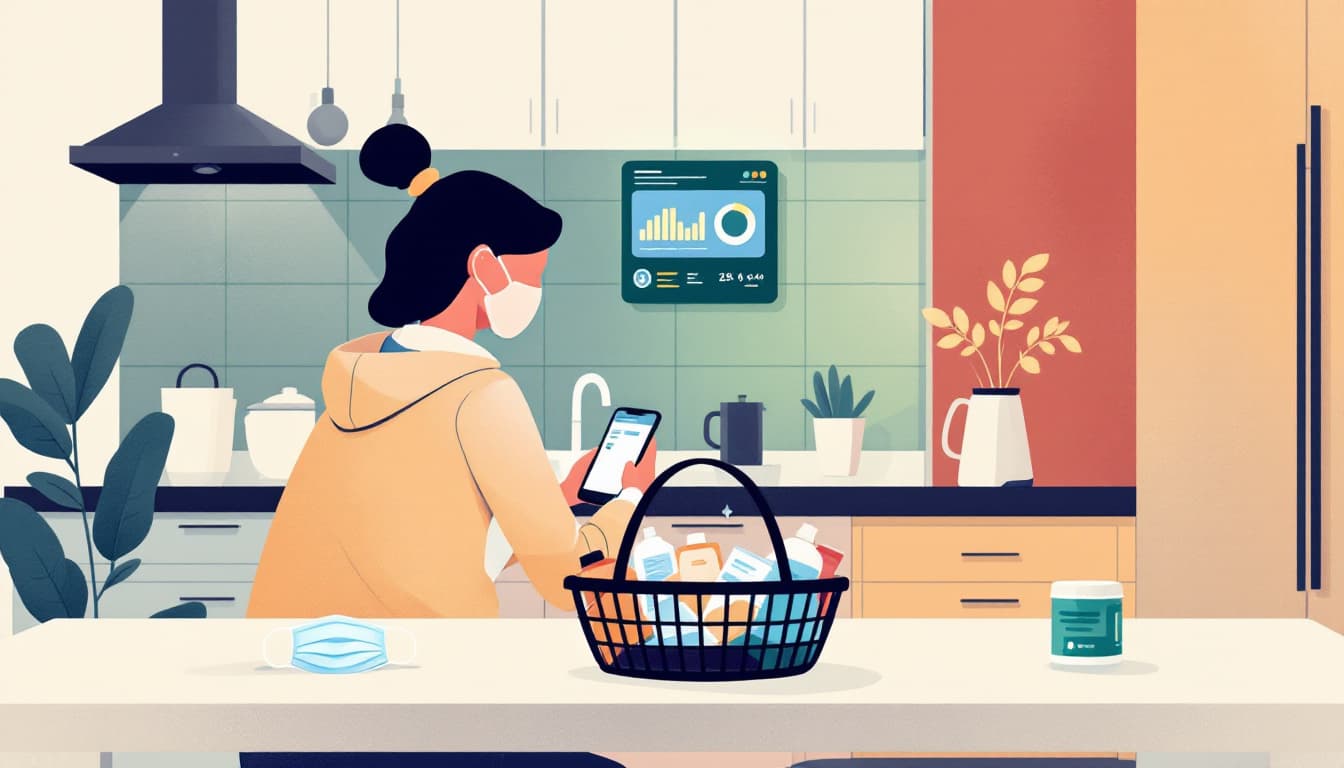
Two weeks of lead time is enough to make a pharmacy run without competing with panicked buyers. When Oregon's SARS-CoV-2 or flu lines show three consecutive weeks of increase, that's your cue to verify you have what you'd actually need: fever reducers in the right doses for every person in the household, electrolyte supplies, and a few extra days of easy-prep food. Not a bunker. A buffer.
Know which wastewater treatment plants near you report into NWSS. The CDC dashboard lets you drill into facility-level data for states with multiple reporting sites. If you're in Eugene, Bend, or the Portland metro, you likely have local data. If you're in Coos Bay or La Grande, check whether your system participates — and if it doesn't, use the nearest large city as a proxy signal. Oregon Health Authority's communicable disease page sometimes publishes supplemental regional updates worth cross-referencing.
Don't conflate signal with severity. Viral RNA concentration in wastewater tells you how much virus is circulating. It does not tell you how sick people are getting, which variants are dominant, or whether this wave will hit your household. High wastewater signal in a season where your family is current on vaccines and has recent natural immunity means something different than high signal in a season where you've skipped boosters and your kids started a new school. Adjust your response to your household's actual risk profile, not just the number on the chart.
Keep a simple illness log. When someone in the house gets sick, note the date and symptoms. After two or three seasons, you'll have your own household data — when you typically get hit, which illnesses move through the whole family versus one person, how long recovery takes. That baseline makes the CDC wastewater signal more interpretable, not less.
The bigger picture
Wastewater surveillance is one of the quieter public health infrastructure wins of the last several years. It's not perfect, and coverage gaps mean rural Oregonians shouldn't assume silence equals safety. But for most households in the state's population centers, it's a free, early, low-noise signal that most people ignore entirely.
Preparedness that works isn't about reacting to headlines. It's about building enough situational awareness that you're never surprised by something predictable. Respiratory virus season, every year, is predictable. Oregon's wastewater data just makes the timing visible. Use it.