A KATU report this week put the Pacific Northwest on notice: temperatures across Oregon and Washington are flirting with triple digits, with the peak arriving Monday. The Willamette Valley, the Columbia Gorge corridor, and the southern Oregon interior are all in the forecast window. If you've been putting off thinking about heat preparedness, the window to act is the 48 hours before the thermometer hits its high — not the afternoon it does.
What's actually changing
Oregon is not Phoenix. The state's housing stock reflects that. Oregon Health Authority data from the 2021 heat dome documented over 100 heat-related deaths statewide during a single long weekend, with the majority occurring in older homes without air conditioning. The Willamette Valley in particular sits in a geography that traps heat: the Coast Range blocks marine air to the west, and the Cascades wall off the east. When a high-pressure ridge parks overhead, Portland, Salem, and Eugene can bake at temperatures that would challenge any household without mechanical cooling.
The grid concern is real but often overstated in the short term. Oregon's summer peak demand is lower than its winter heating load, and utility-scale grid emergencies during a single three-day heat event are less likely than rolling demand reductions. What's more common and more dangerous at the household level is a single circuit breaker tripping when two window AC units, a refrigerator, and a chest freezer all run simultaneously — a failure that leaves a family with no cooling and no warning.
The people most at risk aren't the people reading this. They're elderly neighbors, renters in older apartment buildings, and people in manufactured housing, which superheats faster than any other structure type. That's relevant to your household's planning because those people may need your help.
What we'd actually do
Check your cooling equipment today, not Monday morning. Window units and portable ACs pulled from storage may have failed capacitors or dirty filters that cut efficiency by 20–30 percent. Run yours now under load for 20 minutes. A unit that struggles to cool a room when it's 75°F outside will fail you at 98°F.
The time to discover a dead compressor is a Tuesday in May, not during a heat peak. If you don't have a window unit, identify your nearest Oregon cooling center now — OHA maintains a county-level map updated in real time during heat events, and Multnomah, Lane, and Marion counties all operate public cooling sites. Knowing the address before you need it is the entire point.
Redistribute your chest freezer load before the heat hits. A full chest freezer runs more efficiently than a half-empty one and maintains safe temperatures longer during a power interruption. If yours is sparse, fill gallon zip-lock bags with water and freeze them now. They cost nothing, and a freezer full of ice blocks buys you 24–36 hours of food safety if the power goes out.
Locate your neighbors over 70 who live alone. This is not abstract. During the 2021 heat dome, the deaths were concentrated in older adults in poorly ventilated homes who didn't ask for help. Knock on a door. Ask if they have working cooling. If not, offer your house or help them find a cooling center. This is the highest-impact action any Oregon household can take this week.
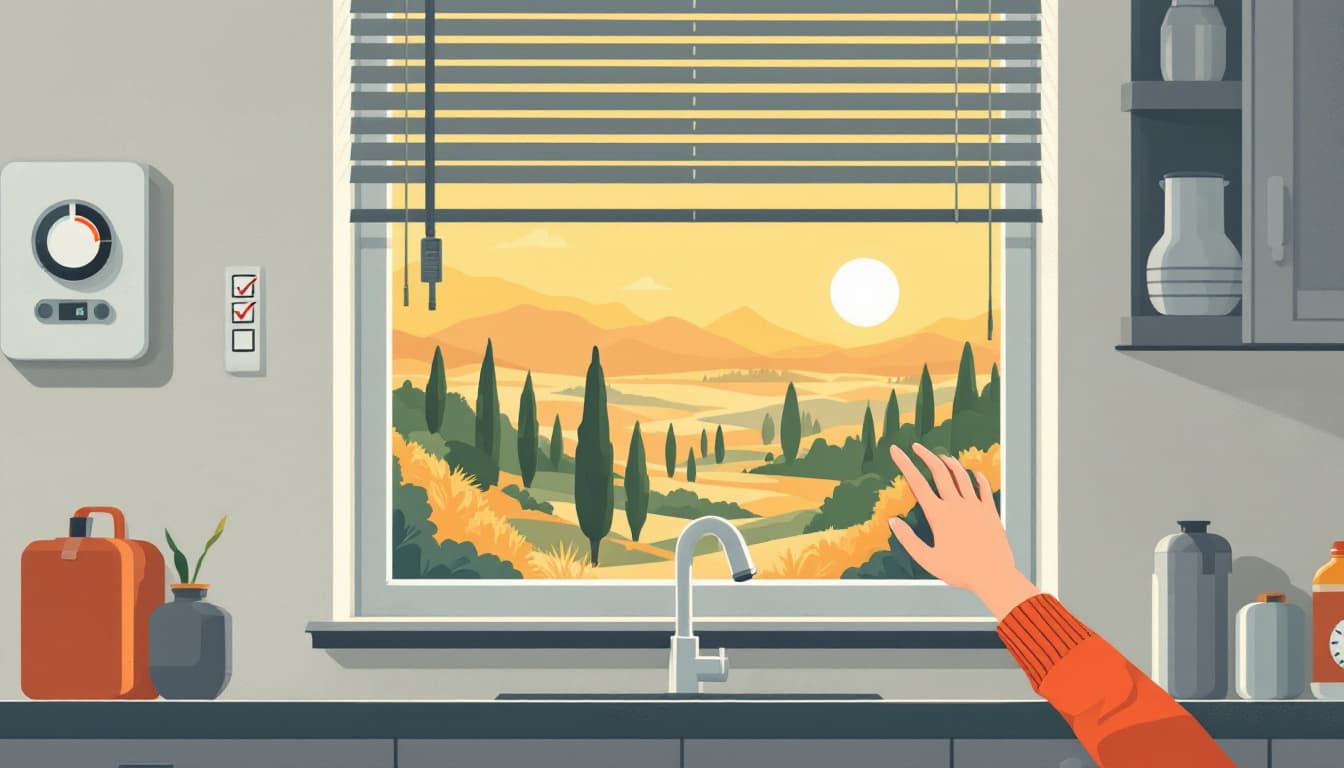
Seal your house in the morning, not the afternoon. The single most effective low-cost heat mitigation for un-air-conditioned or partially cooled Oregon homes is thermal mass management: close windows, blinds, and curtains before 9 a.m. on a high-heat day to trap the overnight cool. Opening windows at 3 p.m. because it feels stuffy defeats the entire strategy. The house that starts the afternoon at 72°F ends it at 85°F. The house that starts at 78°F can hit 95°F by evening.
Know your circuit capacity before you stack loads. If you're running two window units on the same 15-amp circuit, you're one refrigerator compressor cycle away from a tripped breaker. Map which appliances are on which circuits. Split cooling loads across circuits. Keep a flashlight and your breaker panel location known to every adult in the household.
The bigger picture
Oregon heat waves are no longer anomalies. The pattern since 2021 has been a roughly every-other-summer extreme event in the western valleys, with severity still unpredictable in advance. The goal for households isn't to prepare for the apocalypse — it's to be the house on the block that stays functional, helps a neighbor, and doesn't end up in an emergency room. That's durability. It requires less gear than the prepper industry wants you to believe, and more attention to the people around you than most preparedness writing ever mentions.