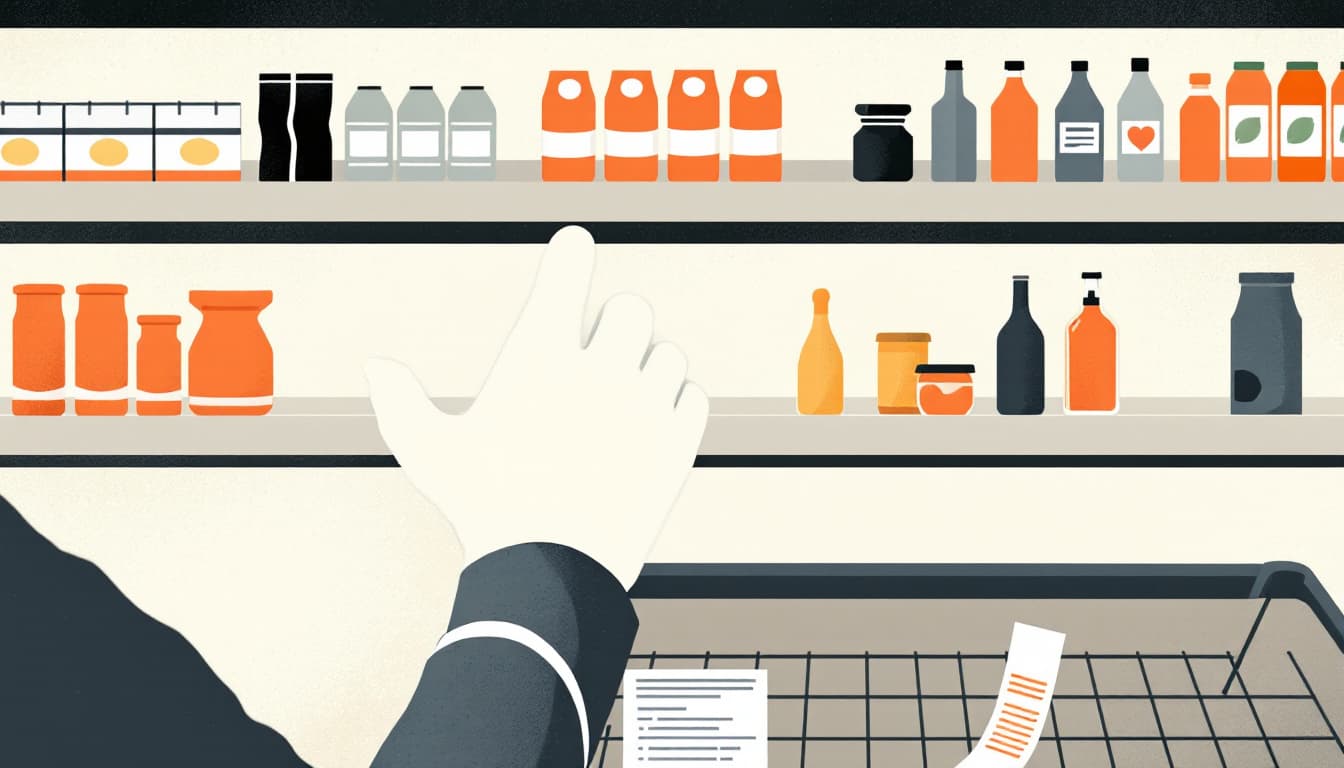
A report this week from Yahoo Finance highlighted Kevin O'Leary — the Shark Tank personality and investor with an estimated net worth of $400 million — physically comparing paper towel prices at a Walmart store as a demonstration of his personal cost-consciousness amid rising consumer prices. The story circulated widely as a kind of performative frugality moment from a celebrity businessman.
The more substantive backdrop is the number that prompted the story's hook: U.S. grocery costs have climbed 5.9%, according to the figures Yahoo Finance cited. That rate, if confirmed by Bureau of Labor Statistics data for the relevant measurement period, would represent one of the sharper single-period jumps in food-at-home prices in recent years, accelerating well beyond the sub-3% range that had characterized much of 2024 and early 2025 as post-pandemic food inflation appeared to be cooling.
Paper towels, the prop O'Leary chose for his demonstration, fall under household supplies rather than the USDA food basket, but they share supply chains — wood pulp, trucking, and retail distribution costs — with many packaged grocery staples, meaning pressure in one category frequently signals parallel pressure in adjacent ones.
The 5.9% figure is a year-over-year aggregate, which means it flattens significant variation across subcategories. Proteins, cooking oils, and shelf-stable staples have historically shown more volatility than the composite grocery index, and in inflationary environments those categories tend to outpace the headline number. Shoppers focused only on the top-line percentage may be underestimating the actual cost shift on specific items they buy regularly.
What the O'Leary story does not address — and what matters specifically for anyone thinking about household supply depth — is that a 5.9% grocery inflation rate compounding against inventory purchased months or a year ago effectively alters the replacement cost of stored goods. Items bought at last year's prices now carry a meaningful discount relative to current shelf prices, a dynamic that reverses for anyone who deferred purchases. Our paper towel and household supply bulk-buying analysis covers the unit-cost math in detail for those tracking this specific category. The spread between warehouse-club unit pricing and standard retail has widened during inflationary periods historically, and current conditions fit that pattern.
O'Leary's stunt, regardless of its sincerity, arrived at a moment when the gap between what wealthy commentators describe as prudent behavior and what middle-income households are actually navigating in weekly grocery runs is measurably large — and the 5.9% figure is the clearest quantification of that gap available right now.