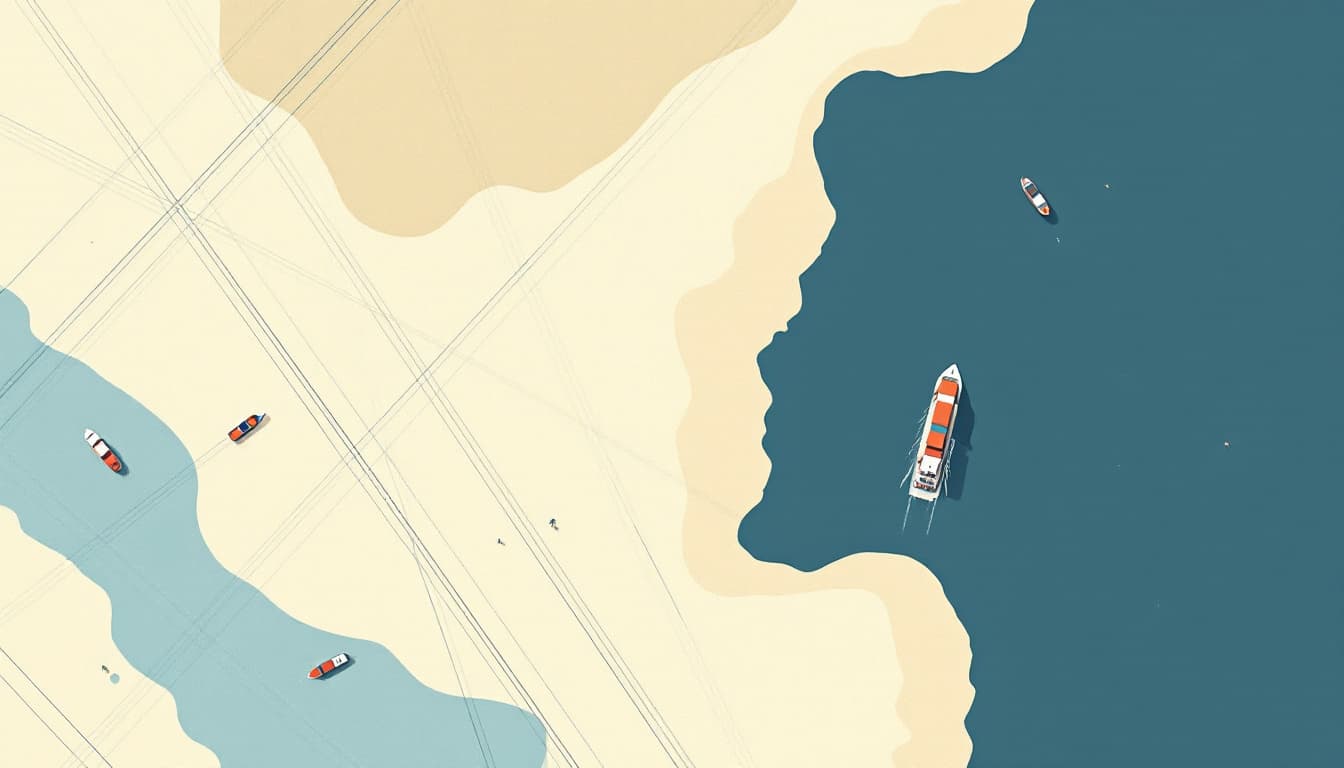
New Zealand naval vessels transited the contested Taiwan Strait this week, according to a report from Devdiscourse, in what marks a notable step for a country that has historically kept a lower profile in high-tension Indo-Pacific waterways. The transit places New Zealand alongside the United States, the United Kingdom, Canada, and Australia — fellow Five Eyes intelligence partners — in having sailed warships through the 110-mile-wide strait that separates mainland China from Taiwan.
The strait carries an estimated 88 million barrels of oil per day and handles roughly half of the world's container ship traffic, making it one of the most commercially critical chokepoints on earth. China claims the strait as its internal waters and has consistently objected to foreign naval passages, framing them as provocations. The United States and its allies assert that the strait — or at least the portions that fall within Taiwan's and international waters — is a legitimate international waterway subject to freedom of navigation. Beijing's foreign ministry, as has become customary, lodged a formal protest following news of the New Zealand transit.
New Zealand's defense posture has evolved noticeably over the past several years. Wellington has deepened its participation in AUKUS-adjacent activities and regional maritime exercises even without being a formal member of the nuclear submarine pact. The timing of this transit, coming in September 2026, aligns with a broader pattern of allied nations incrementally normalizing naval presence in the strait as a diplomatic signal.
What the general news cycle tends to skip over is the strait's role not just in geopolitics but in the physical movement of goods that stock shelves and warehouses in the Americas, Europe, and Oceania. Approximately 20 to 26 percent of global trade by value moves through the South China Sea and Taiwan Strait corridor annually. A sustained closure or sustained military friction — even short of active conflict — would create cascading disruptions to semiconductor components, consumer electronics, and industrial inputs that travel that route from East Asian manufacturing hubs. Historical modeling of even a partial blockade scenario suggests global container shipping rates could spike within two to three weeks of an incident, with spot shortages in electronics and durable goods appearing within four to six weeks in downstream markets. That dependency is the underlying reason that allied navies treat unimpeded transit not as a provocation but as the maintenance of a status quo that the global economy is structurally built around.