A brief stretch of summer rain doesn't end a drought. It pauses one. That distinction matters more than most households realize, and right now North Carolina is sitting in the pause.
A report this week from WRAL noted that recent rainfall has reduced the share of North Carolina land classified under "exceptional" drought conditions — the U.S. Drought Monitor's most severe tier. That's real progress. But the monitor's data also shows that significant portions of the state, particularly across the western Piedmont and mountain foothills, remain in serious or extreme drought classifications. One or two good rain events does not recharge aquifers, refill reservoirs to seasonal norms, or restore soil moisture to depth. It just makes the grass green again and causes people to stop paying attention.
What's actually changing
The U.S. Drought Monitor updates weekly, and a downgrade from "exceptional" to "extreme" or "severe" is not a recovery. It's a reclassification. The underlying deficit in groundwater and surface water can persist for months after rainfall resumes.
For North Carolina specifically, this matters at the household level in two ways. First, private well users — concentrated heavily in rural Piedmont and western counties — may still be pulling from aquifers that haven't recovered. Shallow wells fail or produce sediment long before the drought map improves. Second, municipal systems that draw from reservoirs, including systems serving smaller towns in the foothills, may still be operating under voluntary or mandatory conservation notices even as the state-level news sounds optimistic.
The rain also arrived unevenly. Parts of the Triangle and coastal plain received more than western areas. If your county was the one that got the thunderstorm, your neighbor's county an hour west may still be critically dry. Check the NC Department of Environmental Quality's drought status page, not just the regional news headline.
What we'd actually do
Check your county's specific drought classification before assuming the emergency is over. The NC Drought Management Advisory Council publishes county-level data, and the U.S. Drought Monitor maps at droughtmonitor.unl.edu are freely accessible and updated every Thursday. Look at your county — not the state average.
The state map aggregates wildly different conditions. A household in Catawba County and one in Wake County are not experiencing the same water situation right now, and planning as if they are leads to either unnecessary panic or unwarranted complacency.
If you're on a private well, this is the week to test your water and check your pump. Drought stress causes sediment intrusion and, in some cases, bacterial contamination as water tables shift. NC State Extension's well water testing program can connect you to a certified lab — costs are typically low. If your water looked or smelled different during the drought, test before assuming it's resolved.
Recovery rainfall stirs things up. Well users who noticed discoloration or unusual odor in recent weeks should not assume those problems disappeared with the rain. They may have gotten worse temporarily before they improve.
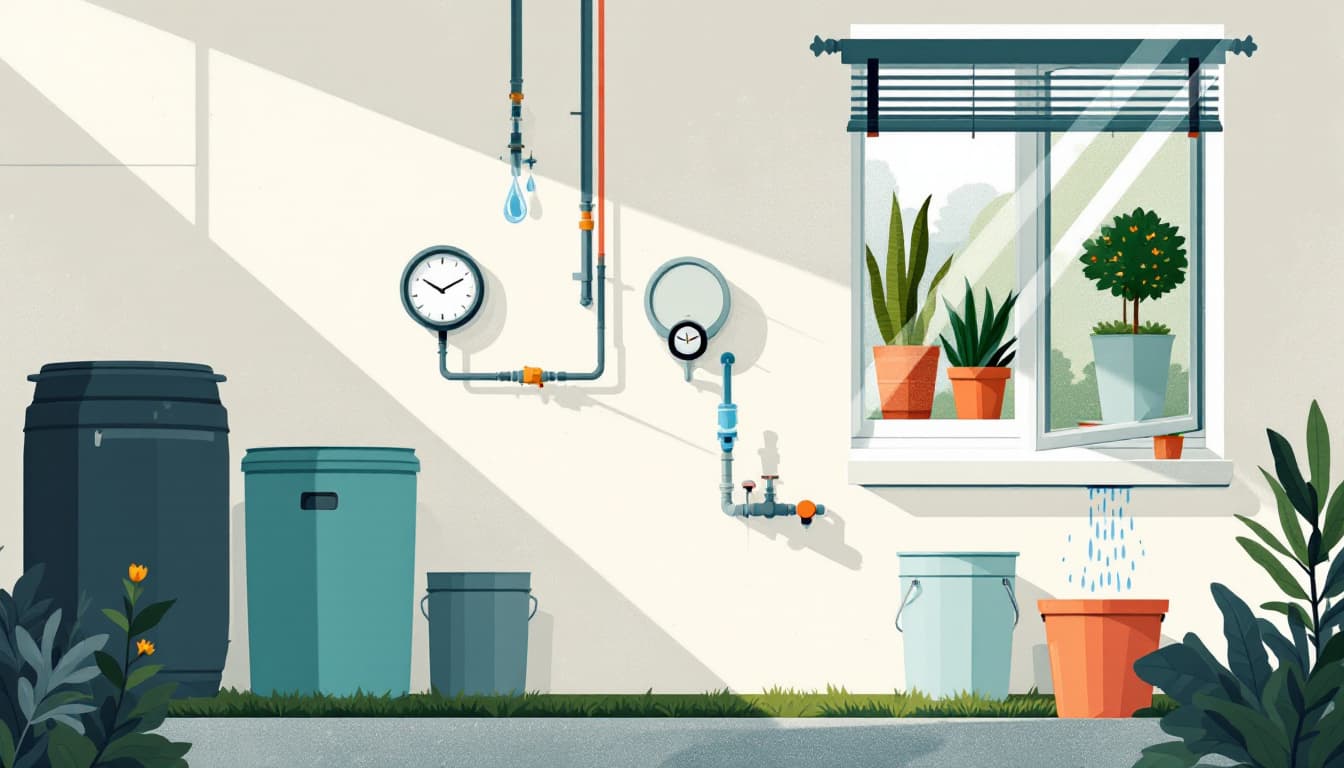
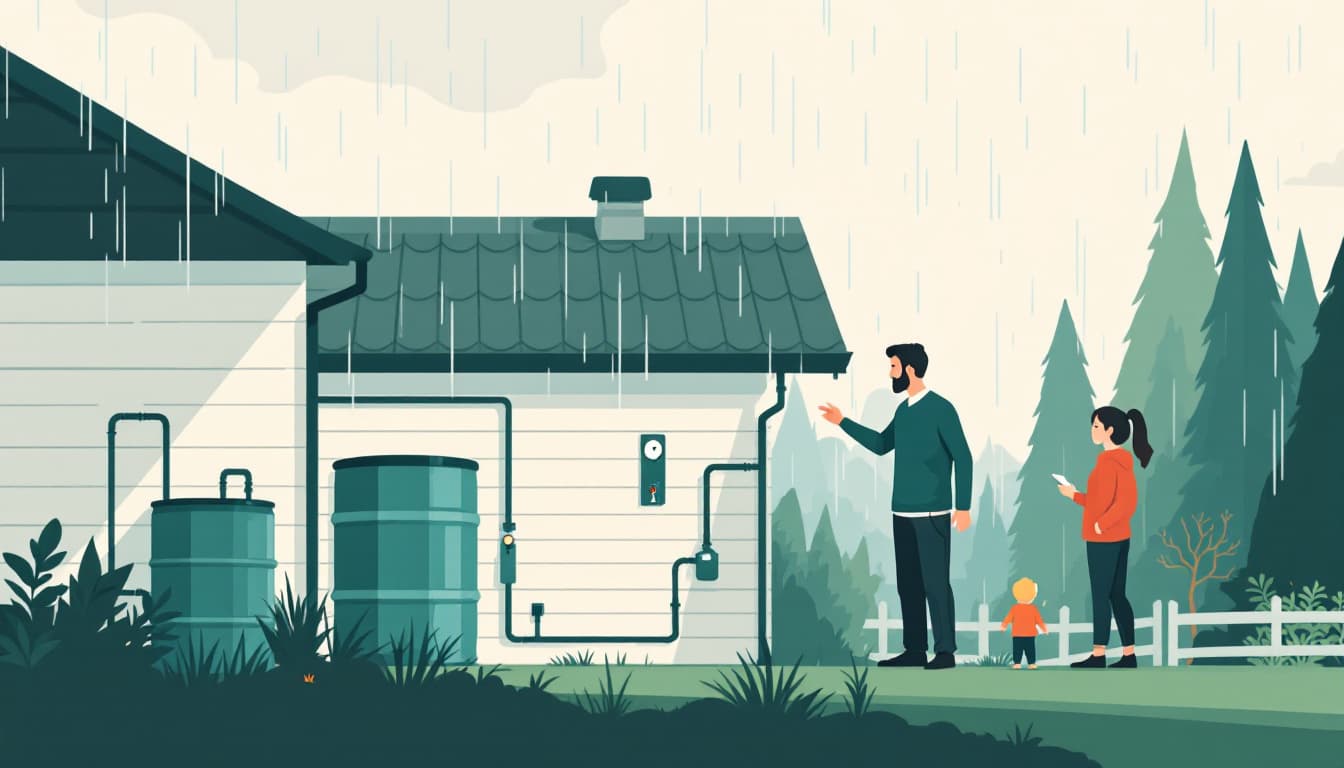
Price and plan for a rain barrel or cistern system now, before the next dry stretch. Home Depot and Lowe's both carry basic 50-gallon rain barrels starting around $80-100. A two-barrel system connected to a downspout can capture several hundred gallons from a moderate rain event, enough to keep a garden alive through two to three weeks of dry conditions without touching your municipal supply.
This is not a doomsday purchase. It's a utility hedge. North Carolina has experienced significant drought years in cycles, and the pattern has not been improving. Installing the infrastructure during a wet week means you're not scrambling during the next dry one.
If your municipality issued conservation restrictions this summer, find out whether they're still in effect. Some utilities lift restrictions the moment reservoir levels tick up; others maintain them through a longer recovery threshold. This is a five-minute phone call or website check. Violating conservation ordinances carries fines in many NC municipalities, and the rules don't always get publicized when they end.
Make a note of your water meter readings today. This establishes a baseline. If a dry stretch returns in August or September — and late-summer drought in the Piedmont is historically common — you'll have concrete data on your household's daily use and can make informed reductions rather than guessing.
The goal here is not to extend an emergency that's easing. The goal is to not waste the window. Drought infrastructure — storage capacity, tested wells, known conservation baselines — costs almost nothing to build when the pressure is off and pays off significantly when it returns. North Carolina households that treat this rain as a reset rather than a reprieve will be better positioned for what comes next summer, and the one after that.
Durability isn't built during the crisis. It's built in the pause between them.