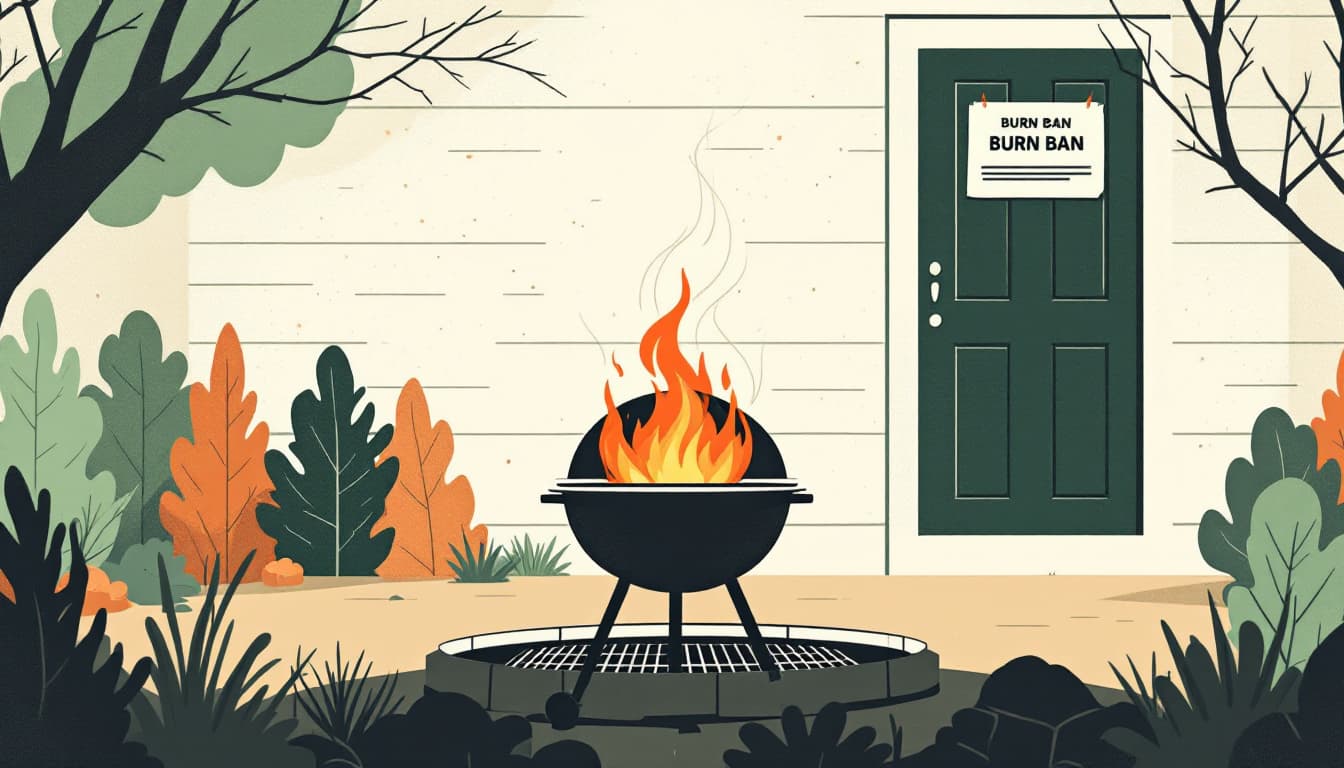
Drought conditions severe enough to trigger official burn bans have spread across more than 20 counties in Mississippi, according to a report this week from Twin States News. The restrictions prohibit open burning — a common practice in rural areas for land clearing and debris disposal — as abnormally dry conditions elevate wildfire risk across the state heading into the fall season.
Mississippi is not historically grouped with the American West when drought and fire risk are discussed, but the current pattern reflects a broader regional dryness that has drawn attention from state emergency managers. Burn bans of this geographic scale are relatively uncommon in the state and signal that conditions have moved beyond routine seasonal dryness into territory that officials consider genuinely hazardous. The specific counties affected span multiple regions of the state, suggesting the drought is not concentrated in a single watershed or climate zone.
The preparedness angle that most general coverage skips is the groundwater and municipal supply dimension. When drought conditions are widespread enough to trigger burn bans — a threshold tied to soil moisture, vegetation dryness, and fire weather indices — the same soil-moisture deficit is typically stressing shallow wells, private cisterns, and smaller rural water systems that draw from surface sources. Mississippi has a significant rural population on private wells, and a multi-county drought of this intensity can begin dropping static water levels within weeks, well before any formal water emergency is declared. Households on private groundwater sources in affected counties who haven't checked their well depth or storage capacity recently may find themselves with less margin than they assume. Our well water and storage review covers what that assessment looks like in practical terms.
Twin States News did not specify an end date for the bans, which are typically lifted county-by-county as conditions improve or rainfall arrives. State forestry and emergency management agencies generally coordinate the lifting of such restrictions based on updated fire danger ratings.