A report this week from WDSU confirmed what anyone stepping outside in southeast Louisiana already knows: the heat is not breaking. Temperatures are forecast to stay dangerous through at least the first days of August, with heat index values in the 110–115°F range across much of the state — conditions that Entergy Louisiana and the Louisiana Public Service Commission have both flagged as high-stress periods for the grid in past summers.
This is not unusual for July in Louisiana. What makes it worth your attention is duration. A single hot weekend strains the body. Ten or more consecutive days of extreme heat strains everything: the household power supply, the refrigerator running full-tilt around the clock, the medication that needs to stay below 77°F, the elderly neighbor who hasn't answered the door since Thursday.
What's actually changing
Extended heat events do things that a hot afternoon doesn't. Rolling brownouts become more likely as residential and commercial demand peaks simultaneously — Entergy's distribution infrastructure in New Orleans and Baton Rouge has shown load-shedding vulnerability in prior multi-week heat events. Food in a refrigerator set to 37°F will reach unsafe temperatures within four hours of a power cut. A freezer that's full holds temperature for roughly 48 hours; a half-empty one, closer to 24.
Medications are a sharper problem than most households realize. Insulin, certain thyroid drugs, and some biologics lose potency or become unsafe above specific temperatures — most in the 77–86°F range. If your home's interior climbs during an outage, that clock starts immediately. This is not a theoretical risk in a multi-day blackout scenario during a Louisiana summer.
Parish cooling centers exist but are inconsistently communicated. Jefferson, Orleans, East Baton Rouge, and Lafayette parishes each run their own programs, and hours change based on staffing. The Louisiana Governor's Office of Homeland Security and Emergency Preparedness (GOHSEP) maintains a statewide resource locator that's worth bookmarking before you need it.
What we'd actually do
Audit your medications for heat sensitivity this weekend. Pull every prescription bottle and look up its storage requirements — not just the label, but the manufacturer's guidance. If you or anyone in your household takes insulin or a biologic, get a small insulated medication case and two or three reusable gel packs now. A decent case runs under $25 and keeps contents in range for 24–36 hours without electricity.
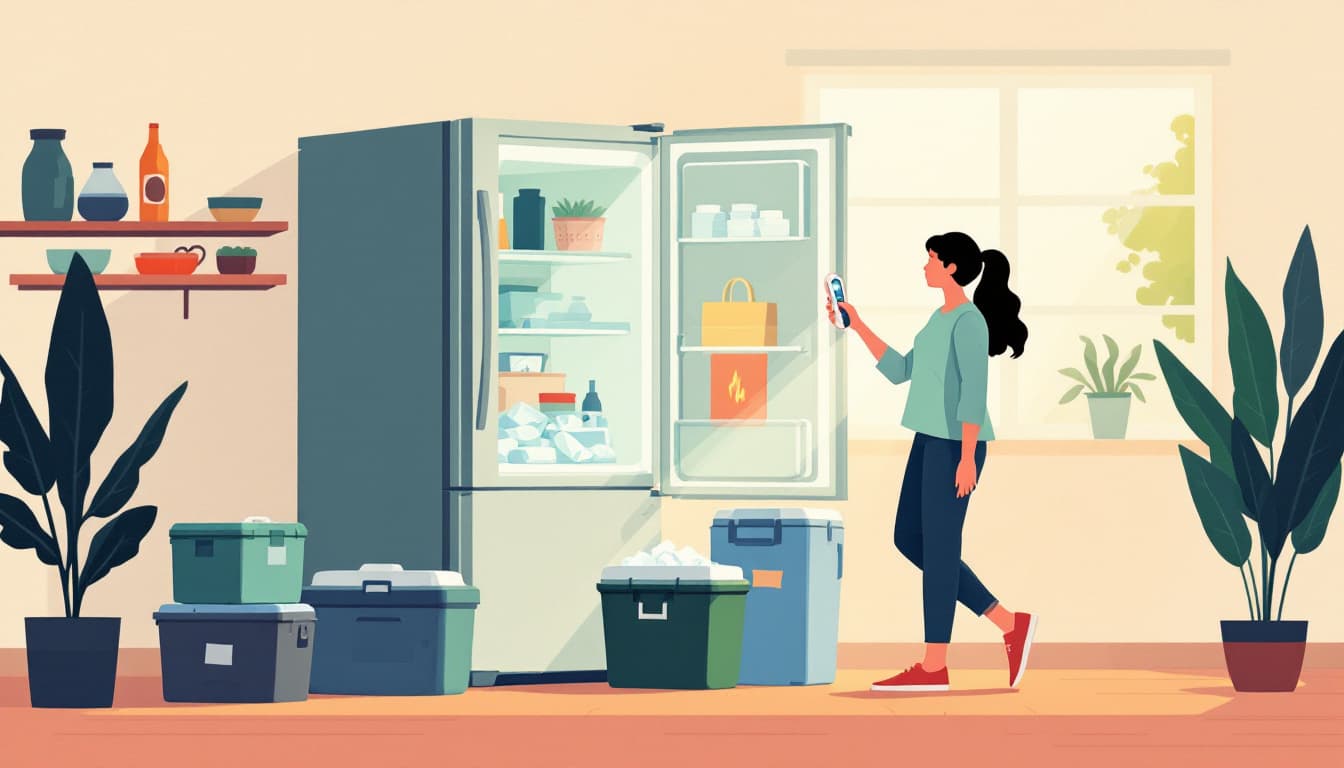
Set your freezer to maximum cold and fill any air space with water bottles. A full freezer is a thermal battery. If you have unused space, fill gallon jugs 90% full and freeze them. They'll extend safe food temperatures significantly during an outage and serve as ice for a cooler once thawed. This costs nothing if you have the jugs.
Locate your two nearest parish cooling centers and note their hours. Don't assume you'll search for this during a power outage on a phone with 12% battery. Write the addresses on a sticky note and put it on the fridge. Then text the same information to any elderly relatives or neighbors who live alone in your area — heat mortality in Louisiana skews heavily toward people over 65 living without social contact.
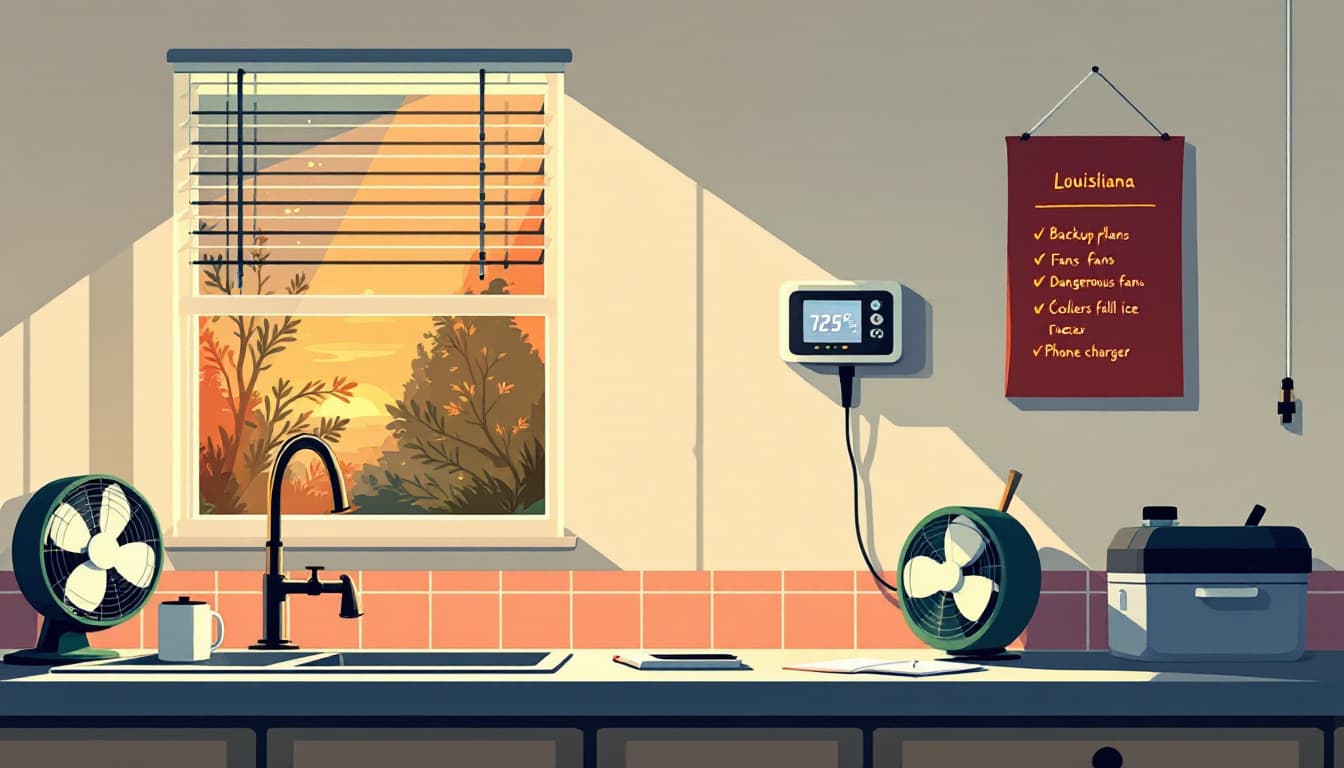
Check your window AC units and central system filters before the peak of the week. A clogged filter on a unit running 18 hours a day in this heat is both a fire risk and an efficiency drain. Replacing a $10 filter takes four minutes. If your central system is more than 15 years old, know where your circuit breaker is and have a box fan as backup — not as a replacement for AC, but as a way to keep one room livable if the system trips.
Pre-position a 72-hour water supply in a cool interior space. Municipal water pressure can drop during extended heat events when demand spikes and pumping stations strain. One gallon per person per day is the standard recommendation from FEMA. For a family of four, that's 12 gallons — five standard water jugs stored under a bed or in a closet. This is not about catastrophe; it's about the mundane inconvenience of low pressure and boil-water advisories, which Louisiana has issued multiple times in recent summers.
The bigger picture
Louisiana households are not strangers to extreme weather. The preparedness reflex built through hurricane seasons is real and useful. But heat is quieter than a hurricane — no countdown, no evacuation order, no dramatic landfall. It accumulates. The failures it causes tend to be medical rather than structural, and they happen behind closed doors.
The goal here is not to survive a collapse. It's to make sure a brutal two-week heat event doesn't turn into an emergency room visit, a ruined freezer full of meat, or a medication crisis that could have been prevented with a $25 gel pack. Durable households handle the boring disasters well. That's the whole game.