A KRZK 106.3 report this week noted that dry conditions are returning to the Lakes Region — the network of Ozarks reservoirs and communities that straddles Missouri and Arkansas. The phrasing "returning" is worth sitting with. This isn't a surprise event. It's a pattern completing another cycle.
That distinction matters for households more than for meteorologists.
What's actually changing
Seasonal drought in the Ozarks Lakes region is not new, but the recovery windows between dry spells have shortened over the past decade, according to recent U.S. Drought Monitor trend data. When a region re-enters dry conditions before soil moisture and lake levels have fully rebounded, the cumulative deficit compounds faster than any single drought year would suggest.
For households on municipal water in this region, the practical signal is this: outdoor watering restrictions tend to arrive with little notice, and when they do, they often coincide with the period when gardens, livestock, and landscaping need water most. For households on private wells, the stakes are higher — well yields can drop or fail entirely during sustained low-water-table conditions, and a failed well in August is an expensive emergency.
The broader pattern isn't limited to the Ozarks. The upper Midwest and lake-adjacent communities across the country have seen late-summer dry spells arrive earlier in the season in recent years, catching households that mentally filed away water scarcity as a Southwest problem.
What we'd actually do
Check your well's last service record — or call a well contractor this week if you don't have one. Households on private wells often have no idea what their static water level is or how close it is to the pump intake. A simple well inspection, typically under $200, tells you whether your system has meaningful cushion or is already drawing from a depleted table. If you're renting, ask your landlord directly. If they can't answer, that's information too.
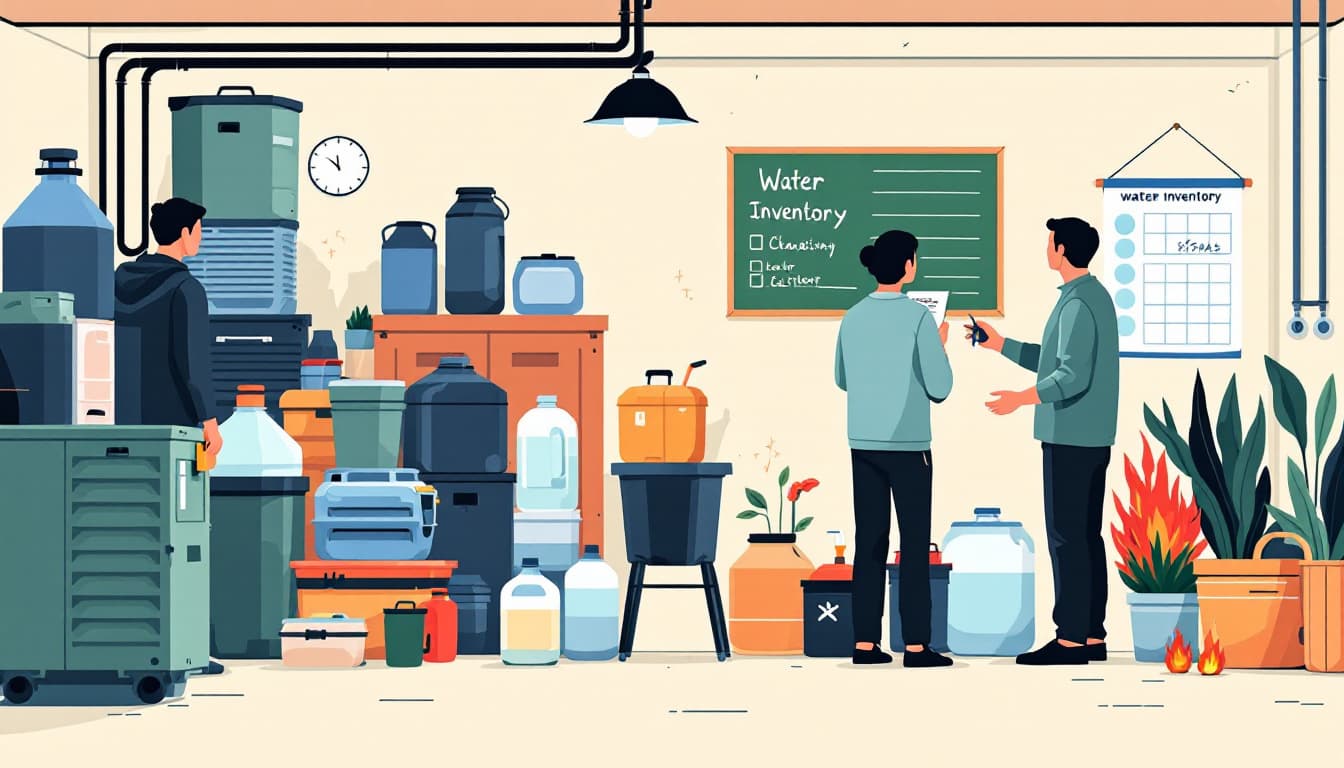
Fill and store a two-week drinking water buffer before restrictions hit. The math is straightforward: one gallon per person per day for drinking and basic sanitation, multiplied by 14 days. For a family of four, that's 56 gallons — roughly nine standard water storage containers from any hardware store. Store them in a cool, dark location and rotate every six to twelve months. This isn't bunker thinking; it's the same logic as keeping a full tank of gas before a predicted ice storm.
Audit your outdoor water use and cut it before you're told to. Most municipal drought restrictions come in stages, and stage two — which typically bans lawn irrigation entirely — arrives faster than households expect. Map out what you're actually watering and what you could lose without significant consequence. Lawn grass almost always survives a dormant period; tomatoes and fruit trees usually don't. Prioritize accordingly now, before you're rationing reactively.
Talk to neighbors on shared water sources. If you're on a rural cooperative water system, a lake association, or share a well with adjacent properties, find out now what the emergency protocol is. Many of these arrangements have no formal drought plan, which means the informal social dynamics under scarcity can get complicated. A calm conversation in August is much easier than a tense one in September.
Know your county's current drought classification and what triggers restrictions. Most counties participating in federal drought monitoring programs publish their thresholds publicly. A quick search for your county plus "drought ordinance" or "water restrictions" usually surfaces the relevant document. Knowing you're at D1 (moderate) versus D2 (severe) gives you a realistic timeline rather than a vague anxiety.
The bigger picture
Drought is one of the few emergency scenarios where the preparation window is visible in advance. Unlike a tornado or a chemical spill, a developing dry spell announces itself weeks ahead through weather reports, reservoir level updates, and soil moisture indices. The Lakes Region's returning dry conditions are a visible signal right now — not a prediction about what might happen someday.
The goal for a household isn't to survive a collapse. It's to be the family that stays calm, waters the garden efficiently, and doesn't make panicked hardware store runs when stage-two restrictions drop. Durability looks boring from the outside. That's the point.