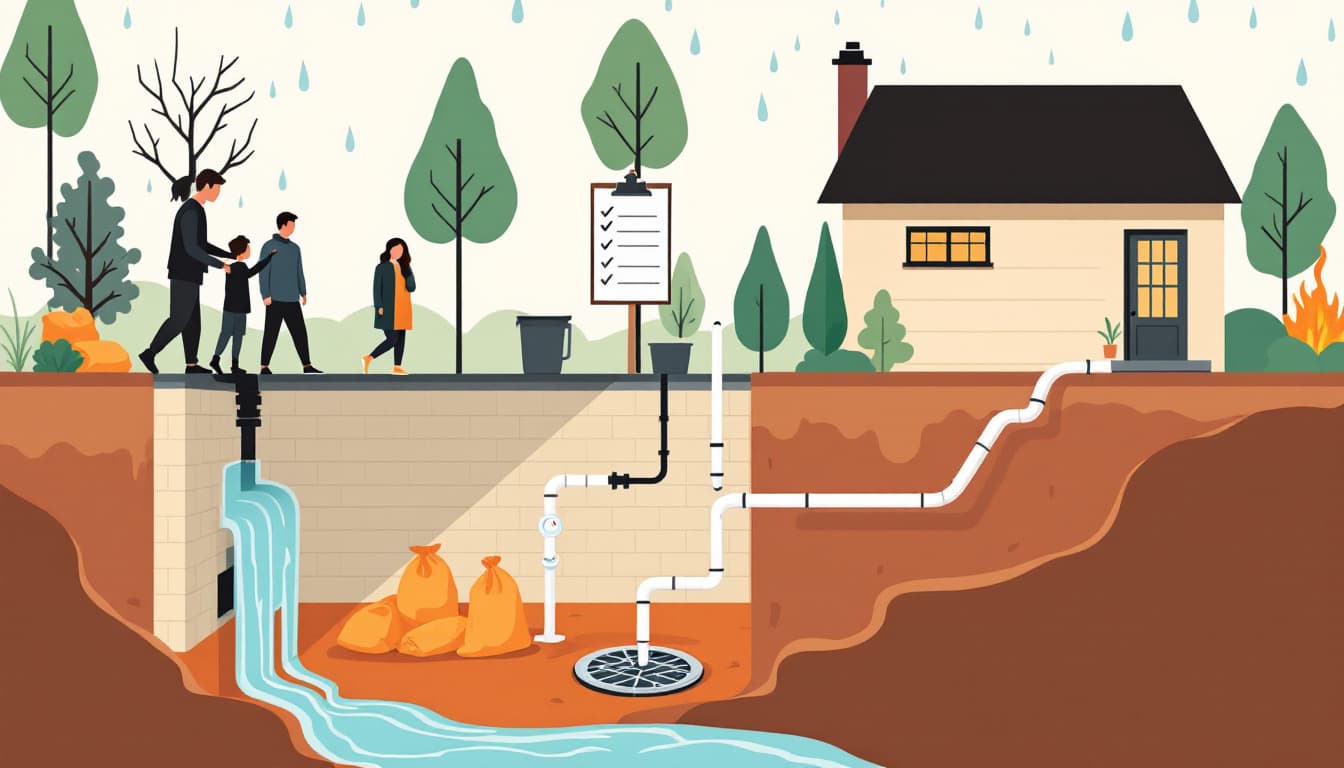
A complete family hurricane plan costs roughly $300 beyond what most households already own, takes one weekend to assemble, and covers the three ways hurricanes actually hurt families: water (storm surge and flooding cause most deaths), power loss (the average outage after a major landfall runs days, not hours), and evacuation chaos (the households that suffer most are the ones deciding what to grab while the highway is already jammed). Here is the checklist, the costs, and the thresholds that should trigger each step.
Hurricane season runs June 1 through November 30, and the statistical peak arrives September 10 — the six weeks from mid-August through September produce the large majority of major landfalls. That means the right time to finish this checklist is now, not when a cone appears on the news.
What the 2026 season actually looks like
NOAA's August update holds its forecast at below normal: 7–13 named storms, 2–6 hurricanes, 0–2 major hurricanes, with 75% odds of a below-average season. The driver is a very strong El Niño — Pacific waters are running 2.07°C above average, tracking toward one of the strongest events on record — which strengthens the subtropical jet stream and shears Atlantic storms apart. Two named storms, Arthur and Bertha, have formed so far.
A below-normal forecast is a statement about storm count, not about your risk. 1992 was also a below-average El Niño season with just seven named storms — one of them was Andrew, which leveled parts of South Florida as a Category 5. It takes one landfall in your county to make the season count irrelevant. NOAA itself cautions that an El Niño this strong "could produce atmospheric impacts never before seen." Prepare for the season you could get, not the average of all seasons.
The one-weekend checklist, priced
Water and food, sized to your household. The planning floor is one gallon per person per day and roughly 2,000 calories per adult, with a three-day minimum if you evacuate and two weeks recommended if you shelter at home. Rather than guessing from averages, run your actual household — people, kids, pets, climate, dietary needs — through our water and food calculator; it converts your answer into containers and a shopping list. For a family of four, the two-week buffer built from groceries you already eat runs about $250–350, acquired over a few normal shopping trips.
Backup power, sized to what you'd actually run. A refrigerator, phones, a fan, and lights — not the whole panel. A mid-size portable power station covers that for two to four days of careful use; our 2026 power station review tiers the options from about $500 to $3,000. If you run a gas generator instead, the non-negotiable rule: outdoors only, 20 feet from any window — carbon monoxide kills more people after some storms than the storm does. A $25 battery CO alarm is part of the kit.
The evacuation half-hour. Know your evacuation zone today — every coastal county publishes a zone map, and "do I live in Zone A or Zone C" is the single fact that determines whether you leave or shelter. Stage a go-bag per person (clothes, medications, chargers, and cash in small bills — our emergency cash calculator sizes that to your household, since card readers and ATMs die with the power), and photograph every page of your insurance policies, IDs, and titles into cloud storage. Keep the car above half a tank from August through October; the pre-landfall fuel line is a choice you can simply opt out of.
The paperwork most families skip. Standard homeowners insurance does not cover flood damage — flood insurance is a separate NFIP or private policy, and NFIP coverage carries a 30-day waiting period. If you're in a surge or flood zone without it, the time to fix that is a month before you need it, which is the whole point of doing this in a quiet week. While you're at it, check your wind deductible: many coastal policies carry a separate hurricane deductible of 2–5% of the dwelling value, which is the number that determines what a near-miss actually costs you.
First aid and communications. A stocked trauma-capable kit — our first aid review covers the tiers — plus a NOAA weather radio with battery or crank power, because cell service degrades exactly when you need forecasts most.
The thresholds that trigger action
A hurricane watch means hurricane conditions are possible in your area within 48 hours: finish anything left on the checklist, fill the tank, charge everything, and decide now — based on your zone — whether you're leaving. A hurricane warning means conditions are expected within 36 hours: if your zone is ordered out, leave then, not when the wind starts; if you're sheltering, you're done shopping — stores and roads after a warning are where plans go to fail. And read the forecast cone correctly: it maps the probable path of the center, not the storm's size — surge, rain, and tornadoes routinely reach well outside it, which is why zone and official orders, not the cone graphic, make the evacuation decision.
Updated August 2026 with NOAA's mid-season forecast revision. We refresh this guide each May before the season opens, and after any major landfall that changes the guidance.