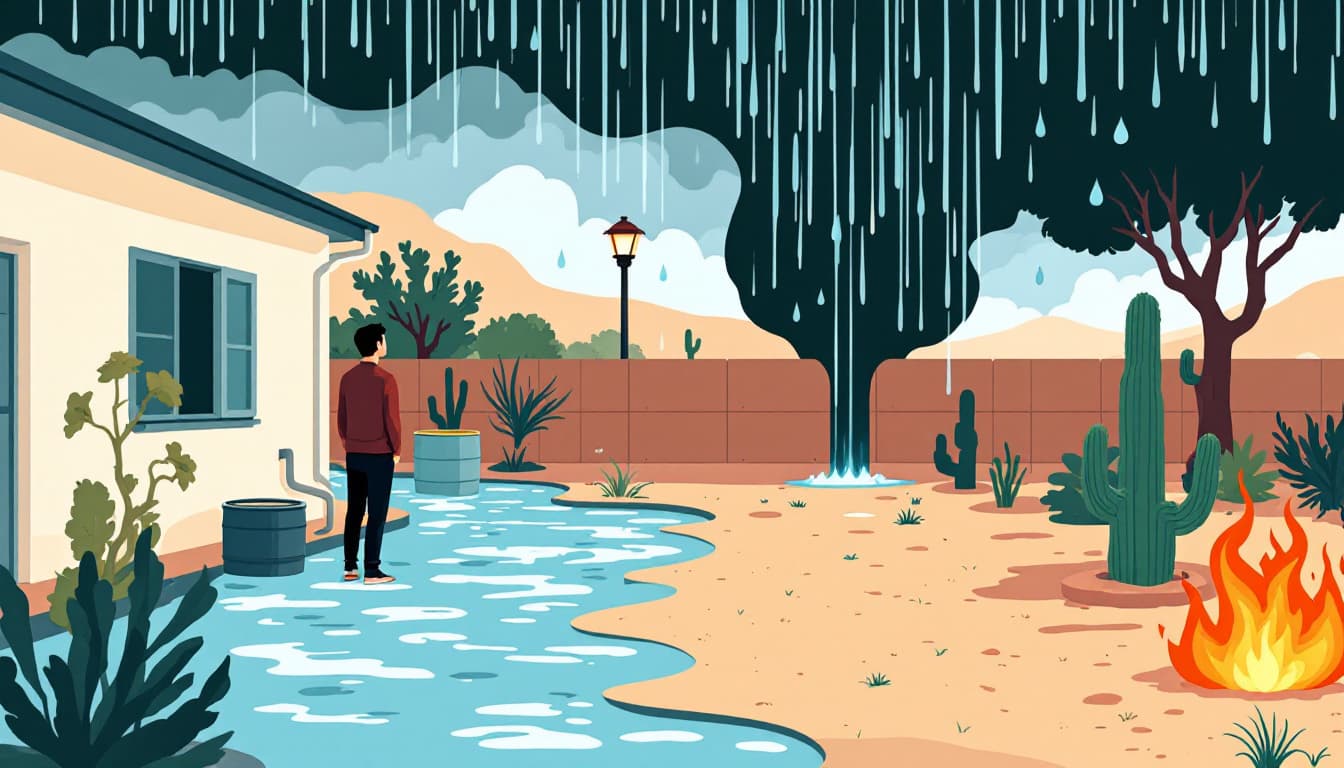
A report from FOX 10 Phoenix confirmed that Hurricane Polo brought measurable rainfall to Arizona, with moisture from the eastern Pacific storm system tracking northeast and reaching well into the desert Southwest. Tropical systems making it this far inland are relatively uncommon but not unprecedented — Arizona sits in a geographic corridor where weakening Pacific hurricanes and tropical depressions can funnel monsoon-like surges of moisture into the state during late summer and early fall.
The storm's remnant moisture moved across the Sonoran Desert, affecting communities in the Phoenix metro area as well as portions of southern and central Arizona. The National Weather Service Forecast Office in Phoenix was monitoring the system as it progressed, with rainfall totals varying significantly based on elevation and terrain — mountain ranges such as the White Mountains and the Mogollon Rim are capable of dramatically amplifying precipitation from such events.
Arizona's drainage and flood control systems are primarily managed at the county level, with Maricopa County Flood Control District overseeing an extensive network of retention basins, channels, and dams designed to handle the intense but typically brief rainfall that characterizes the region's monsoon season. Slow-moving or prolonged tropical moisture events can stress these systems in ways that standard monsoon thunderstorms do not, because the rainfall can be sustained over a longer period rather than concentrated in short, intense bursts.
For preppers and resilience-minded residents, the Polo event is a useful data point about Arizona's actual weather risk profile. The state's airsheds and watershed geography mean that a hurricane hundreds of miles offshore in the Pacific can materially affect local conditions — a dynamic that also has downstream implications for the Salt River Project reservoir system, groundwater recharge zones, and the capacity of the Arizona Department of Transportation to maintain road access across flood-prone desert washes. Readers interested in the mechanics of how tropical systems interact with desert infrastructure may find our review of portable water filtration options relevant for periods when municipal systems are disrupted by turbidity following large runoff events. Extended tropical moisture can also affect Arizona's electrical grid by raising humidity levels that reduce the efficiency of air cooling systems at substations, a vulnerability that is distinct from the state's more commonly discussed extreme-heat grid stress scenarios.