A piece by Neal Stephenson, currently circulating on Hacker News, makes the case that writing by hand does something to the brain that typing does not. The argument draws on neuroscience research showing that the motor complexity of forming letters activates memory encoding and comprehension in ways keyboard input bypasses. The piece isn't new-age wellness advice. Stephenson is an engineer-minded novelist who thinks carefully about how tools shape cognition. That framing is worth taking seriously.
The preparedness angle here is not "what if the power goes out." It's subtler, and it matters more.
What's actually changing
We are in the middle of a slow, mostly invisible transfer of cognitive labor to AI tools. Drafting, summarizing, remembering, planning — each of these is being offloaded, one workflow at a time, by households and individuals who have every rational incentive to do so. The tools are good. The time savings are real.
The problem is that skills atrophy when they go unused. This is not a controversial claim — it's how the nervous system works. Surgeons who stop operating lose dexterity. Navigators who rely solely on GPS lose spatial reasoning. The question for families is not whether AI assistance is worth using. It obviously is. The question is whether any given household is maintaining the cognitive and practical baseline that exists underneath the AI layer.
Handwriting is a useful test case because it's concrete and low-stakes. A child who has never needed to write a paragraph by hand, think through an argument without autocomplete, or read their own cursive note from six months ago has a genuine skill gap — not a moral failing, but a real gap. The same is true for adults.
If the AI layer becomes unavailable — temporarily, due to an outage, or structurally, due to cost or access changes — the household that has maintained analog cognitive practices will recover faster than one that has not.
What we'd actually do
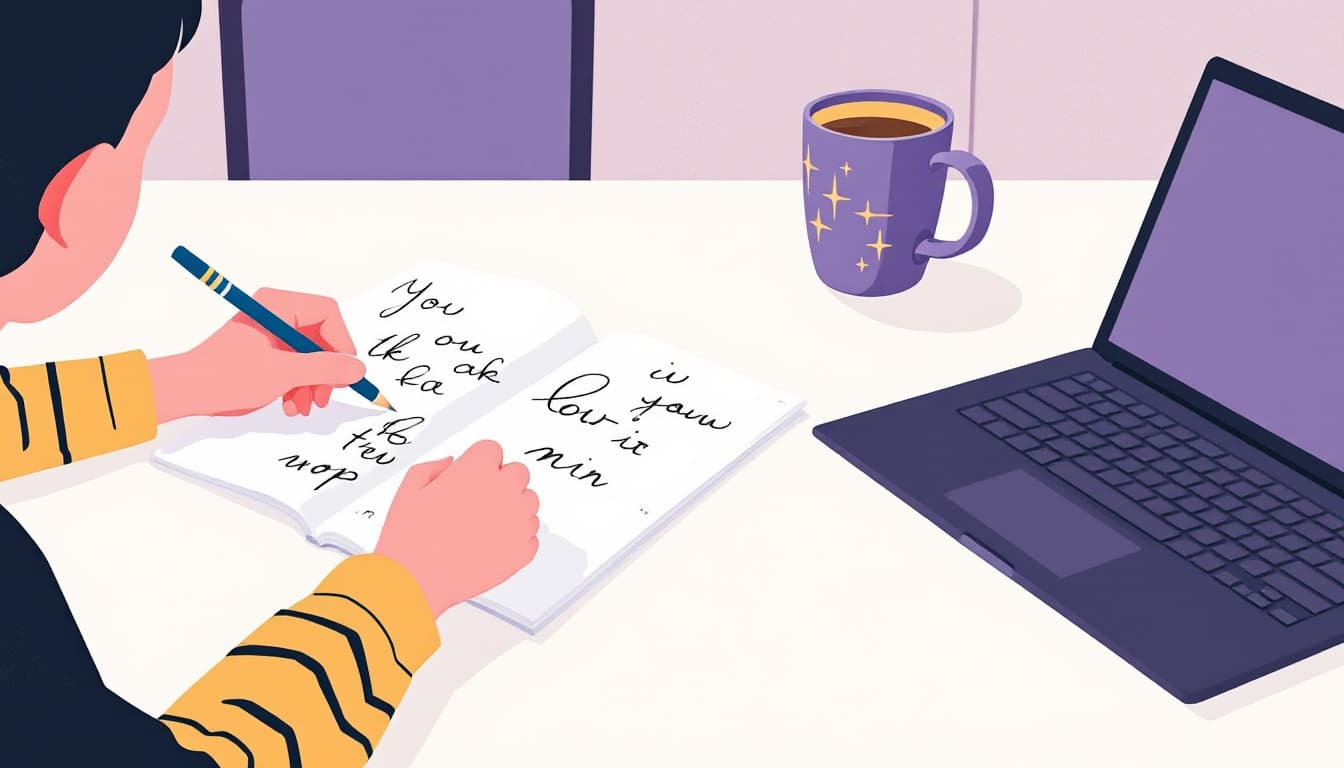
Keep a handwritten household log for 30 days. Start small: a single notebook where one family member writes daily notes on whatever matters — tasks, observations, plans, expenses. The goal is not journaling as self-improvement. The goal is to maintain the neural pathway. After 30 days, the habit either sticks or it doesn't, and you've lost nothing by trying.
The research Stephenson cites suggests that retrieval and synthesis improve when notes are handwritten rather than typed, because slower transcription forces the writer to paraphrase and prioritize. That's useful for households tracking a budget, managing a medical situation, or planning a home project. You're not just preserving a skill — you're probably thinking more clearly about the thing you're writing about.
Pull kids back from full AI-assisted writing once a week. One short-form writing task per week — a paragraph, a letter, a grocery list with explanations — done entirely by hand, without autocomplete or AI editing. This is not about rejecting helpful tools. It's about making sure those tools are a choice rather than a dependency. Schools are inconsistent on this; families have to decide for themselves.
Store at least one critical household reference in handwritten or printed form. Contact lists, medical information, insurance policy numbers, utility account details. Not because screens will fail permanently, but because during any disruption — power outage, device failure, account lockout — the household that has this on paper doesn't have to improvise under stress.
Practice reading your own handwriting. This sounds trivial until you try it after six months. Legibility is a feedback loop: if you write rarely, you write sloppily, and you can't read what you wrote, which discourages writing. Ten minutes of deliberate practice once a week maintains the loop.
The bigger picture
The preparedness goal has never been to return to 1987. It's to build a household that has genuine options when conditions change. An over-indexed-on-AI household and an over-indexed-on-analog household are both fragile — just in different directions.
The families worth learning from are the ones who use every tool available and can also function without any single one of them. Handwriting sits at the intersection of cognitive health, practical resilience, and independence from systems you don't control. It costs a notebook and twenty minutes a week.
That's a reasonable investment for what it protects.