A FOX Weather report this week named Florida's summer heat as the engine behind a near-daily flash flood threat — afternoon convective storms firing up along the sea-breeze boundaries that cut through the peninsula almost every day from June through September. This is not a hurricane story. It's quieter than that, and for most Florida households, more immediately consequential.
What's actually changing
Florida's summer storm pattern isn't new, but the intensity and frequency of rainfall events have shifted enough that the National Weather Service has begun issuing flash flood watches in areas — parts of Central Florida's flatlands, low-lying neighborhoods in the Tampa Bay basin, drainage-challenged streets throughout South Florida — that historically only flooded during named storms.
The compounding factor is soil saturation. By mid-July, after weeks of daily afternoon rain, the ground is already near capacity. A storm that would have drained overnight in May now backs up into streets, garages, and first-floor interiors. The risk isn't one big event. It's the tenth moderate event in twelve days.
Insurance is the first thing to audit here. Standard homeowners policies in Florida do not cover flood damage. The National Flood Insurance Program (NFIP) offers coverage, but there's a 30-day waiting period before it activates — meaning the week you finally sign up is not the week it helps you. Renters are equally exposed; renter's flood insurance exists and costs less than most people assume.
The second issue is mold. Florida's combination of heat, humidity, and flooding creates conditions where mold colony growth can begin within 24 to 48 hours of water intrusion. A flooded garage that drains by morning is not a solved problem. It's the beginning of a 72-hour remediation clock most households don't know is running.
What we'd actually do
Check your flood zone status before the next storm, not during it. FEMA's flood map service center at msc.fema.gov lets you enter any Florida address and pull the current flood zone designation. Zone AE means high-risk with base flood elevations. Zone X means moderate-to-minimal risk. Knowing your zone tells you whether your current insurance coverage is a gap or a formality.
Many Florida households, particularly those in Zone X, assume they're safe and skip flood coverage entirely. Roughly a third of NFIP claims nationally come from outside high-risk flood zones — a figure FEMA has published consistently for years. Check the map and make a deliberate decision, not a default one.
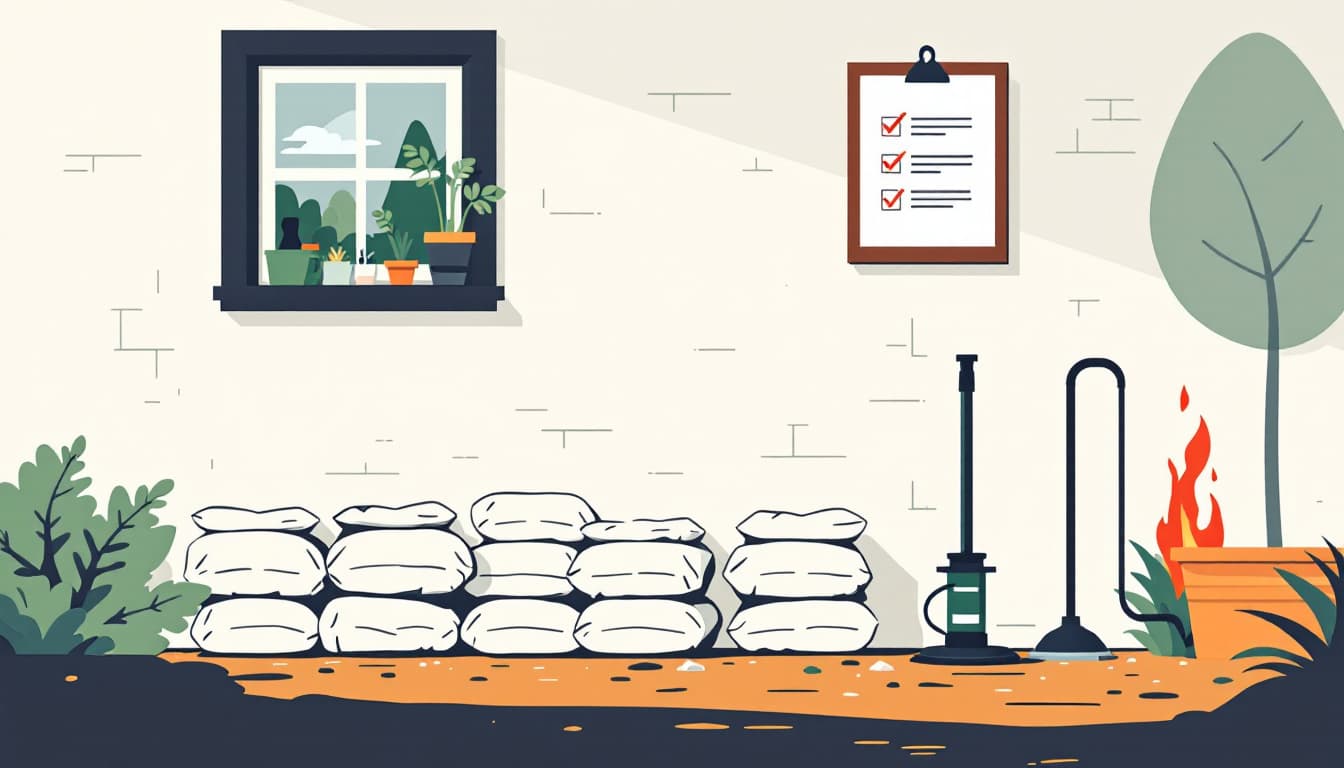
Build a 30-minute flood response kit and store it above floor level. A five-gallon sealed bucket placed on a garage shelf — not on the floor — should hold: a box of heavy contractor trash bags, a tube of silicone caulk, a small wet/dry shop vac attachment, latex gloves, and a bottle of commercial mold inhibitor spray. The goal is to be able to begin drying and sealing within the first hour after water enters a space. That first hour matters more than anything you do at hour 24.
Document your home's contents on video now. Walk every room with your phone, narrating what you see. Store the video in cloud backup outside your home network. After a flood event, insurance adjusters work from what you can prove existed, not what you remember owning. This takes 20 minutes and costs nothing.
Know your municipality's storm drain and swale rules. Many Florida counties — particularly in Broward, Miami-Dade, and Hillsborough — have specific rules about keeping roadside swales clear of landscaping debris. A blocked swale in front of your home can redirect sheet flow onto your property or your neighbor's. County public works departments publish these rules online, and some offer free swale inspections.
Locate your water shutoff and your main electrical panel before flooding occurs. If water enters a living space and reaches electrical outlets, the correct action is to cut power to the affected circuit before wading in. Knowing where your panel is and how to trip the right breaker takes 10 minutes to learn. The alternative is learning it in the dark, ankle-deep in water.
The bigger picture
Florida households live with weather risk the same way Pacific Northwest households live with earthquake risk or Midwest households live with tornado risk: it's background noise until it isn't. The flash flood pattern FOX Weather flagged this week isn't an anomaly to prepare for once and forget. It's a seasonal operating condition that runs from now through October.
Durability here doesn't mean a bunker or a generator — though a generator matters in Florida for other reasons. It means a household that has made the 20-minute decisions ahead of time: map checked, insurance gap identified, documents backed up, kit assembled. The storm doesn't care whether you were ready. Your recovery timeline does.