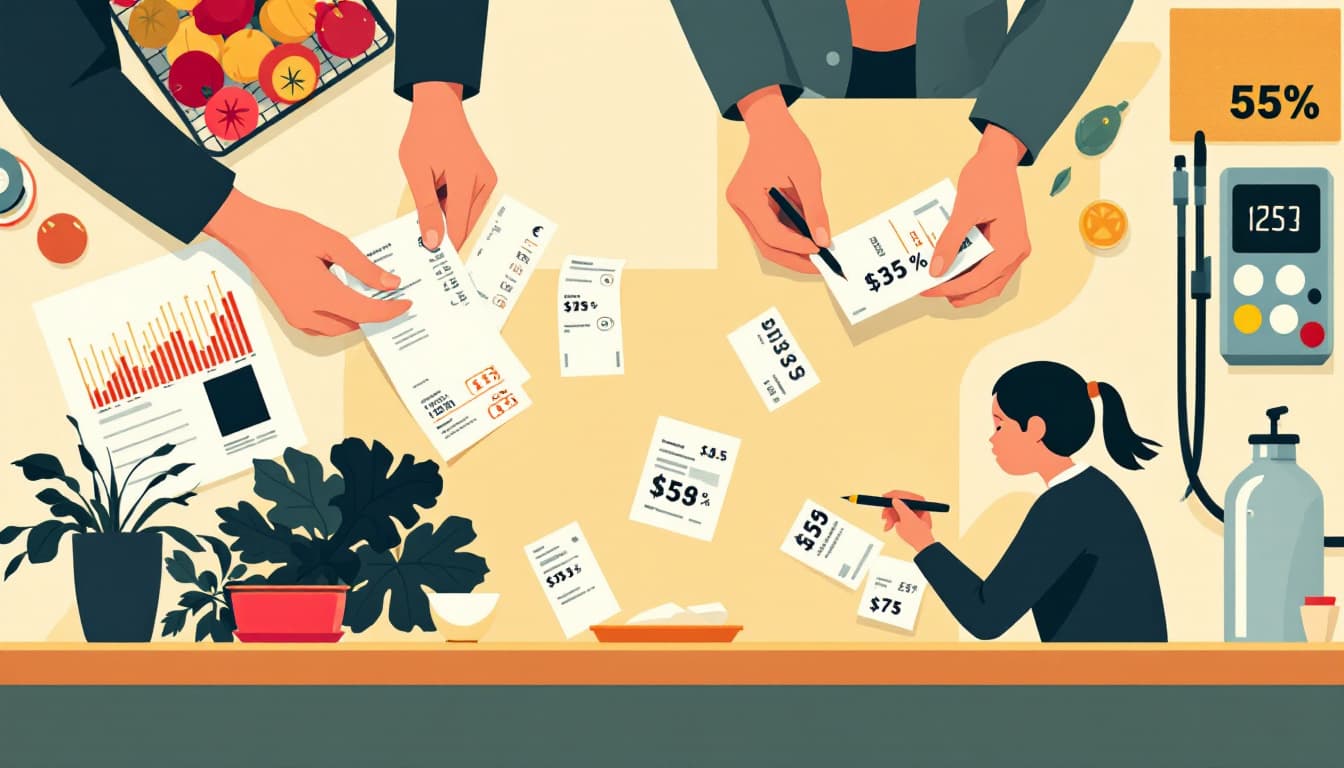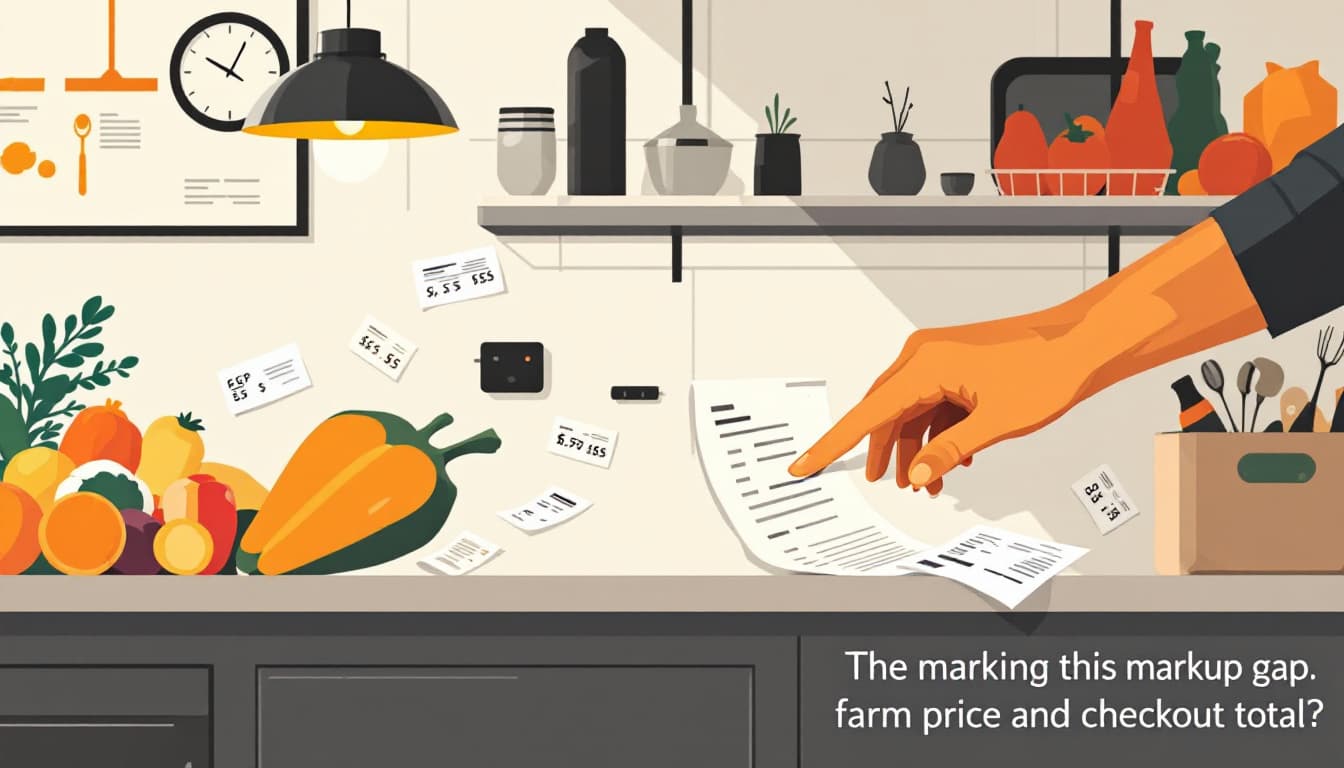
A survey reported this week by Farms.com found that a majority of American consumers correctly identify corporate middlemen — processors, distributors, and grocery retailers — rather than farmers themselves as the primary drivers of persistently high food prices. The finding marks a notable shift from earlier in the post-pandemic inflation cycle, when farm-gate prices were more frequently conflated with retail sticker prices in public discourse.
The distinction matters because farm-gate prices — what producers actually receive for raw commodities — have in many categories fallen or stagnated even as retail food prices remained elevated. The USDA's farm-to-retail price spread data has shown for several years that the margin captured between what a farmer receives and what a consumer pays has widened considerably across protein, dairy, and produce categories. Farmers growing commodity corn, soybeans, and wheat have faced input costs — fertilizer, fuel, equipment — that compressed their margins even as grocery store receipts climbed.
Public awareness of that gap appears to be growing. Farms.com's reporting on the survey indicates consumers are increasingly sophisticated about distinguishing the agricultural production stage from the processing and retail stages, a distinction that industry analysts and farm advocates have pushed for years to communicate more clearly. Retail food prices in the United States remain roughly 25 to 30 percent above their 2019 baseline, according to Bureau of Labor Statistics CPI data, while many commodity prices have cycled back toward or below pre-inflation norms.
What general coverage of this survey tends to skip is the structural implication for food system resilience: because margin compression happens at the farm level rather than the retail level, the financial stress falls on the producers who are fewest in number and hardest to replace quickly. When farm operations fail or consolidate under that pressure, the redundancy in domestic food production — the number of independent farms capable of growing a given crop in a given region — shrinks. That concentration is a supply-chain fragility concern entirely separate from any single year's price data, and it moves slowly enough that it rarely registers as urgency until a weather event, a disease outbreak, or a logistics disruption removes one of the few remaining large operators from the equation. Our grain storage and long-term staples review touches on why regional production diversity has historically been the variable that buffers households from localized supply failures.
The Farms.com report did not detail the survey's sample size, methodology, or the organization that commissioned it, which limits how precisely the results can be weighted. Still, the directional finding — that consumers are parsing the food supply chain with more accuracy than they were two or three years ago — aligns with broader polling trends from organizations like the Farm Bureau and independent agricultural economists who have tracked public sentiment on food pricing since 2021.