A report this week from Post Independent describes what Front Range and mountain residents already felt in their bones: Colorado's High Country is moving from a sustained heat wave directly into monsoonal showers and thunderstorms. That transition sounds like relief. For households, it is also a distinct set of hazards that are easy to underestimate precisely because the rain feels welcome.
What's actually changing
Colorado's monsoon season — driven by moisture pulling north from the Gulf of California — typically arrives in mid-July and runs through September. The pattern is not new. What makes this particular swing notable is the sequence: baked, dry soil followed immediately by intense, localized downpours.
Hydrophobic soil is the key phrase here. When ground dries past a certain threshold, it repels water rather than absorbing it. The Colorado State Forest Service has documented this effect repeatedly in post-fire landscapes, but it applies to any severely dried terrain. Rain that would normally soak in instead sheathes across the surface, picking up speed, debris, and whatever topsoil wasn't already cracked to dust.
The result is flash flooding that arrives faster and carries more sediment than the same rainfall volume would in spring. The National Weather Service office in Boulder issues Flash Flood Watches that can go from posted to active in under an hour during monsoonal afternoons. If you live in a drainage, canyon corridor, or anywhere downstream of a burn scar — including areas affected by recent fires in Summit, Eagle, or Garfield counties — that timeline is the one that matters.
There is a secondary issue that gets less attention: the structural stress cycle on houses. Weeks of 90-plus-degree heat expand wood framing, dry out caulking around windows and roof penetrations, and can open small gaps that were sealed fine in May. The first hard rain of the monsoon finds every one of those gaps. Ceiling stains, wet insulation, and mold can follow within days of the first storm.
What we'd actually do
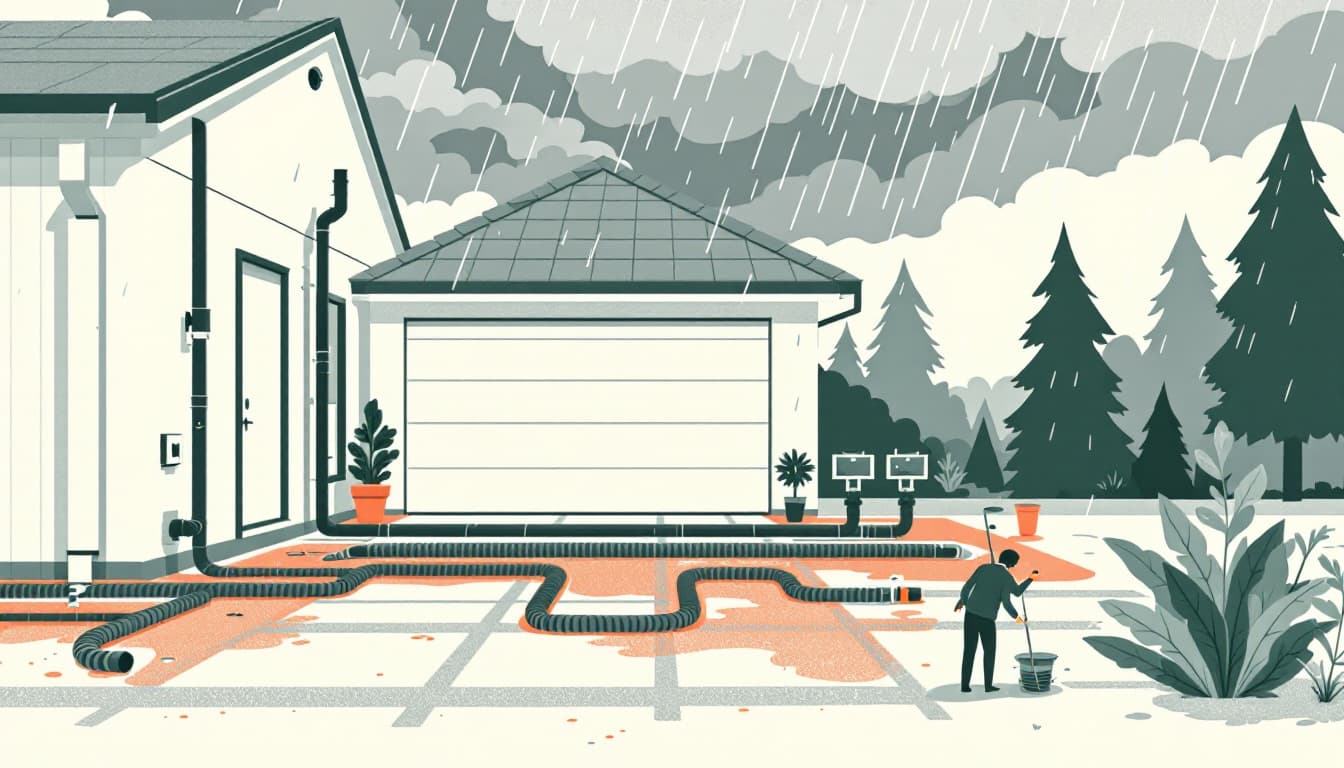
Check your gutters and downspout extensions before the first storm hits. Clogged gutters during a monsoonal cloudburst push water against fascia boards and into the roofline rather than away from the foundation. Spend thirty minutes this week clearing debris and make sure downspouts discharge at least four feet from the foundation. In clay-heavy Front Range soils, that distance matters more than it does in sandier ground.
Walk your property and identify where water flows. Do this when it's dry, before the rain arrives. Look for low points near the foundation, compacted soil that slopes toward the house, and any window wells that lack covers or adequate gravel drainage. A ten-minute walk now takes the guesswork out of a storm at 4 p.m. on a Tuesday.
Know your burn scar proximity. The Colorado Division of Fire Prevention and Control maintains public maps of active and recent fire perimeters. If you are within a watershed that drains through or near a burn scar — even one from two or three years ago — sign up for your county's emergency alert system. Garfield, Eagle, and Grand counties all have opt-in text alert programs. Do not assume the risk has passed because the fire is old; hydrophobic soil can persist for several years.
Inspect window caulking and roof flashing now. Run a bead of paintable exterior caulk around any window or door frame where the existing seal has pulled away. Check the flashing around chimneys, skylights, and plumbing vents. A tube of caulk costs under ten dollars and takes twenty minutes. The alternative is a wet ceiling and a remediation bill.
Build or refresh a 72-hour go-bag with mountain timing in mind. Monsoonal flash floods in canyon corridors — Highway 133, I-70's Glenwood Canyon, US-6 through Clear Creek Canyon — can close road egress with little warning. If you live in or regularly travel through one of these corridors, carry enough supplies in your vehicle to shelter in place or reroute without panic. Water, a spare phone charger, and a paper map of alternate routes are the basics.
The bigger picture
Colorado households that live with seasonal extremes develop a useful instinct: the weather that arrives after the hard weather is when you let your guard down. The monsoon does bring cooler afternoons and some drought relief. It also runs on its own schedule, hits harder than the radar sometimes suggests, and finds every deferred maintenance item your house has been accumulating since June.
The goal here is not to treat every thunderstorm as a catastrophe. It is to spend an hour or two this week closing the gaps the heat wave opened, so that when the storms arrive, the house handles them the way it was built to.
Durability is the point. Not readiness for the worst case — readiness for the realistic case, which is a Colorado afternoon storm that arrives faster than expected and finds you already prepared.