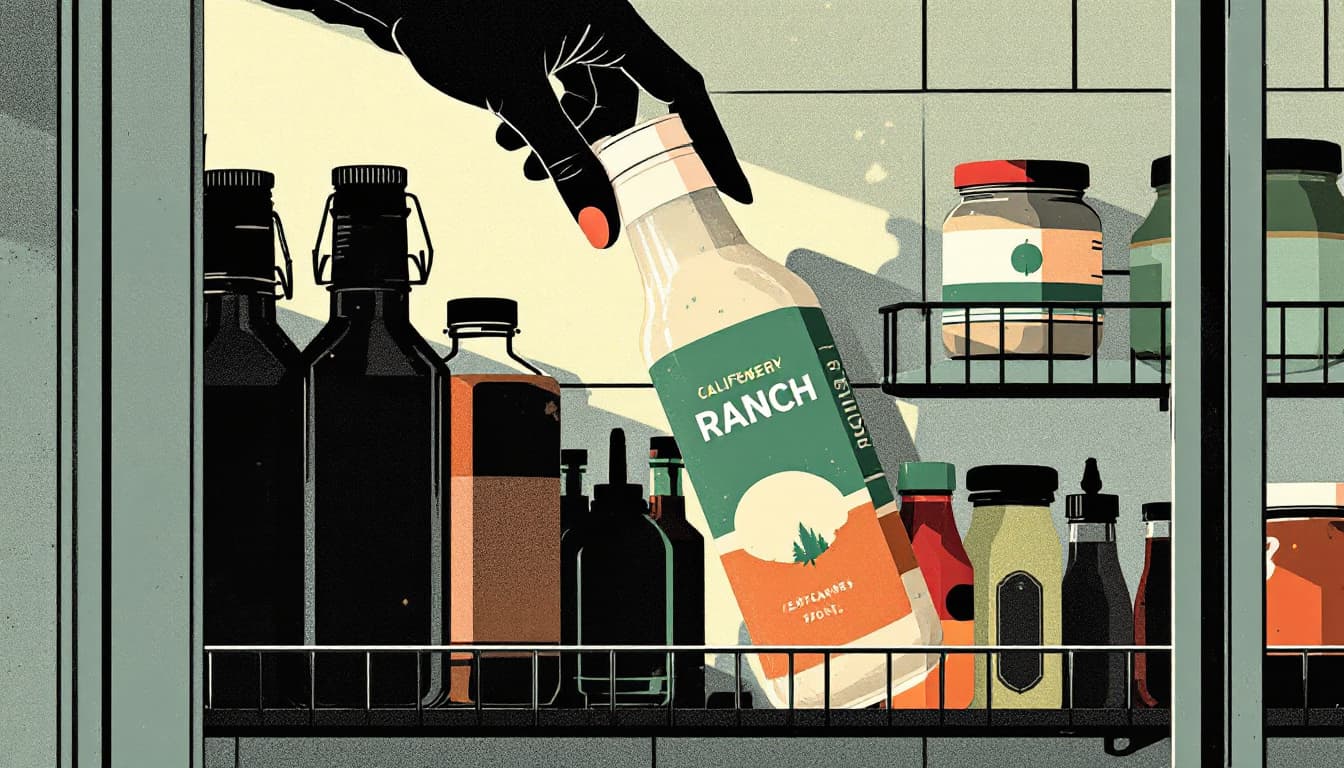
A jar of ranch dressing is not the thing most people imagine when they think about food safety preparedness. It should be.
A report this week from Greenville Online flagged an active salmonella-linked recall affecting ranch-branded products pulled from Walmart stores. The recall is described as ongoing, meaning the investigation is still open and the list of affected products may expand. California runs more Walmart Supercenter and Neighborhood Market locations than any other state — somewhere north of 300 stores — so the geographic reach of any Walmart-distributed recall lands hard here.
What's actually happening
Salmonella recalls follow a pattern worth understanding. A positive test result triggers an initial pull. Then investigators trace the contamination upstream — to a shared ingredient, a co-packer, a production line — and the recall often widens before it closes. If you bought ranch products at a California Walmart in the past several weeks and haven't checked the FDA recall database, that is the gap this article is asking you to close.
The CDC estimates roughly 1.35 million salmonella infections occur in the U.S. each year, with most cases going undiagnosed. Symptoms typically appear within six to 72 hours of exposure: diarrhea, fever, cramps. For most healthy adults, it resolves in four to seven days without treatment. For young children, pregnant people, adults over 65, and anyone immunocompromised, it can escalate to hospitalization. California households with any of those members should treat this recall with more urgency than the average family.
Condiments and dressings don't get the attention that raw chicken or leafy greens do in food safety coverage, partly because people assume shelf-stable or refrigerated bottles are low-risk. They aren't inherently. Cross-contamination during manufacturing, contaminated ingredients like dried herbs or onion powder, and inadequate pasteurization are all documented pathways into bottled dressings.
What we'd actually do
Check the FDA's recall database before dinner tonight. Go to fda.gov/safety/recalls-market-withdrawals-safety-alerts and search "ranch" or "salmonella." The database is updated as recalls expand, so a product that wasn't listed last week may be listed now. Match the UPC code and lot number on your bottle, not just the brand name — different production runs from the same brand can have very different risk profiles.
Recalls spread across Walmart's supply chain don't always trigger the same automated alerts as grocery chains with robust loyalty-card data. Walmart does maintain a recall page and can send email alerts if you have an account, but the FDA database is the authoritative source. California's Department of Public Health also maintains a food recall page at cdph.ca.gov that sometimes catches state-specific distribution details before national outlets do.
Pull and quarantine any suspect product — don't taste-test it to decide. Salmonella has no smell, no color change, no visible sign. If your product matches the recall criteria, bag it, seal it, and set it aside. The FDA guidance is to return it to the point of purchase for a refund or dispose of it in a sealed container. Do not pour it down the drain if you can avoid it — salmonella can survive in wastewater.
Use this as a prompt to build a one-week condiment buffer with rotation. California households that buy in bulk from Costco or Smart & Final already practice rotation informally. Make it explicit: write the purchase date on the lid with a marker, use oldest first, and keep your FDA recall alerts turned on. A small buffer means a recall forces you to throw out one bottle, not scramble to replace a staple mid-week.
Know the salmonella symptom window if anyone in your household gets sick. If a family member develops fever and GI distress within 72 hours of eating anything from a recalled product, call your doctor or an urgent care line before deciding to wait it out — particularly for anyone in a high-risk group. California's 211 system can connect you to local health resources if you're unsure where to go.
The bigger picture
Recalls are not a preparedness failure — they're the food safety system working. The failure mode is not finding out until after someone gets sick. California households run on dense, interconnected supply chains that move product fast and wide, which means recalls also move fast and wide. The habit worth building isn't stockpiling; it's staying connected to the actual status of what's in your pantry. That's a five-minute-a-month practice, not a lifestyle overhaul.
Durability looks like knowing what's in your kitchen and what to do when something in it turns out to be a problem.