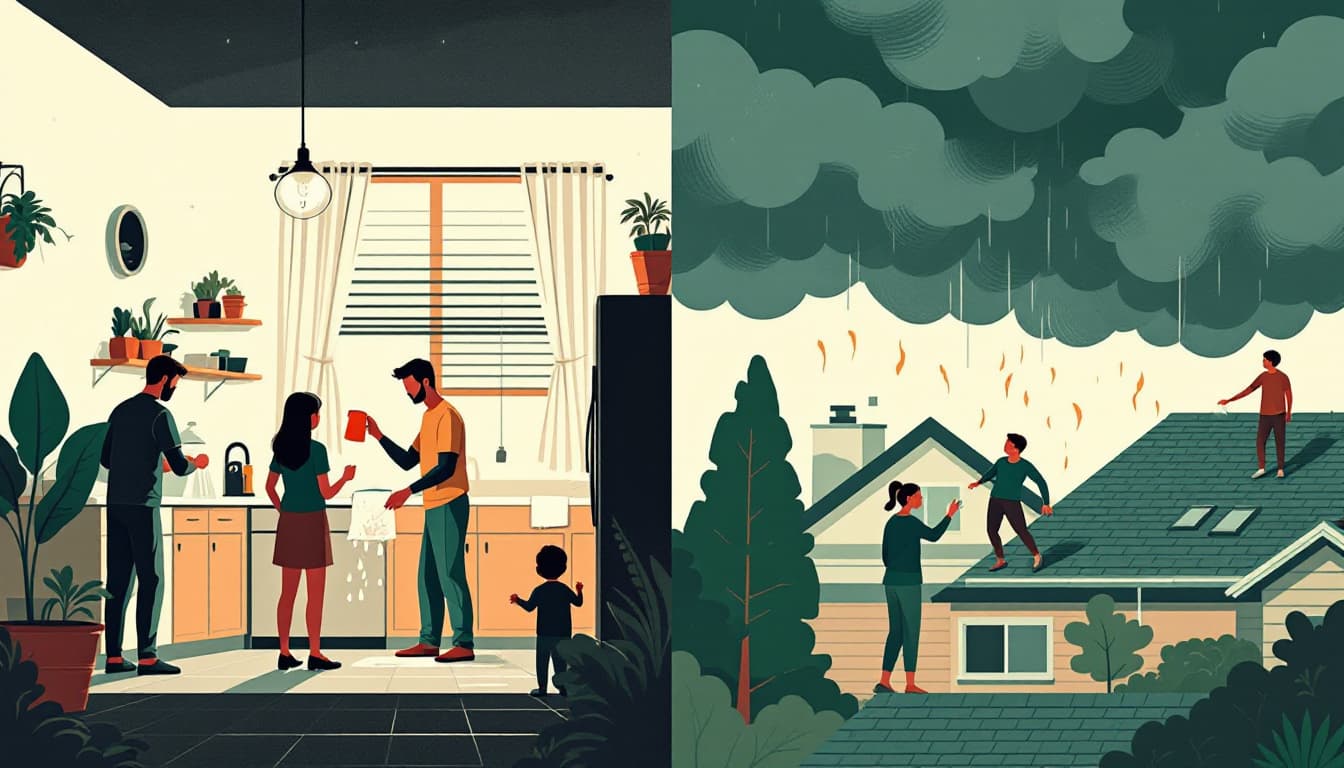
A Prescott Valley neighborhood lost power on a Tuesday this week, according to a report from the Prescott Daily Courier. The item was brief — a few sentences, no cause given, restoration time uncertain. That brevity is itself the story. A summer power failure in Arizona is not a curiosity. It is a medical event waiting to happen, and most households have no plan for it.
What's actually changing
Arizona's grid has always been seasonal, but the margin for error is narrowing. The Yavapai County area, where Prescott Valley sits at roughly 5,100 feet elevation, enjoys cooler summers than the Valley floor — but "cooler" is relative. June temperatures in Prescott Valley routinely push into the 90s, and indoor temperatures in an unventilated home can rise faster than most people expect once air conditioning stops.
The state's transmission infrastructure is aging in spots, and the rapid buildout of new residential areas across the I-17 corridor has added load without always adding proportional capacity. The Arizona Corporation Commission, which oversees utility reliability standards, has flagged distribution-level stress in growing communities as an ongoing concern. None of this means the grid is failing. It means outages will keep happening, some without obvious cause, most resolved in hours. The question is whether your household can handle four hours of heat safely.
For families with infants, elderly members, or anyone on electrically dependent medical equipment, the answer to that question needs to be worked out before the temperature hits 95, not during.
What we'd actually do
Identify your household's actual heat vulnerability now, not in August. Sit down and list every person in your home and honestly assess who becomes medically at risk if AC stops for four hours versus eight hours versus twelve. Infants under 12 months, adults over 65, and anyone taking medications that impair sweating (certain antihistamines, diuretics, antipsychotics) are higher risk than the general population. The Arizona Department of Health Services publishes a heat illness guidance document that's worth pulling up — it will recalibrate your sense of what "hot but fine" actually means.
Map your nearest cooling center before you need it. Maricopa County runs a well-publicized cooling center network, but Yavapai County's options are thinner and less centralized. Call your local library branch, community center, or fire station now and ask directly: do you operate as a cooling center during outages, and what are your hours? Write the address and hours on paper. Phone batteries die.
Buy one thing this week: a non-electric thermometer for a central room. A simple indoor thermometer (under $10 at any hardware store) tells you when interior temps cross 90°F, which is the threshold where heat illness risk rises meaningfully for vulnerable people. Most households have no idea how fast their home heats up without AC because they've never measured it. Knowing the number tells you when to leave.
Pre-position a 72-hour supply of water where it stays cool. Arizona households are often told to store water, but most people store it in garages where summer temps can exceed 110°F. Warm water doesn't help with heat illness. Keep at least one gallon per person per day in an interior closet. A family of four needs 12 gallons for three days, which fits in a small cooler or two stacked five-gallon containers.
Register with your utility's medical baseline or life-support program if you qualify. Both APS and TEP (Tucson Electric Power) maintain programs that flag accounts where outages may pose medical risk, sometimes triggering faster restoration priority and advance notification. If anyone in your household uses powered medical equipment, this takes one phone call and costs nothing.
The bigger picture
One neighborhood losing power for a few hours in Prescott Valley is not a catastrophe. It is exactly the kind of routine, low-drama event that reveals whether a household has thought through its actual vulnerabilities. Arizona's summers create a narrow window where the ordinary becomes dangerous quickly. The goal is not to prepare for grid collapse. It is to make a four-hour outage in June a manageable inconvenience rather than an emergency. That gap is smaller to close than most families assume — and most of it can be closed this week.