A voluntary recall of certain marijuana products in Arizona, covered by 12News this week, is the kind of story most households scroll past. The products are off shelves. The dispensaries are presumably notifying customers. The contamination — the exact nature of which has not been fully detailed in public reporting — sounds like someone else's problem.
It usually isn't.
What's actually happening
Arizona legalized recreational cannabis in 2020, and the state's market has grown steadily since. That growth means more licensed producers, more product SKUs, and more surface area for quality-control failures. The Arizona Department of Health Services oversees cannabis testing requirements, but as with any regulated perishable product, contamination can clear testing at one stage and emerge later in the supply chain.
This recall is voluntary, which means the producer or distributor identified a problem and reported it rather than waiting for a regulatory action. That is, genuinely, how the system is supposed to work. It doesn't mean the system is broken. It means the system caught something.
What it surfaces, though, is a set of questions every Arizona household that keeps cannabis products on hand should be asking — questions that apply equally to vitamins, supplements, herbal teas, and any other consumable that sits in a drawer or cabinet for weeks or months without a second look.
What this means for prepared households
The preparedness angle here isn't about cannabis specifically. It's about perishable and semi-perishable supplies more broadly.
Most households that keep any kind of medicine cabinet, supplement stack, or stored consumables do not have a system for tracking recall notices. The FDA maintains a public recall database. The ADHS maintains Arizona-specific notices for cannabis and food products. Almost nobody checks these regularly.
When a recall hits something you have on hand, the gap between "I heard something about this" and "I know what's in my cabinet and what to do" is the gap that actually matters. That gap costs time, and sometimes health.
Heat compounds this in Arizona. Maricopa, Pima, and Yuma counties regularly see summer temperatures that accelerate degradation in stored consumables — cannabis included, but also medications, supplements, and even some packaged foods. A product that passed testing in February may behave differently after sitting in a Phoenix garage through July. Contamination aside, potency and safety can shift in ways that aren't visible to the user.
What we'd actually do
Sign up for ADHS recall alerts and bookmark the FDA's recall page. The Arizona Department of Health Services publishes notices for cannabis and regulated products. The FDA's recall database covers food, drugs, and supplements. Neither requires an account. Set a recurring calendar reminder — monthly is enough — to scan both. This takes four minutes and costs nothing.
The alternative is finding out about a recall from a news alert after you've already used the product, which is how most people find out.
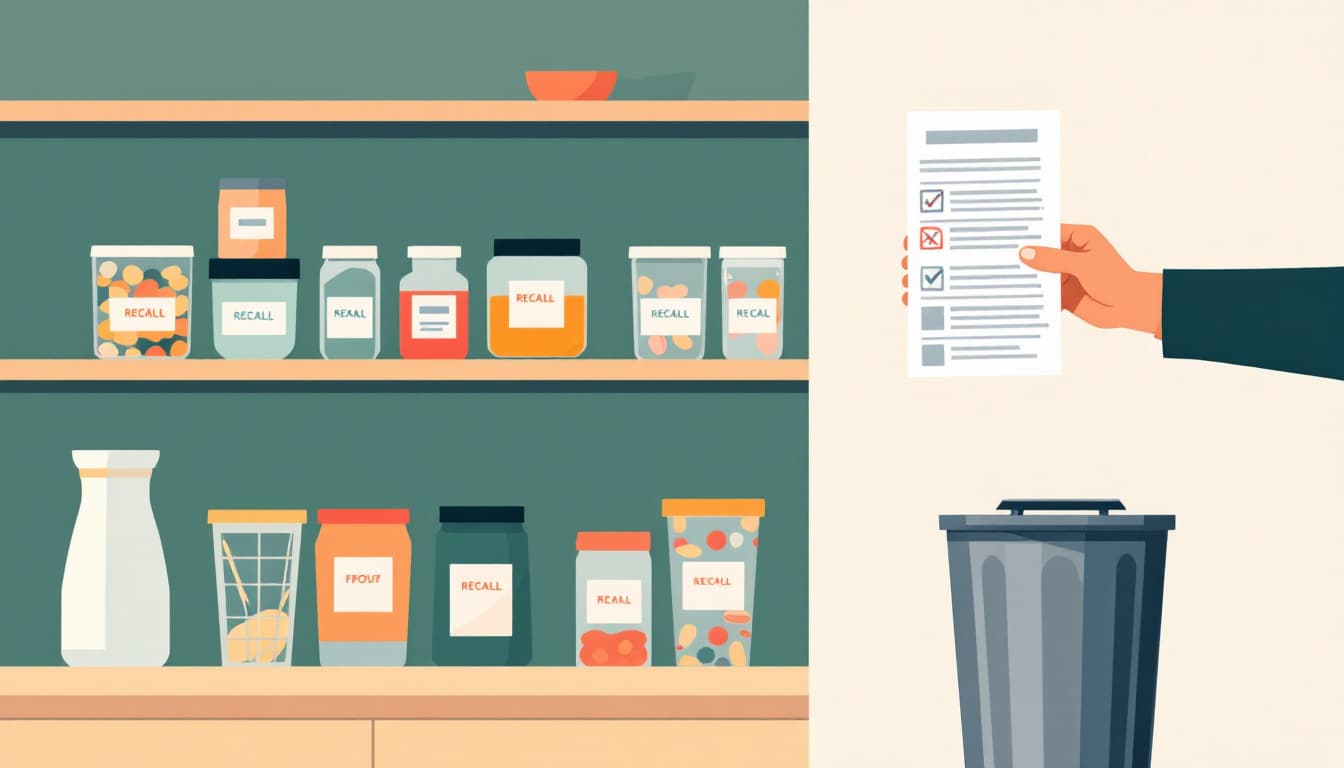
Audit what's actually in your medicine cabinet and consumable storage. Pull everything out. Check purchase dates and lot numbers. This is especially relevant for anything purchased from a dispensary, a supplement retailer, or a bulk-food source in the last six months, since those are the windows most recalls cover. If you can't find a lot number or purchase date, that's useful information too — it means you've lost traceability on that product.
For cannabis products specifically: if you purchased from an Arizona dispensary in the past few months and haven't received direct notification, contact the dispensary directly and ask if any of your purchases are affected. Licensed dispensaries are required to maintain purchase records.
Store consumables in a temperature-controlled environment, not a garage or car. This is Arizona-specific in a way it isn't for most of the country. Sustained heat above 90°F degrades many active compounds and can accelerate microbial growth in improperly processed products. If your storage spot hits triple digits in summer, it is not food-safe storage, regardless of what the package says.
Keep purchase records for anything you'd want to return or report. A photo of the receipt and the product label takes 10 seconds and gives you the lot number and date if a recall surfaces later. Put these in a dedicated folder in your phone's photo app or email them to yourself. You won't do this for everything, but do it for anything you're storing more than a week's worth of.
The bigger picture
Recalls are not a sign that the regulatory system has failed. They're often evidence it's working — a producer catches a problem and pulls product before it causes wide harm. The food and cannabis supply chains in the U.S. are not perfect, but voluntary recall mechanisms exist because they function.
What doesn't exist is any system that automatically tells your household what to do when a recall touches something you own. That part is up to you. Building even a minimal habit around tracking recall notices and maintaining traceability on your stored consumables is the kind of low-effort, high-value practice that doesn't make for exciting preparedness content — and is exactly what most families actually need.
Durability isn't about having the right gear. It's about knowing what's in your house.