A dispensary visit feels routine until the product you brought home last week shows up on a recall list.
A report this week from 12News flagged a voluntary recall of certain marijuana products sold in Arizona due to possible contamination. The recall is voluntary, the language is careful, and the story is easy to scroll past. That's exactly the moment to slow down.
What's actually changing
Arizona has one of the more active cannabis markets in the country, and with scale comes supply-chain complexity. Cultivation, processing, and packaging all introduce contamination vectors — microbial, chemical, and pesticide-related among them. The Arizona Department of Health Services oversees licensed dispensaries and can push recalls through the state's seed-to-sale tracking system, which means affected lots are theoretically traceable. Theoretically.
The gap the 12News report highlights is that consumers often don't know which lot they purchased, whether the product is still in their home, or what "possible contamination" actually means in terms of health risk. That ambiguity isn't unique to cannabis. The same pattern plays out with leafy greens, deli meats, and dietary supplements: the recall happens, the language hedges, and the household has no clear protocol.
For Arizona households where a family member uses cannabis medicinally — for chronic pain, anxiety, or sleep disorders — an unexpected supply disruption isn't trivial. Running out with no plan is a real problem, and so is consuming something that may be contaminated.
What we'd actually do
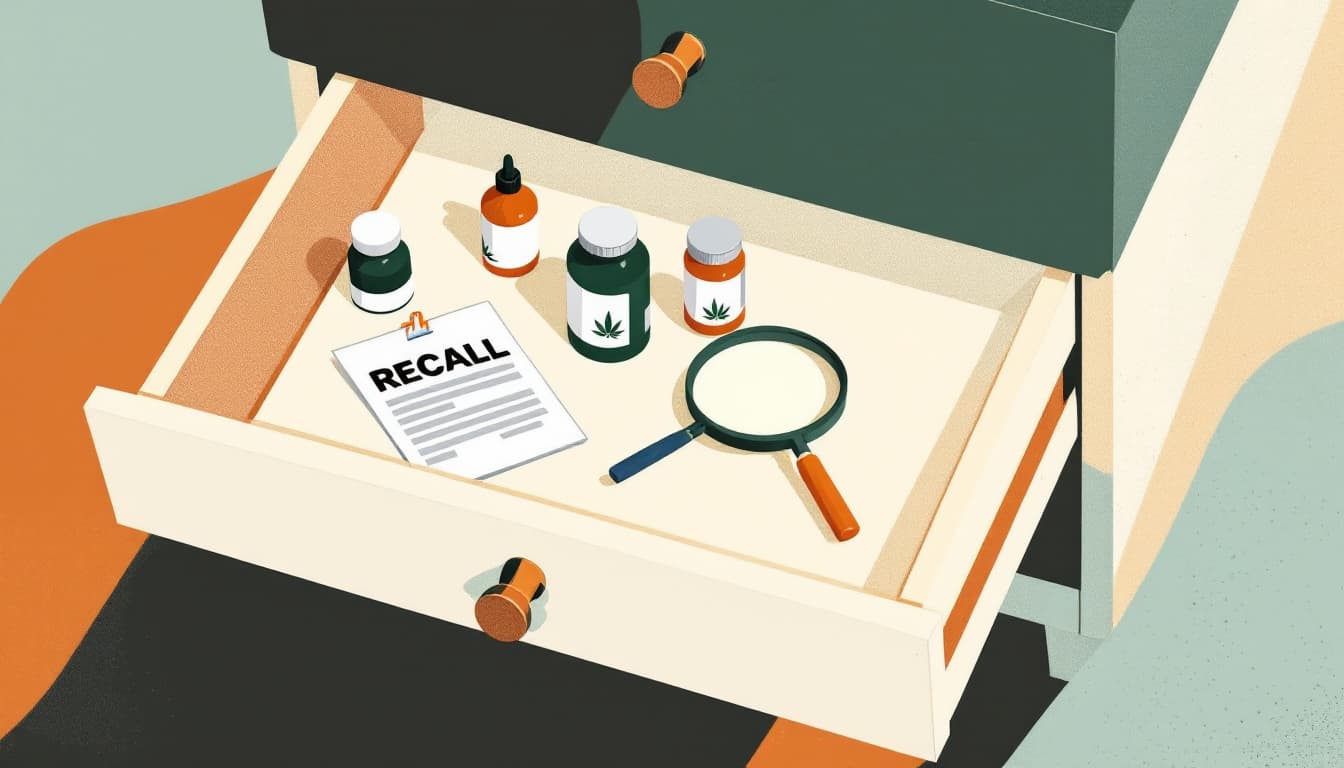
Check the lot number on anything you have at home before using it. The Arizona Department of Health Services (azdhs.gov) maintains recall notices, and dispensaries are required to contact affected customers. Pull out whatever you purchased in the last 30 days and compare it against the current recall notice. This takes five minutes and is the only action that matters right now.
Dispensary text or email notifications are not guaranteed to reach you, especially if you opted out of marketing messages when you signed up. Many cannabis buyers do exactly that — and then miss a safety notice buried in the same channel they muted. Log into your dispensary's patient portal directly or call them. Don't wait for the notification to find you.
If you use cannabis medically, keep a two-week buffer supply. This is standard harm-reduction logic applied to any medication or therapeutic product. A single recall, a dispensary closure, or a supply gap during Arizona's summer heat (when driving to a dispensary in 112-degree weather is genuinely unpleasant) can leave you without what you need. A modest buffer — stored properly in a cool, dark location, which in Phoenix means inside, not in a car or garage — closes that gap. Most dispensaries run regular promotions that make stocking up inexpensive.
Know your fallback options before you need them. In Arizona, both medical and recreational cannabis are legal, and there are dozens of licensed dispensaries across the Phoenix metro, Tucson, Flagstaff, and most mid-sized cities. If your primary dispensary is the source of a recall or runs out of a specific product, knowing your second and third options takes thirty seconds of research now and real stress off the table later. Save two or three dispensary contacts in your phone the same way you'd keep a backup pharmacy on file.
Treat "voluntary recall" language as a signal to verify, not to dismiss. Voluntary recalls in regulated industries usually mean the company identified the problem internally and reported it before a regulator forced the issue. That's generally a sign the system is working. It does not mean the risk is zero. When you see "possible contamination," your job is to check the specific product, not to decide whether to trust the industry in the abstract.
The bigger picture
Food and consumable supply chains produce recalls regularly. The USDA and FDA post new ones most weeks. Cannabis, because it's state-regulated and not federally tracked, gets less centralized coverage — meaning Arizona households that rely on these products have to monitor state-level channels rather than the national databases they might already use for food recalls.
The lesson here isn't that cannabis products are uniquely dangerous. It's that any consumable you depend on can disappear or become unsafe on short notice. Building a modest buffer, knowing your alternatives, and spending five minutes on verification when a recall surfaces is the kind of low-effort, high-return preparedness that doesn't require a bunker or a panic buy.
Durability looks like this: calm, informed, and not caught flat-footed by a story that ran quietly on a Tuesday morning.