Lake Mead's "bathtub ring" — the pale calcium carbonate band etched into canyon walls above the current waterline — is now measured in dozens of feet. That ring is not an aesthetic detail. It is a public ledger showing how much storage the Colorado River system has surrendered, and Arizona sits at the end of that ledger's most exposed line.
A report this week from The Hill catalogues what water managers in the West have been tracking for years: the Colorado is delivering less water, Hoover Dam's power generation is constrained by lower reservoir elevations, and the states that depend on both the water and the electricity are running shorter on margin than their infrastructure was designed to handle. For Arizona households, that dual exposure — water supply and grid stability — lands at the same time every year: July and August, when 115-degree days drive air-conditioner loads to their peak.
What's actually changing for Arizona
Arizona's Central Arizona Project canal delivers Colorado River water to roughly 80 percent of the state's population, including greater Phoenix and Tucson. The Bureau of Reclamation has issued Tier 2 and Tier 3 shortage declarations in recent years under the 2019 Drought Contingency Plan, cutting Arizona's CAP allocation by hundreds of thousands of acre-feet annually. Municipal utilities have mostly managed this through groundwater substitution and stored water credits banked during wetter years — but those reserves are finite.
The power piece is less discussed but equally concrete. Hoover Dam's hydropower output falls as Lake Mead drops, because the hydraulic head driving the turbines shrinks. That power goes to utilities across Arizona, Nevada, and California. When output falls, utilities buy replacement power on the spot market during summer peaks — at higher prices, during the same hours your neighbors are also running their AC. Rolling conservation alerts and time-of-use pricing pressures follow.
None of this means Phoenix taps run dry next Tuesday. It does mean Arizona households now carry more individual responsibility for water and energy continuity than they did ten years ago, because the system's buffers are thinner.
What we'd actually do
Know your utility's water source mix before the next shortage tier is declared. Call or check your city's annual water quality report, which lists what percentage of your supply comes from CAP, groundwater, and reclaimed sources. Phoenix, Scottsdale, Chandler, and Tucson each have different exposure profiles. Knowing yours tells you which disruption scenario — CAP cut vs. well drawdown — you're most vulnerable to.
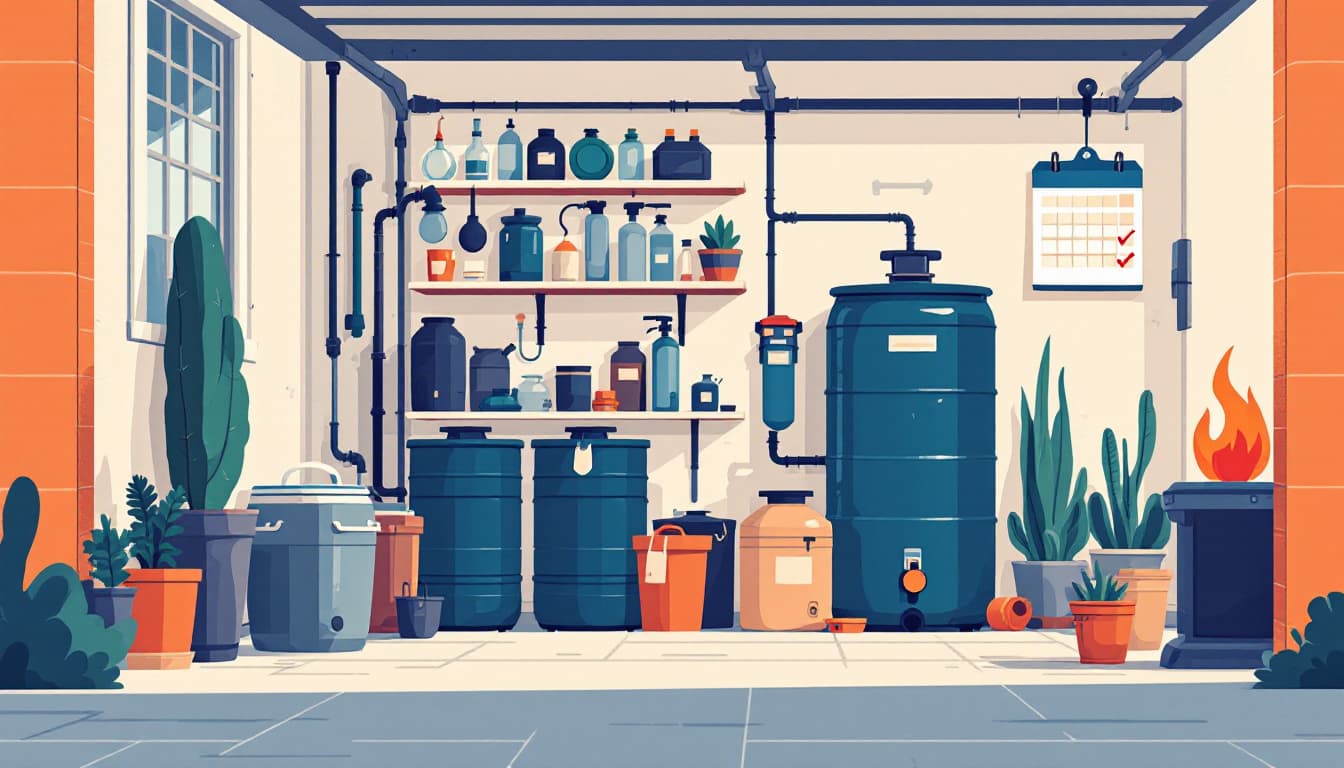
Store more water than FEMA's 72-hour guidance suggests. The standard "one gallon per person per day for three days" was designed around short-duration emergencies, not prolonged utility stress or multi-day grid outages that knock out pumping stations. Two weeks of water storage per person is achievable with stackable 5-gallon containers and a cool interior closet. For a family of four, that's roughly 56 gallons — about $40 in food-grade containers, filled from the tap.
Shift your biggest electrical loads before 3 p.m. Arizona Public Service and Salt River Project both publish time-of-use rate schedules. Running dishwashers, laundry, and EV charging before noon — or after 9 p.m. — meaningfully reduces your bill during peak demand months and takes pressure off the grid during the hours when hydropower shortfalls are most acutely felt. This costs nothing to implement.
Audit your landscape irrigation for waste. The average Arizona household with a yard uses more water outdoors than indoors. A single broken drip emitter running unnoticed can waste hundreds of gallons a week. Walk your irrigation zones during a scheduled run, watch for pooling or misting heads, and set your controller to water before sunrise. Most municipal water departments in Arizona offer free irrigation audits — use them before they're overwhelmed with requests.
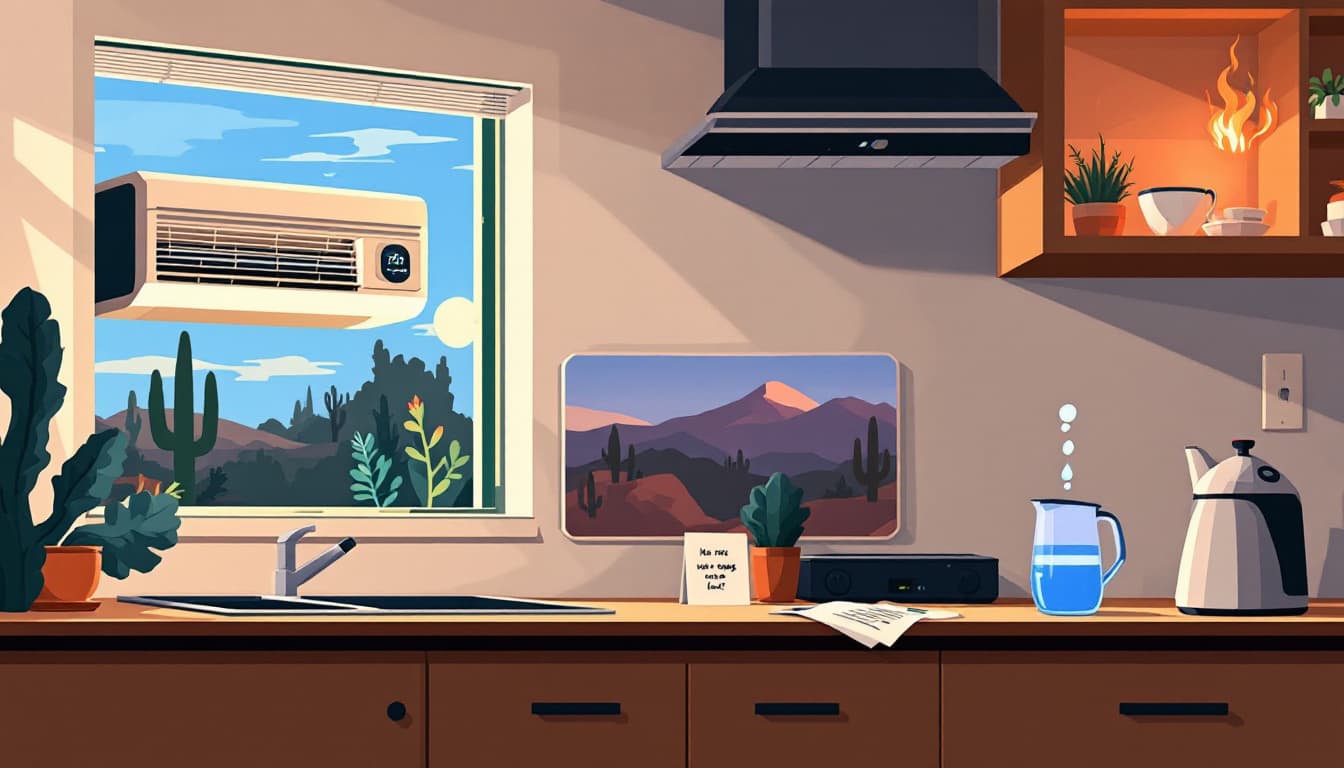
Consider a backup power option sized for your medical and cooling needs. A whole-house generator is not the goal here. A single-room solution — a window AC unit, a portable battery station capable of running it for four to six hours, or a small inverter generator — can keep one room safe during a multi-hour outage. For households with elderly members or anyone with heat-sensitive medical conditions, this is a life-safety item, not a luxury.
The Colorado River built the modern Southwest. That doesn't change. What changes is that the engineering assumptions baked into Arizona's water and power infrastructure were calibrated to a wetter baseline than the one the region now operates under. The state's water managers are not asleep — Arizona has done more long-term planning on this than most Western states. But institutional planning buys time at the system level. Household resilience is what covers the gap when the system runs close to its limits on a 112-degree Wednesday afternoon.
Durability, not disaster. Build toward the former so the latter stays theoretical.