When the National Weather Service issues an Extreme Heat Warning, the threshold is 105°F or higher for at least two hours. A forecast above 120°F — which The Watchers reported this week for parts of Arizona, California, and Nevada — isn't just a worse version of the same warning. It's a different category of stress on the systems your household depends on.
Phoenix has recorded temperatures at or near 120°F before. The Sonoran Desert does this. But multi-day events at that ceiling are where preparation separates households that stay safe from households that end up in an emergency room or a shelter.
What actually fails at 120°F
Most Arizona families know to stay inside and hydrate. What fewer think through is the cascade of secondary failures that extreme heat triggers.
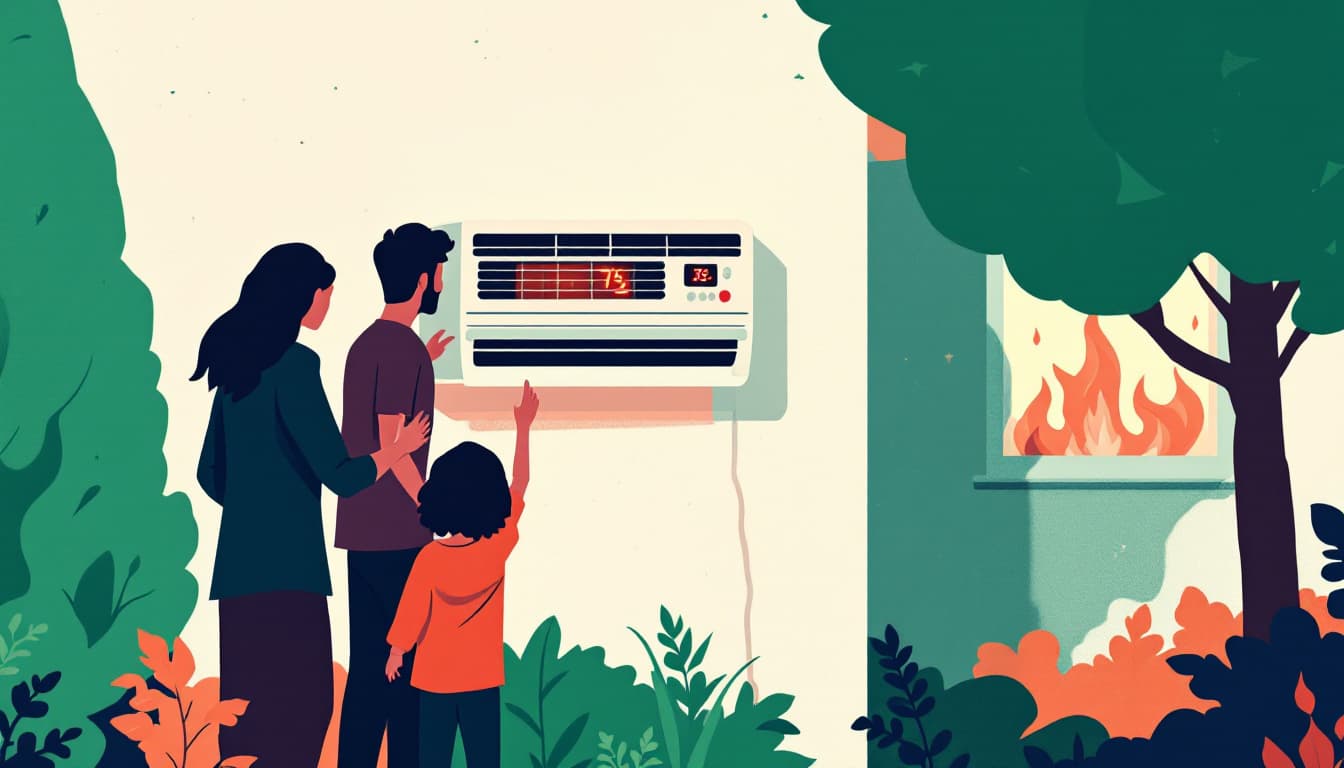
Air conditioning. Residential HVAC units are rated for a temperature differential, not an absolute ceiling. When outdoor air hits 120°F, many systems struggle to pull indoor temps below 85–88°F even running continuously. If your unit is older than 12 years or hasn't had a coil cleaning this season, it may fail under that sustained load. APS and SRP both operate disconnect moratoriums during extreme heat events, but a mechanical failure is your problem regardless.
Grid strain. Arizona's grid has improved, but record demand during multi-day heat events is exactly when rolling curtailments become possible. Recent summers have seen APS issue conservation alerts during peak afternoon hours. A two-to-four-hour outage at 118°F is a medical emergency for elderly residents and young children in poorly insulated homes.
Vehicles. Coolant systems, tire pressure, and battery capacity all degrade faster above 115°F. A car that starts fine in the morning may not start after sitting in a parking lot for four hours.
Water lines and pressure. Municipal systems face high demand during heat events. Older neighborhoods in central Phoenix and unincorporated Maricopa County have experienced low-pressure events during peak draw. If you rely on well water, verify your pump's operating temperature rating.
Food safety. A power outage of more than four hours will begin compromising a refrigerator. At ambient temperatures above 110°F, that window is shorter than the FDA's standard guidance assumes.
What we'd actually do
Test your AC unit before the peak hits. Run it to its lowest setting tonight and time how long it takes to reach that target temperature. If it takes more than 45 minutes to drop 10 degrees, schedule a service call now — not after the warning is active. A clogged filter or low refrigerant charge matters a lot more at 120°F than at 105°F.
Identify your nearest cooling center and your backup. Maricopa County operates a network of cooling centers, and the county's human services site lists locations by zip code. Know the two closest to your home and the two closest to where your kids or elderly relatives spend their days. Don't look this up during an outage when your phone battery is at 12%.
Pre-position water and electrolytes for three days. One gallon per person per day is a floor, not a ceiling, in extreme heat. At 120°F with any physical exertion, adults can need two to three gallons. Store water in a cool interior room, not a garage — water stored in a hot garage approaches temperatures that accelerate plastic off-gassing. Add electrolyte packets or low-sugar sports drink powder; plain water doesn't replace sodium lost through heavy sweating.
Charge a battery bank and know your phone's offline maps. If grid power curtails and cellular towers go to backup power, data gets slow and patchy before voice does. Download offline maps of your area in Google Maps or Maps.me now. A 20,000mAh battery bank will fully charge most smartphones four to five times.
Move your car to shade or a structure before 10 a.m. A car interior at 120°F ambient can exceed 150°F within 20 minutes. That's a heat-related death risk for any occupant left inside, and it accelerates battery degradation on both conventional and electric vehicles. Covered parking at a library, mall, or employer lot is a legitimate logistical resource during a multi-day event.
The bigger point
Arizona families who've lived in Phoenix or Tucson for more than a decade have usually absorbed some version of heat resilience without naming it — they know to carry water, they know not to walk the dog at noon in July. What multi-day events above 115°F test is whether those habits are backed by actual systems: stored water, a working AC, a plan for grid failure, a place to go.
Preparedness in a desert climate isn't about the worst-case scenario. It's about whether your household can remain functional and safe through the next 72 hours when infrastructure is stressed and the margin for error is narrow.
That's a solvable problem. It just needs to be solved before the temperature peaks, not during it.