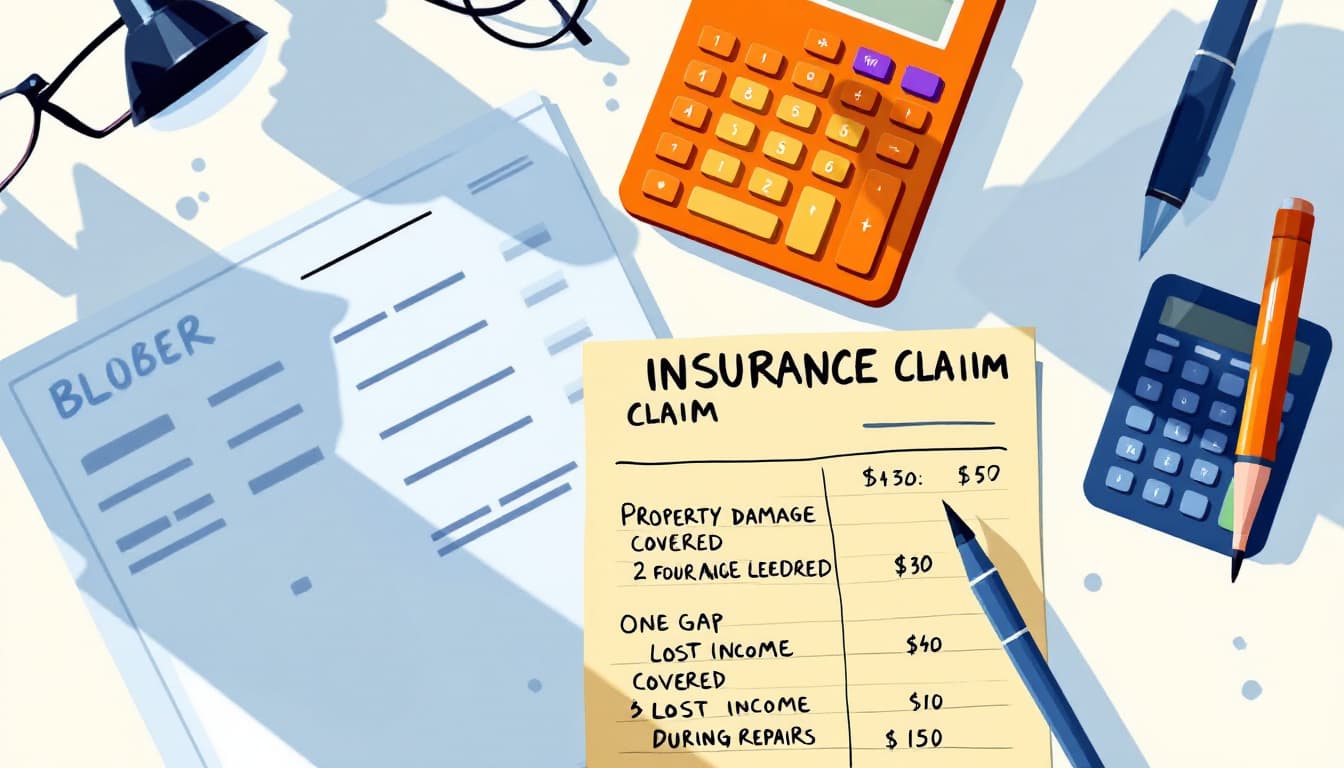
New claims data published by Allianz Commercial confirms that business interruption (BI) losses remain one of the most significant and fastest-growing categories in commercial insurance, with payouts and contested claims continuing to accumulate well into 2026. The report, released by Allianz Commercial in October, highlights that BI losses — which compensate businesses for lost revenue when operations are halted by covered events — frequently exceed the direct property damage component of the same claims, sometimes by substantial multiples.
Allianz Commercial, one of the world's largest commercial insurers by premium volume, noted in its reporting that cyber incidents, natural catastrophes, and supply chain failures are the three dominant triggers driving current BI claim volumes. The company has consistently ranked business interruption among the top two or three global business risks in its annual Allianz Risk Barometer surveys, and the latest claims data appears to reinforce that assessment in concrete dollar terms. Notably, BI claims tied to supply chain disruptions — where a company's operations are halted not because of damage to its own facilities but because a critical supplier or logistics partner was affected — continue to present the most complex valuation challenges for adjusters.
One detail that rarely surfaces in general financial coverage of this topic is the distinction between triggered and contingent business interruption coverage. Standard BI policies typically require physical damage to the policyholder's own property to trigger a payout. Contingent BI (CBI) extends that to damage at a supplier or customer location, but CBI is often sublimited, meaning the maximum payout is capped well below what a business might actually lose during a prolonged outage. The COVID-era court battles over pandemic-related BI claims — which saw insurers successfully defend against hundreds of thousands of claims on the grounds that viral contamination did not constitute "physical damage" — accelerated policy language changes that have made these sublimits and exclusions more explicit, not more generous. That legal and actuarial tightening is part of what the Allianz data is measuring: a claims environment where losses are large but the portion covered by existing policies is often a fraction of total economic damage.
For households that depend on small business income — whether as owners, contractors, or employees of companies without robust BI coverage — understanding that gap between insured loss and actual economic disruption is a more realistic planning frame than assuming insurance will bridge any extended outage. The broader preparedness literature, including resources like those tracked at Middle Class Prepper, has long emphasized that community-level economic resilience and insurance coverage are related but distinct variables. The Allianz data, while aimed at corporate risk managers, is effectively a real-time measure of how much economic damage from disruption events is absorbed by markets rather than transferred to insurers — and that ratio has not been improving.