A recent AI Magazine piece featuring Saskia van Gendt, head of sustainability at a major agriculture technology firm, argues that AI is no longer optional for building resilient food systems — it's the only tool that can keep pace with climate variability, input cost swings, and labor shortages hitting farms simultaneously. The argument is persuasive at the industry level. But the article stops at the farm gate, and that's exactly where most of us need the analysis to begin.
What's actually changing
The headline promise of AI in agriculture is precision: smarter irrigation, earlier disease detection, yield forecasting that lets distributors plan months out instead of weeks. Those gains are real. USDA and various ag extension programs have been tracking meaningful efficiency improvements on farms that adopt sensor-driven systems.
The catch is timing and distribution. Adoption is concentrated on large commercial operations — the ones already running thin margins and heavy equipment debt. Small and mid-size farms, which supply a disproportionate share of regional produce markets and farmers' markets, are largely watching from the outside. The efficiency gains at the top of the supply chain don't automatically translate into stable prices or reliable availability at your grocery store.
What we're actually in the middle of is a structural consolidation. AI tools lower per-unit costs for farms large enough to absorb the upfront investment, which puts further pressure on smaller growers. Fewer, larger producers means a supply chain that's more efficient in normal conditions and more brittle under stress. One bad regional weather event, one disease outbreak, one logistics disruption — and the buffer that used to exist in the form of dozens of regional suppliers simply isn't there.
For households, the near-term reality is continued food price volatility. Recent BLS data shows grocery inflation outpacing overall CPI in several fresh produce categories. That pattern is unlikely to reverse quickly, regardless of how well AI performs in controlled greenhouse trials.
What we'd actually do
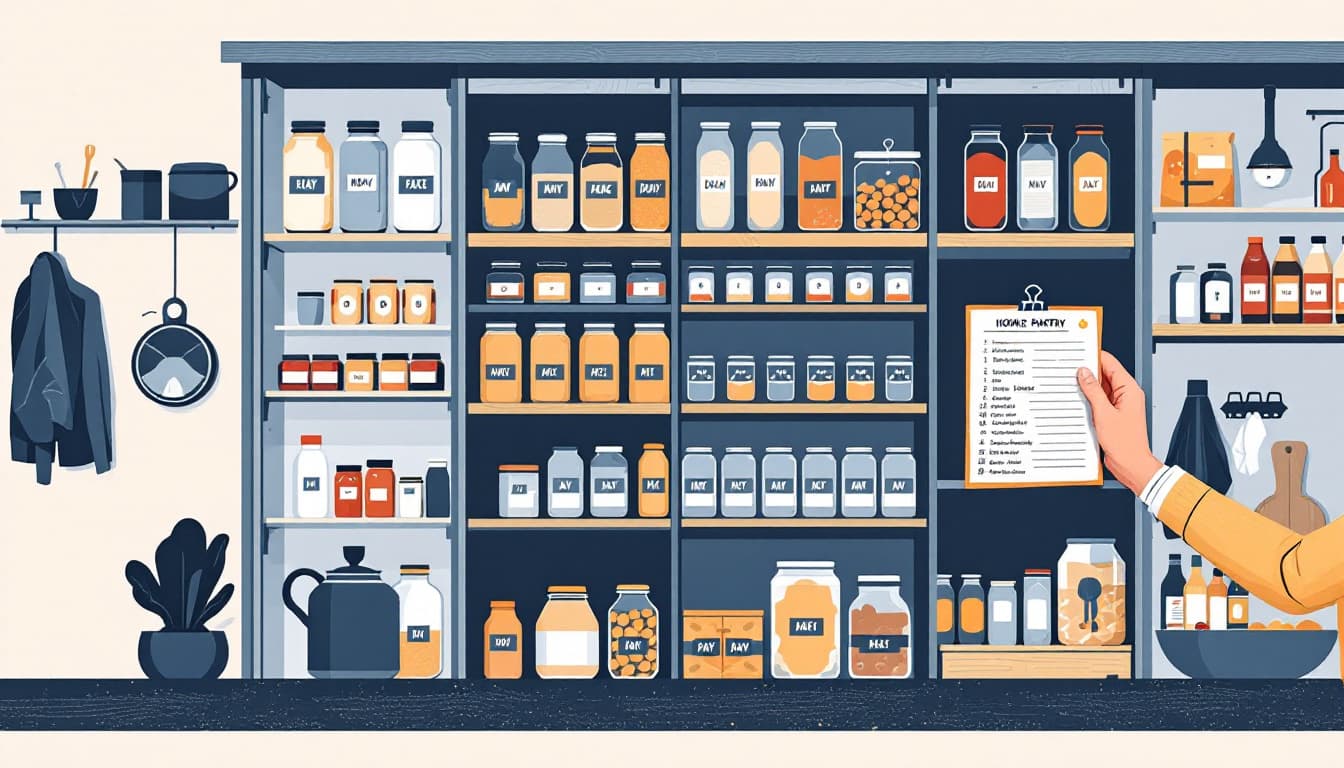
Build a one-month rotating pantry around shelf-stable staples you already eat. This is not about stocking a bunker. It means identifying the five or six dry goods and canned proteins your household actually cycles through — rice, lentils, canned tomatoes, sardines, oats, whatever fits your diet — and keeping a month's worth on hand, purchased at regular price over time. When prices spike, you're buying from your own stock. When prices ease, you're restocking at lower cost. The rotation keeps waste near zero and your grocery math improves.
Start tracking your actual food spend by category, not just by total. Most households don't know whether their grocery bill went up because of produce, proteins, or packaged goods. A simple three-month log — even a notes app works — tells you where your exposure is. If fresh produce is your vulnerability, that's a different response than if it's cooking oils or eggs. Precision matters here too.
Identify one local or regional food source and make it a habit before you need it. A farm stand, a CSA share, a small ethnic grocery that sources regionally — these aren't immune to supply disruption, but they're often more stable in specific disruptions than national chains. More importantly, you build a relationship and some knowledge of what's actually available locally. That knowledge has no downside.
Learn one preservation skill. Not canning your entire harvest. One skill: water bath canning for high-acid foods, or lacto-fermentation for vegetables, or simply understanding how to use a chest freezer efficiently. The AI Magazine piece is right that technology is reshaping food production. The response at the household level isn't to replicate industrial tech — it's to reduce how much you depend on the industrial chain for every single meal.
The bigger picture
The AI-in-agriculture story is genuinely interesting, and some of the resilience gains are real. Better forecasting means fewer waste events, more predictable wholesale prices, and potentially lower food costs over a long arc. None of that happens overnight, and none of it is evenly distributed.
The families that will feel the transition smoothly are the ones who've already reduced their dependence on just-in-time grocery shopping. Not through hoarding or fear, but through the quiet competence of knowing what they have, where it comes from, and what they'd do if a specific category became expensive or scarce for six weeks.
That's the durable position. It doesn't require predicting which crop fails next, or which farm goes under, or what AI does in five years. It just requires a small, consistent habit of not being caught flat-footed.